Most accessory guides list 21 types and leave you worse off than when you started. This one starts with 3.
By Ghoul, FashionXD. Last updated November 13, 2026.
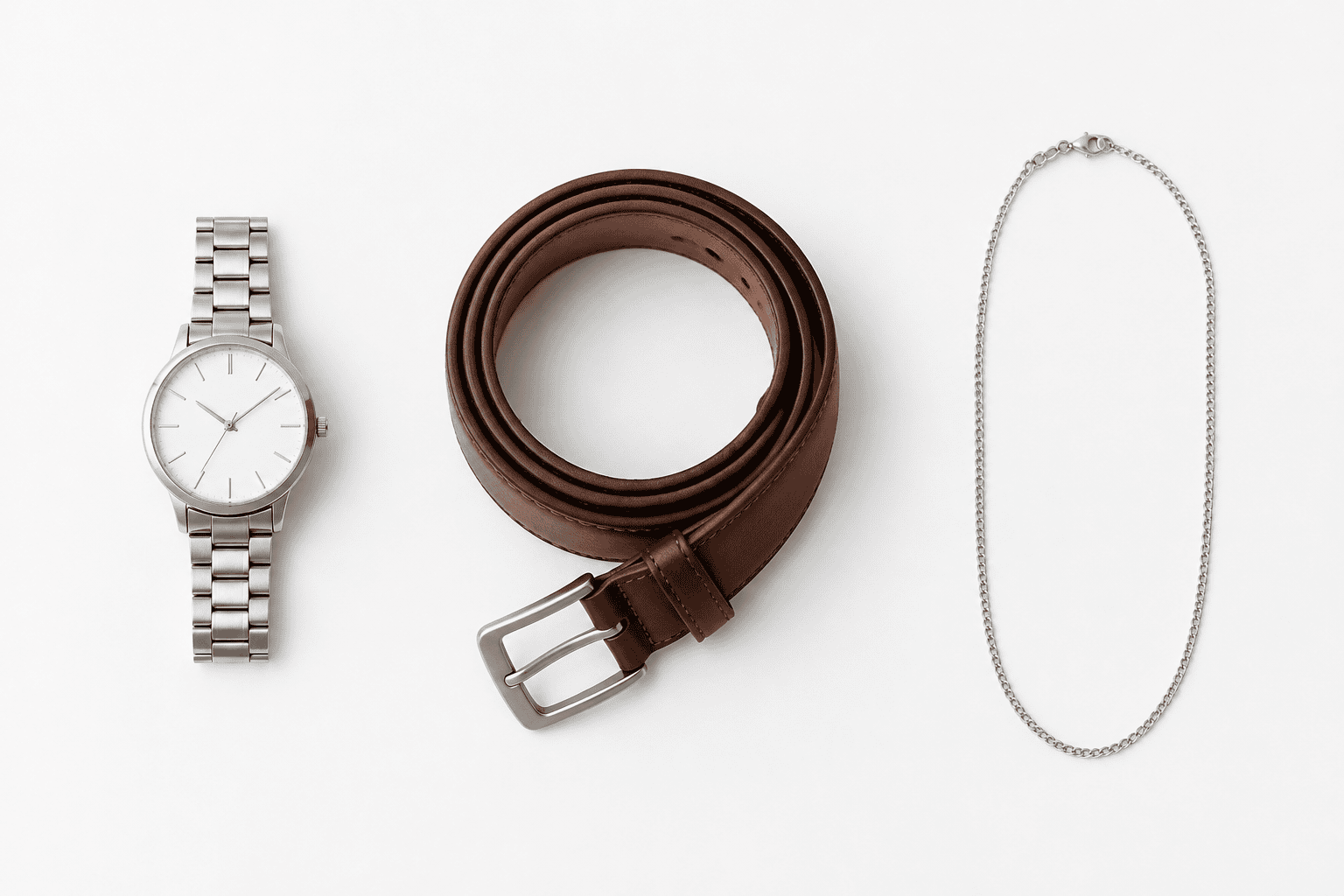
If you are new to accessories, you need 3 things: a watch you can wear everywhere, a belt in the same color family as your shoes, and 1 small personal piece, like a chain, a ring or a bracelet. Everything after that gets added one at a time, worn until it stops feeling new, and only then joined by the next piece.
The Mistake That Makes Accessories Look Borrowed
Your first accessory purchase will probably be the wrong one. A statement ring, a wide-brimmed hat, a chain with a pendant the size of a coin, bought because it looked good on someone with 10 years of practice wearing it.
The problem is sequence. Taste has nothing to do with it. Accessories sit on top of an outfit the way seasoning sits on top of food. If you are still working out your colors and fits, you have no base for a loud piece to sit on, so the piece wears you instead. The quiet basics feel boring to buy, which is exactly why most men skip them, and why most accessory drawers hold 3 loud items and nothing useful.
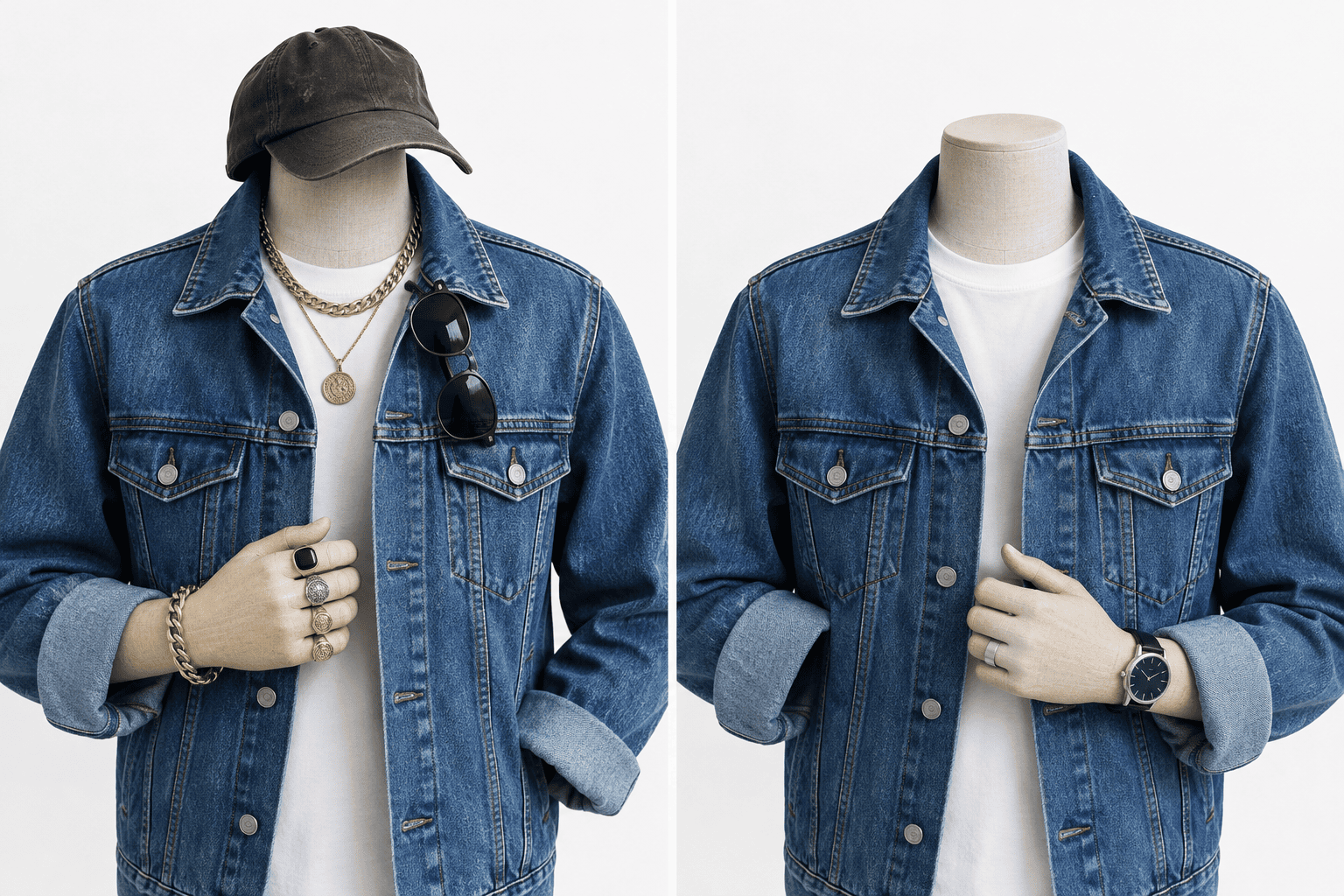
There is a second version of the same mistake, and it hits about 6 months later: wearing everything you own at once. Watch, chain, 2 rings, bracelet, sunglasses on your head, beanie, all in 1 outfit. Each piece is fine on its own. Together you become a display case, and the outfit fails the costume test: if you look like a character rather than a person, you have gone too far.
Buy the boring 3 first. The loud piece still works later, and it will look earned by then.
The Starter 3
A watch that goes everywhere
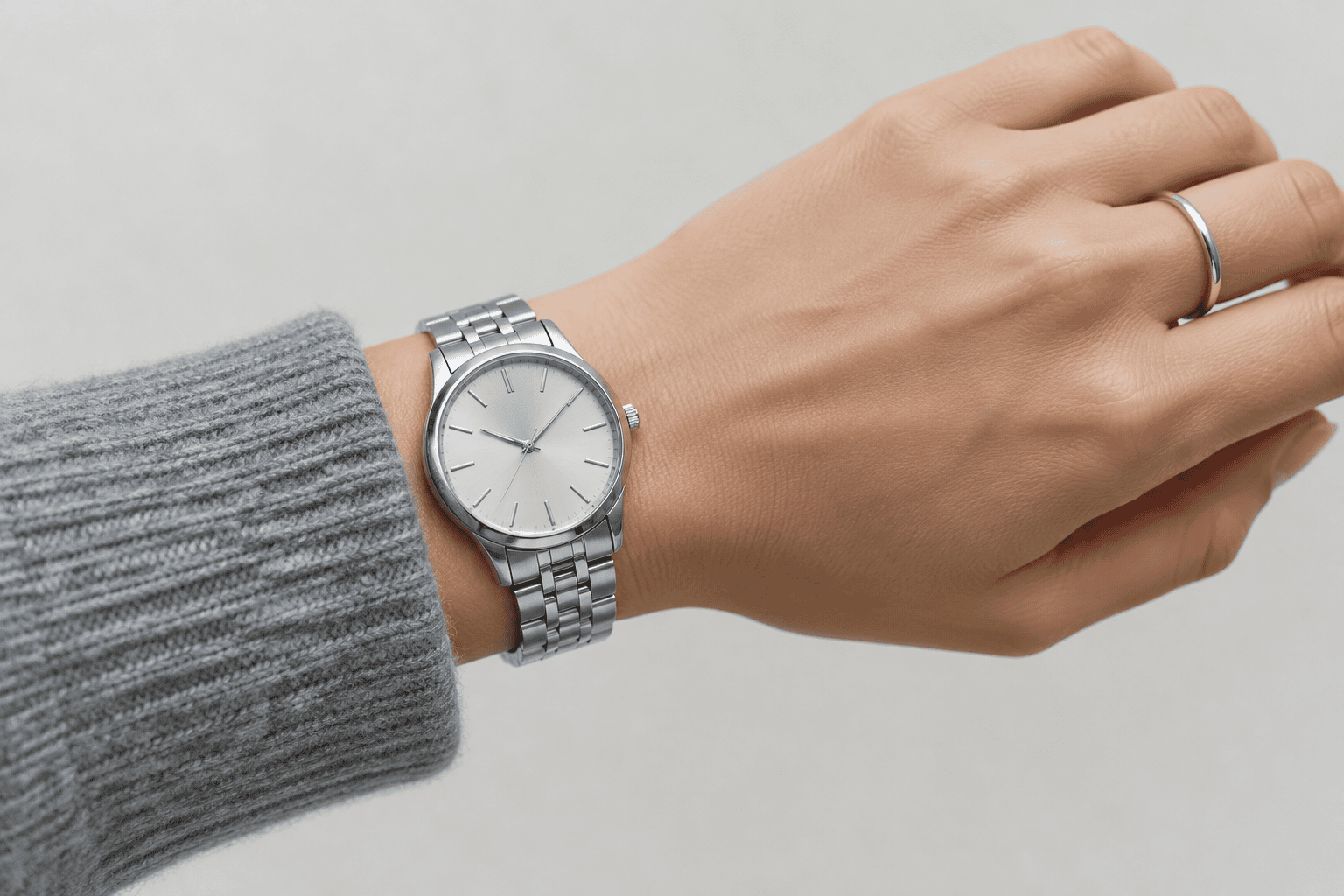
The watch is the 1 accessory menswear has agreed on for a century, and it is the right first buy because it reads across every dress code from a t-shirt to a suit. A simple 3-hand watch with a plain dial, 36 to 40 millimeters across for most wrists, on a steel bracelet or a leather strap, covers nearly every situation you will walk into.
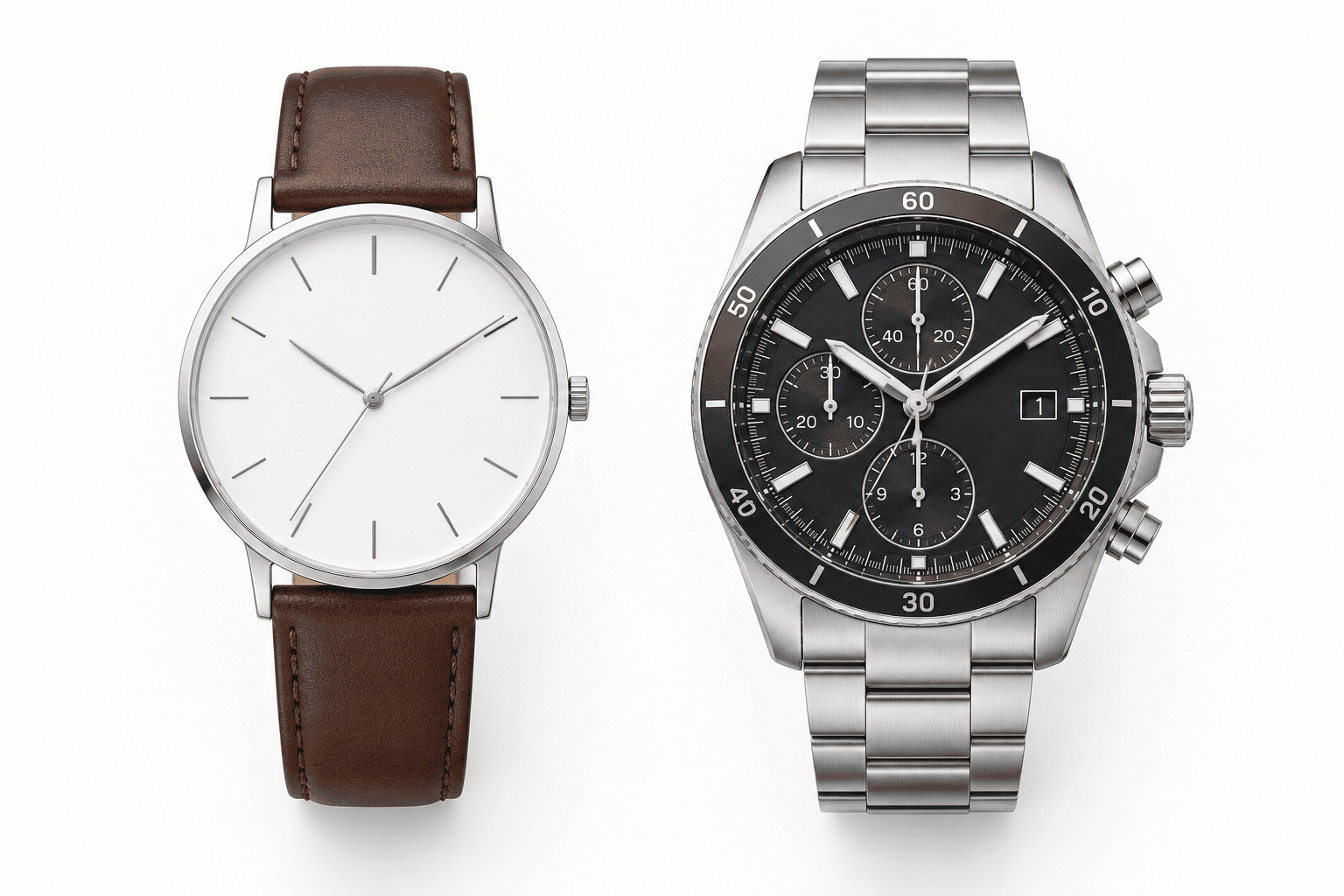
Skip the complications. A chronograph with 4 subdials and a tachymeter scale is a conversation about motorsport that you did not ask to have. Plain dial, slim case, done. The full sizing and strap logic gets its own guide in December, but the starter rule holds: if your watch is the first thing people notice, it is the wrong watch for you right now.
A belt in the same family as your shoes
The belt is the least exciting purchase on this list and the one that quietly fixes the most outfits. The rule from our color matching guide applies directly: brown shoes take a brown belt, black shoes take a black belt, and the shades can differ as long as the families match.
Buy the belt for the shoes you wear most often, which for most men means brown first. Check the match in daylight, because 2 browns that agreed under store lighting regularly separate in the sun. A slim, plain buckle reads better than a logo plate at any budget.
1 personal piece
The third slot is where your taste enters. A thin chain, a plain ring or a simple bracelet, worn daily until it feels like part of the hand or neck it sits on. This is the piece that makes your outfit look inhabited rather than assembled, and it is also the piece you will feel most self-conscious about, so one honest note: your first chain feels far more visible to you than to anyone else. Nobody is staring. Wear it for 2 weeks and the feeling passes.
The alt and streetwear end of men’s style has always understood this better than mainstream menswear, and the alternative fashion guide shows how far a single chain or ring can carry a look. A full jewelry starter guide lands in December with metals, lengths and skin tones covered properly.

The Next Tier, Added Slowly
Once the starter 3 stop feeling like decisions, these earn their place, in roughly this order.
- Sunglasses. 1 well-fitting pair beats a drawer of novelty frames, and the only test that counts is your face in a mirror in daylight.
- An everyday bag. A clean backpack or a simple messenger in black or brown covers commutes, gym runs and weekends. Logos shrink an outfit; plain panels do the opposite.
- Winter accessories. A beanie and a scarf in neutral colors extend every coat you already own. December brings a full guide to matching these with specific coats.
- A fragrance. The invisible accessory, and the one people remember. It gets its own beginner’s guide on December 1.
The order matters less than the pace. Add each piece alone, wear it for a couple of weeks, and only then think about the next one. You are building a habit here, so pace it like one.
4 Rules That Keep Accessories From Wearing You
- Metal lives with metal. A silver-toned watch wants silver-toned rings and a silver-toned chain, and gold wants gold. Mixing can work with practice, but your eye has not calibrated yet, so keep the family consistent and the question disappears.
- Leather lives with leather. Belt, watch strap, bag and shoes should share a color family. It is the belt-and-shoes rule extended to everything else you carry.
- 1 focal point per outfit. If the watch is the statement, the chain stays quiet. Accessories compete for the same pair of eyes, and 1 clear winner always beats 3 tied contenders.
- Scale the piece to your frame. A wide cuff and a chunky watch swallow a narrower wrist, and oversized frames sit heavier on a smaller head. Men under about 5 foot 8 know this logic from clothing already; accessories follow the same proportions.
None of these rules survives contact with personal style, and that is fine. They exist to make your first year easy. After that, you will know exactly when to break them.
Where to Spend and Where to Save
Spend on the pieces that touch your daily uniform: the watch and the belt. Both get worn hundreds of times a year, both fail visibly when they are cheap, and both sit in the part of your outfit people see up close. The wardrobe essentials guide applies the same cost-per-wear logic to clothing, and it holds here.
Save on the rotating pieces. Sunglasses get sat on, beanies get lost, and jewelry tied to a trend dates itself within a few seasons. Mid-range versions of all 3 exist at every mall and do the job without ceremony.
What Breaks the Look
You are making a few small mistakes that tip an outfit from sharp into costumed, and they are almost always 1 of these 4:
- Wearing everything at once. The fastest fix in this entire article: before you leave the house, take 1 piece off.
- Matching every metal and leather to perfection. Precision matching crosses from sharp into themed, and themed is costume territory. Same family is the target; nobody needs identical shades.
- Letting the logo do the talking. A belt buckle or bag that exists to show a brand mark dates your outfit and cheapens the pieces around it.
- Buying for the occasion that never comes. The cufflinks and the silk pocket square can wait until a wedding actually lands on your calendar. An accessory bought for an imaginary life gathers dust in the real one.
None of these needs a purchase to fix. Most of them need a subtraction, which is why accessories reward restraint more than almost anything else you wear.
FAQs
What accessories should every man own?
3 to start: a watch, a belt that matches his most-worn shoes, and 1 personal piece like a chain, ring or bracelet. After those, sunglasses, a plain everyday bag and winter pieces in neutral colors cover nearly every situation a normal year produces.
How many accessories should a man wear at once?
3 visible pieces is a comfortable ceiling: the watch, the belt and 1 more. Your wedding ring and everyday glasses do not count, because nobody reads them as accessories. When in doubt, remove 1 before leaving.
Should men wear jewelry?
Yes. Men have for most of recorded history, and a thin chain or a plain ring reads as normal in 2026 in nearly every setting short of the strictest offices. Start with 1 piece and wear it daily until it stops feeling new.
Is gold or silver better for men?
Neither is better, but 1 usually suits your skin more than the other. Warm undertones tend to sit well with gold, cool undertones with silver, and the wrist vein check from our color guide gives you a quick answer: blue or purple veins point cool, green veins point warm. Once you know your family, the stronger rule is consistency. A gold watch with a silver chain and a gunmetal ring looks assembled by accident, so pick 1 metal family and stay in it across watch, chain and rings until mixing becomes a deliberate choice rather than a random one.
Do accessories actually matter?
They matter in proportion to how small they are. Your clothes do most of the work in any outfit, and accessories handle the last 10%, the part that separates dressed from dressed with intent. A plain outfit with a good watch and a matched belt reads more deliberate than an expensive outfit with neither.
Where to Start Tonight
Check your wrist, your waist and 1 empty slot. If the watch situation is handled and your belt matches the shoes you wear most, the only remaining question is which personal piece gets the third slot. Pick the one that sounds most like you, and wear it tomorrow.