
Capsule Wardrobe for Men: 30 Pieces That Actually Work
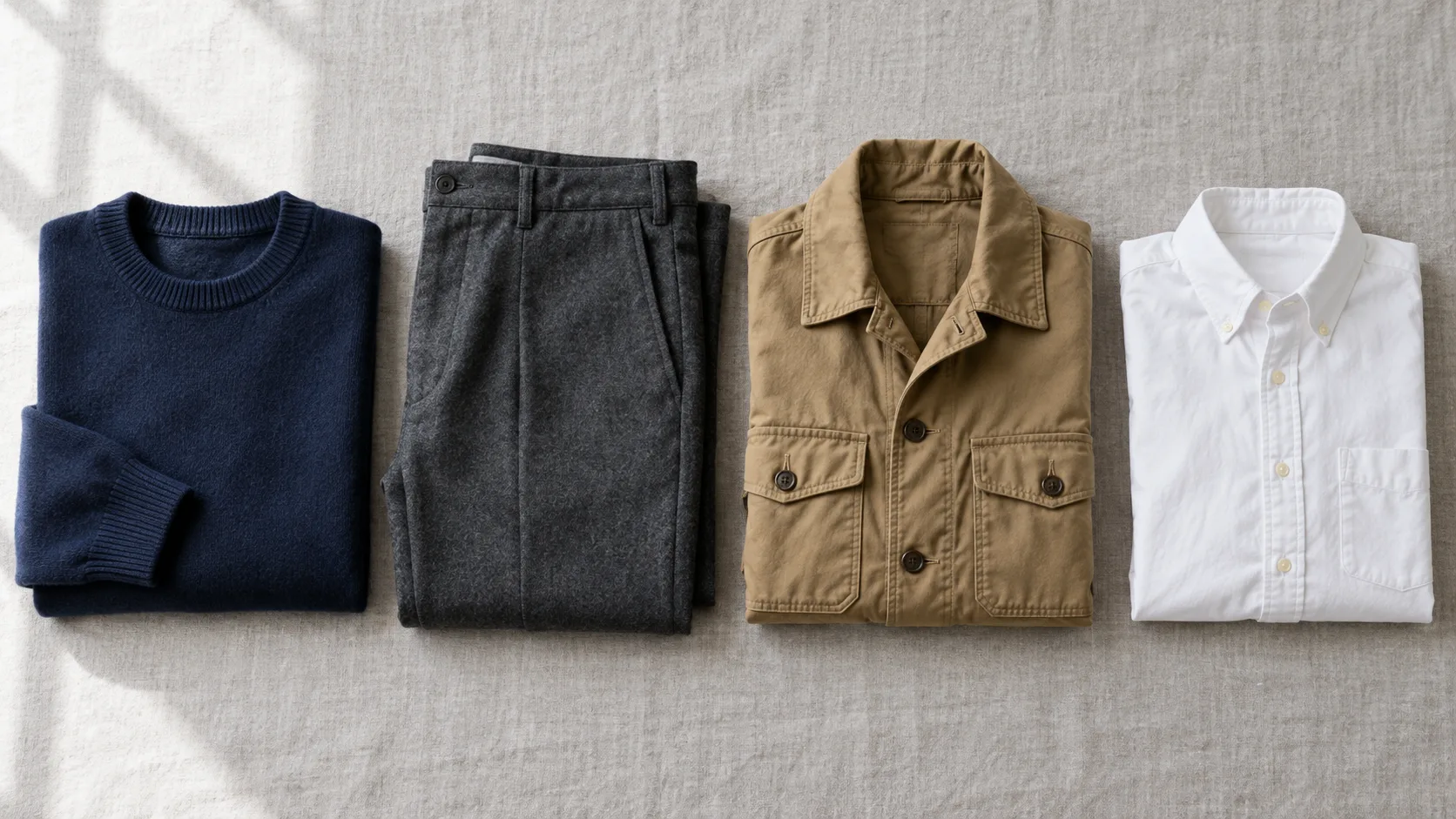
Most “capsule wardrobe” advice aimed at men is a woman’s Pinterest board with the florals swapped for flannel. Here’s what actually earns a spot in a working man’s closet, the real math behind it, and the brands worth clicking through to.
By Ghoul, FashionXD. Last updated November 2026.
A men’s capsule wardrobe is a small, deliberately chosen set of clothes, usually around 30 pieces, built so almost everything in it can be worn with almost everything else. The real goal is spending less time deciding what to wear and getting more use out of everything already owned, not owning less for the sake of a smaller number.
Thirty sounds arbitrary until you count what’s actually hanging in a normal closet. Most men own somewhere between 80 and 150 individual garments once gym clothes, old work shirts, and the four hoodies from college that never got thrown out are counted in. Of that pile, a small fraction gets worn on a loop, maybe 15 to 20 pieces doing 80 percent of the real work, while the rest sits folded as a decision nobody wants to make. A smaller, coordinated closet just makes that ratio honest instead of pretending it isn’t already true.
What Is It Like Having a Capsule Wardrobe?
Here’s the honest version, since the productivity blogs tend to oversell this part: nothing about it feels dramatic for the first few days. What changes is smaller and quieter than that. The fifteen seconds it used to take standing between two nearly-identical shirts just stops happening, because there’s only one shirt in that slot now, not four competing for the same five minutes before you leave the house.
Steve Jobs is the extreme version of this, and the story behind it is better than the takeaway everyone repeats. On an early trip to a Sony factory in Japan, he noticed every employee wearing the same simple uniform, something the designer Issey Miyake had made for the company. Jobs came home wanting the same thing for Apple and pitched it to his executive team, who reportedly laughed him out of the room. Nobody wanted a company jumpsuit. So he built a version just for himself instead: a black turtleneck, jeans, and the same sneakers, repeated most days for close to two decades, with Miyake designing the turtlenecks specifically for him. The pitch that got rejected in a boardroom quietly outlived everyone who rejected it.
Nobody needs to take it that far. But the math behind it holds at any scale, and it’s worth naming plainly instead of just gesturing at “fewer decisions” the way most articles do: every outfit choice that’s already been made in advance is one less thing competing for attention before the first coffee.
None of that makes a smaller closet free, and it’s worth saying since a lot of the internet oversells this part too. Building one properly usually costs more upfront than the wardrobe it replaces, because a shirt built to survive 100 washes costs more per unit than a five-pack from the clearance rack. A man rebuilding from zero should expect a real total closer to the low hundreds of dollars if he already owns some usable pieces, and more than that starting from an empty rail. The payoff shows up later, spread across years of wear, which is easy to promise on a blog and harder to feel good about while the receipt is still in the bag.
There’s also a genuine repetition risk worth naming instead of glossing over. Wearing the same handful of pieces on a loop means seeing a similar silhouette in the mirror often enough to notice it. The real fix lives inside the closet already owned, in variation rather than volume: a different collar treatment, one textured layer like a shawl-collar cardigan next to two flat crewnecks, a watch swapped for a plainer strap on a random Tuesday.
Ask anyone who’s actually built one how long it took to feel finished, and the honest answer is rarely a single weekend. Most men land somewhere between one and three months of small corrections: tailoring one pair of trousers, returning a jacket that looked right online and wrong in the mirror, swapping a sneaker that turned out too narrow. Somewhere in that stretch, the closet stops feeling like a project and starts feeling like, well, a closet.
The Ground Rules, Before Anything Gets Bought
A handful of definitions need to land before any list does, or the whole thing turns into 30 items that still don’t talk to each other. If the closet is starting from empty rather than overstuffed, FashionXD’s complete guide to men’s wardrobe essentials is the broader checklist this capsule narrows down. Here’s what actually needs agreeing on first.
What Counts as One of the Pieces
The count covers visible, outfit-building clothing only: tops, bottoms, outerwear, shoes, and the accessories that show. Underwear, socks, sleepwear, gym kit, and one or two sentimental pieces nobody would actually give up sit outside the count entirely, the same exemption used by most structured wardrobe challenges going back to the ones that popularized this idea online in the early 2010s. Trying to cram boxers into the count just wastes slots on things nobody sees.
The Color Rule, With Actual Colors
Skip the vague “pick colors you already wear” advice and start here instead: navy, charcoal grey, tan or camel, and white or off-white. That’s the whole palette. Every piece bought needs to work with at least two of those four before it earns a place, and picking one leather tone for the whole closet, brown or black, not both, removes an entire category of morning mismatches between shoes and belt before it starts. Online capsule and minimalist wardrobe communities argue about almost everything else in a project like this, but the same four colors show up in nearly every version that actually works, for the simple reason that navy, charcoal, tan, and white all sit next to each other on a color wheel without a single clash.
Fabric Weight, in Numbers That Actually Mean Something
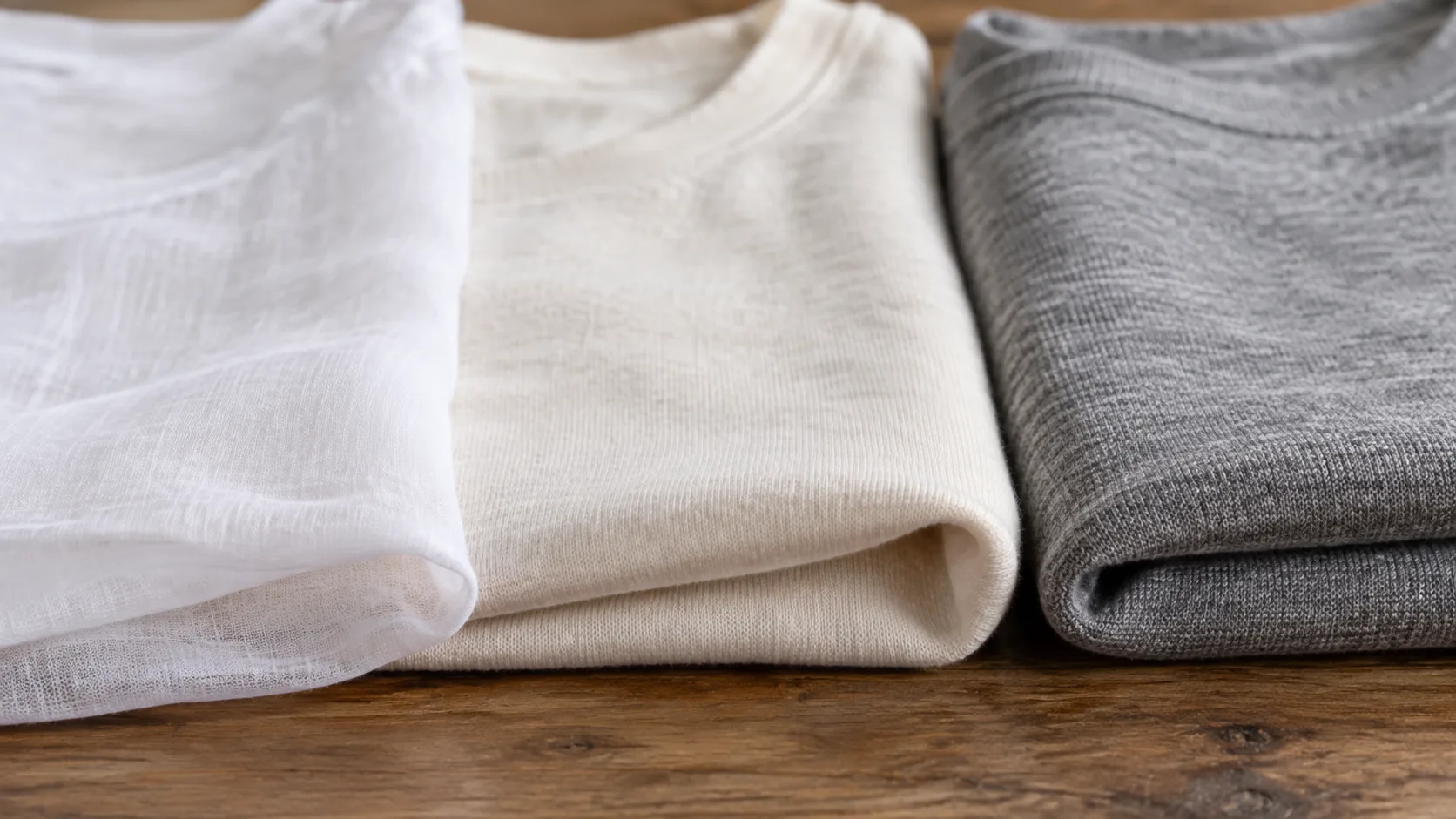
Denim runs in ounces per square yard: under 12 ounces is lightweight and easy to break in, 12 to 16 ounces is the midweight range most everyday jeans fall into, and anything above 16 ounces is heavyweight, stiffer, and built for durability over comfort in the first few wears. Knit cotton runs on the metric GSM scale instead: a tee under about 150 GSM will be light and a little see-through, 150 to 200 GSM is the everyday four-season range most good basics live in, and past 200 GSM starts to feel structured enough to wear alone in cooler weather. Cotton Incorporated’s CottonWorks learning hub, built for apparel professionals, breaks down exactly how that weight gets measured and why it changes drape and warmth, useful for anyone who wants the fuller science behind why one tee feels like a $12 impulse buy and another feels like it’ll outlast the decade.
Wool Needs a Different Kind of Care
A wool sweater or overcoat does not need washing after every wear the way a cotton tee does. Airing it out on a hanger between wears, then washing on a genuine wool cycle or by hand a handful of times a season, is usually enough to keep it looking new, and that habit feeds directly into the cost math below, since a wool piece that gets over-washed and felted early never earns out the years it was bought for. The Woolmark Company’s wool care guide goes deeper on wash temperatures and drying methods for anyone buying wool for the first time.
Rotating Through the Seasons Without Doubling the Closet
Seasonal rotation happens inside the same closet, not on top of it. Shorts and a packable shell earn most of their wear in summer and mostly sit still in January, while a wool overcoat and a beanie do the opposite, and that’s by design rather than an oversight. A true four-season version of this does not need 60 items just because a year has four seasons in it. It needs a set chosen so roughly three-quarters of the pieces work across at least two seasons, with a handful of specialists on each end covering the extremes.
The Only Math That Decides What’s Worth Buying
Cost per wear is the one number that actually settles whether something belongs in the closet, and it’s simple enough to run in your head: take the price, divide by how many times it’ll realistically get worn in a year, multiply by however many years it survives. A $220 wool coat worn 40 times a winter for five years lands under $1.10 per wear. A $35 fast fashion coat that pills and gets binned after one season costs more per wear despite the lower sticker price. The same math holds at the small end too: a $120 pair of sneakers worn twice a week for three years averages under 40 cents a wear, while a $40 pair that falls apart in four months quietly costs more per wear than the pair that looked expensive on the shelf. This is the number that should end most “but it’s on sale” arguments before they start.
How Do I Build a Capsule Wardrobe From Scratch?
Most guides jump straight from theory to a shopping list, which is exactly how men end up with a closet full of pieces that fit a stranger’s life instead of their own. The better starting point is an actual week, not Pinterest. Here’s the order that holds up in practice, with the vague parts made concrete.
- Track the last seven real days, not an imagined average one. Open the Notes app or the camera roll and either write down what got worn each day, or just snap a quick mirror photo every morning for a week. A phone makes this genuinely easy: no spreadsheet, no app to download, just seven photos or seven one-line notes by Sunday. The point is catching the actual pattern, how many days were spent working from home, how many needed real pants, whether anything sharper than jeans came up even once, instead of guessing at it from memory, which is wrong more often than people expect.
- Start from navy, charcoal, tan, and white unless a strong reason says otherwise. These four already showed up in the ground rules above for a reason: they’re the palette most men already lean toward without realizing it. If the week-long photo log from step one shows a lot of one color already in heavy rotation, that’s a signal to keep it as a fifth accent rather than fight it.
- Empty the entire closet onto the bed and sort into three piles. Keep is anything that already fits the four colors and the actual week from step one. Maybe is anything that needs a wash test, a trip to a tailor, or a second opinion from someone whose taste is trusted. Gone is everything else, and it leaves the house that week, not “eventually,” since “eventually” is where good intentions go to become clutter.
- Lay the keep pile against the full list below and count what’s missing. This turns the shopping list into a gap list instead of a wish list, which is the entire difference between building a capsule wardrobe and just having an expensive shopping spree with better branding.
- Buy the gaps in a fixed order: basics first, then one outerwear piece, then shoes, then accessories last. Buying outerwear or accessories before the basics are locked in is how closets end up with a beautiful camel coat and nothing underneath it worth wearing.
- Run a real 30-day wear test using only what made the cut. Note what gets reached for without thinking and what keeps getting skipped. Whatever’s still unworn after 30 days is either the wrong color, the wrong fit, or the wrong piece for the actual week from step one, and it’s worth admitting that before buying a replacement for it.
That order matters more than the specific pieces. A man who does steps one through four honestly and skips step six will still end up better dressed than one who buys everything in a single afternoon and skips the audit entirely.
What Goes Into a Capsule Wardrobe for Men?
Here’s the full list, broken into the five categories that carry a wardrobe: tops, bottoms, outerwear, footwear, and the accessories that quietly do more work than they get credit for. A capsule is a system rather than a style, so the same structure flexes across any of the main types of men’s fashion styles; it just narrows the colors and raises the bar on fit. Prices below are realistic 2026 street prices, not aspirational or clearance-only numbers, and none of these brand mentions are paid placements, just where each price point genuinely tends to live: Uniqlo, Everlane, and Target’s Goodfellow & Co. line for budget basics, J.Crew, Banana Republic, Taylor Stitch, and Alex Mill for the mid tier, and Buck Mason, Todd Snyder, Drake’s, Red Wing, and Allen Edmonds for the pieces worth treating as an investment.
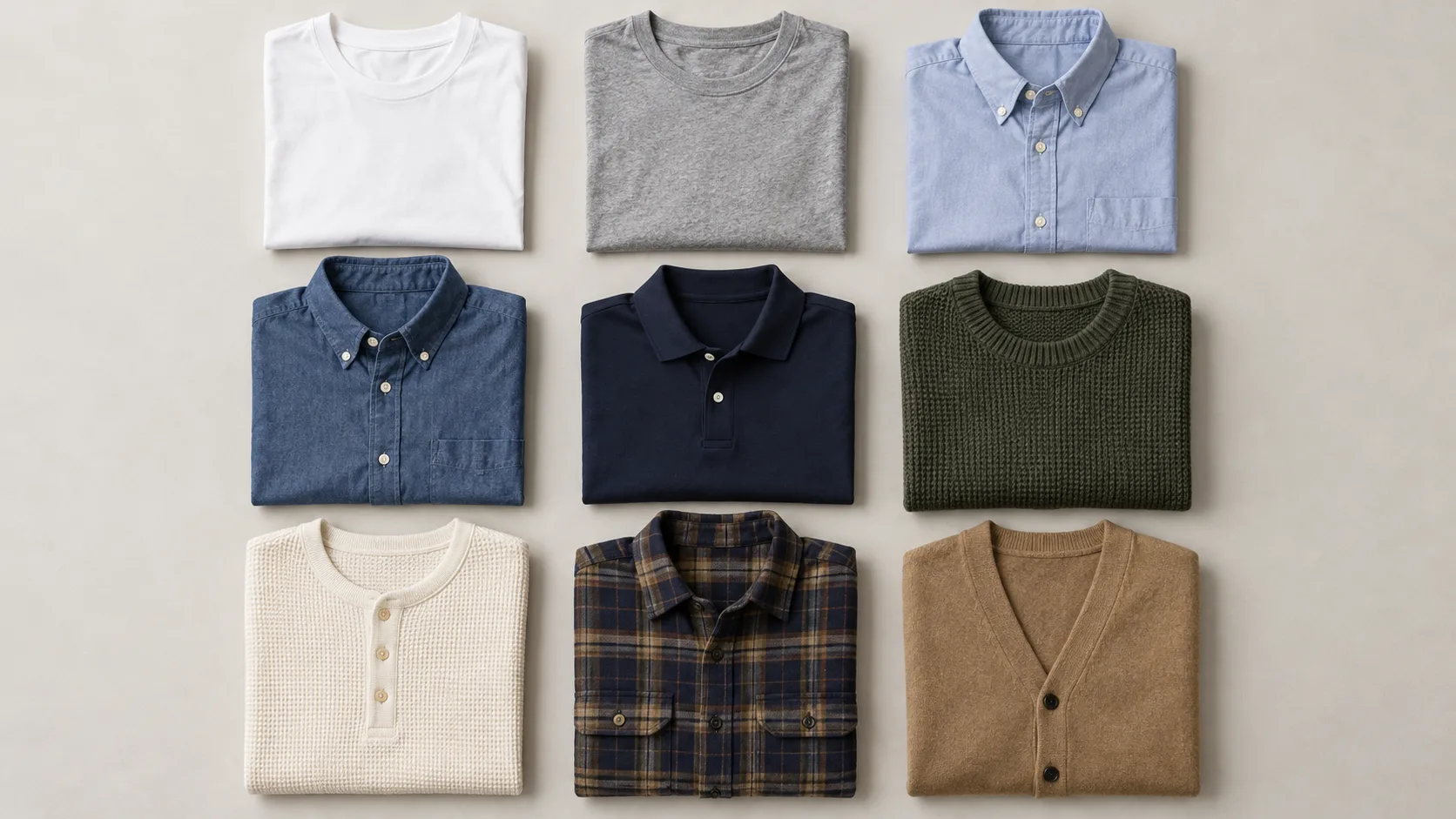
Tops (9 pieces)
| Piece | Qty | Why It’s Here | Typical Price |
|---|---|---|---|
| Crew-neck tee, white | 2 | Layers under a shirt or sweater with no visible neckline, works alone in warm weather | $8 to $25 |
| Crew-neck tee, grey or navy | 2 | Covers the days a plain white tee reads too casual or shows too much under thin fabric | $8 to $25 |
| Oxford button-down, light blue | 1 | Reads smart-casual under a blazer, fine alone with the sleeves rolled | $50 to $98 |
| Oxford button-down, white or ecru | 1 | Works under a suit and with jeans on the same day | $50 to $98 |
| Polo, solid navy or forest | 1 | Splits the difference between a T-shirt and a dress shirt on days that don’t fit cleanly into either | $30 to $70 |
| Crewneck sweater, merino or cotton blend, navy or charcoal | 1 | Adds real warmth without hoodie bulk, layers over any shirt on this list | $60 to $148 |
| Waffle-knit henley, off-white or olive | 1 | Breaks up three flat crewnecks so they don’t look identical in photos | $35 to $68 |
| Flannel or overshirt, check or solid | 1 | Works as a jacket over a tee or as a shirt on its own, doubling its actual use count | $58 to $128 |
| Shawl-collar cardigan or quarter-zip, camel or oatmeal | 1 | Makes a plain tee-and-chino combo look chosen instead of grabbed | $78 to $198 |
Bottoms (6 pieces)
| Piece | Qty | Why It’s Here | Typical Price |
|---|---|---|---|
| Dark indigo straight-leg jeans | 1 to 2 | The one bottom that pairs with every top on this list, no exceptions | $50 to $128 |
| Chinos, stone or khaki | 1 | Reads smarter than jeans without needing a blazer to justify it | $45 to $98 |
| Chinos, navy or olive | 1 | A second neutral so the stone pair isn’t doing all the smart-casual work alone | $45 to $98 |
| Tailored wool-blend trousers, charcoal | 1 | Covers interviews, weddings, and any day jeans-and-chinos isn’t enough | $88 to $228 |
| Chino or twill shorts | 1 | Keeps the whole closet from collapsing the first warm week of the year | $40 to $78 |
| Joggers or a technical trouser | 1 | Travel days, downtime, and the gym-to-errands stretch jeans weren’t built for | $38 to $88 |
Outerwear (4 pieces)
| Piece | Qty | Why It’s Here | Typical Price |
|---|---|---|---|
| Unstructured navy blazer | 1 | Turns any shirt-and-trouser combination into something that reads finished | $128 to $298 |
| Field jacket or trucker jacket | 1 | The mid-layer that covers 55-degree days a heavy coat overdresses | $98 to $248 |
| Wool overcoat, charcoal or camel | 1 | The one splurge worth justifying with the cost-per-wear math above | $228 to $598 |
| Packable technical shell | 1 | The only piece bought purely for weather, and it earns its slot anyway | $68 to $178 |
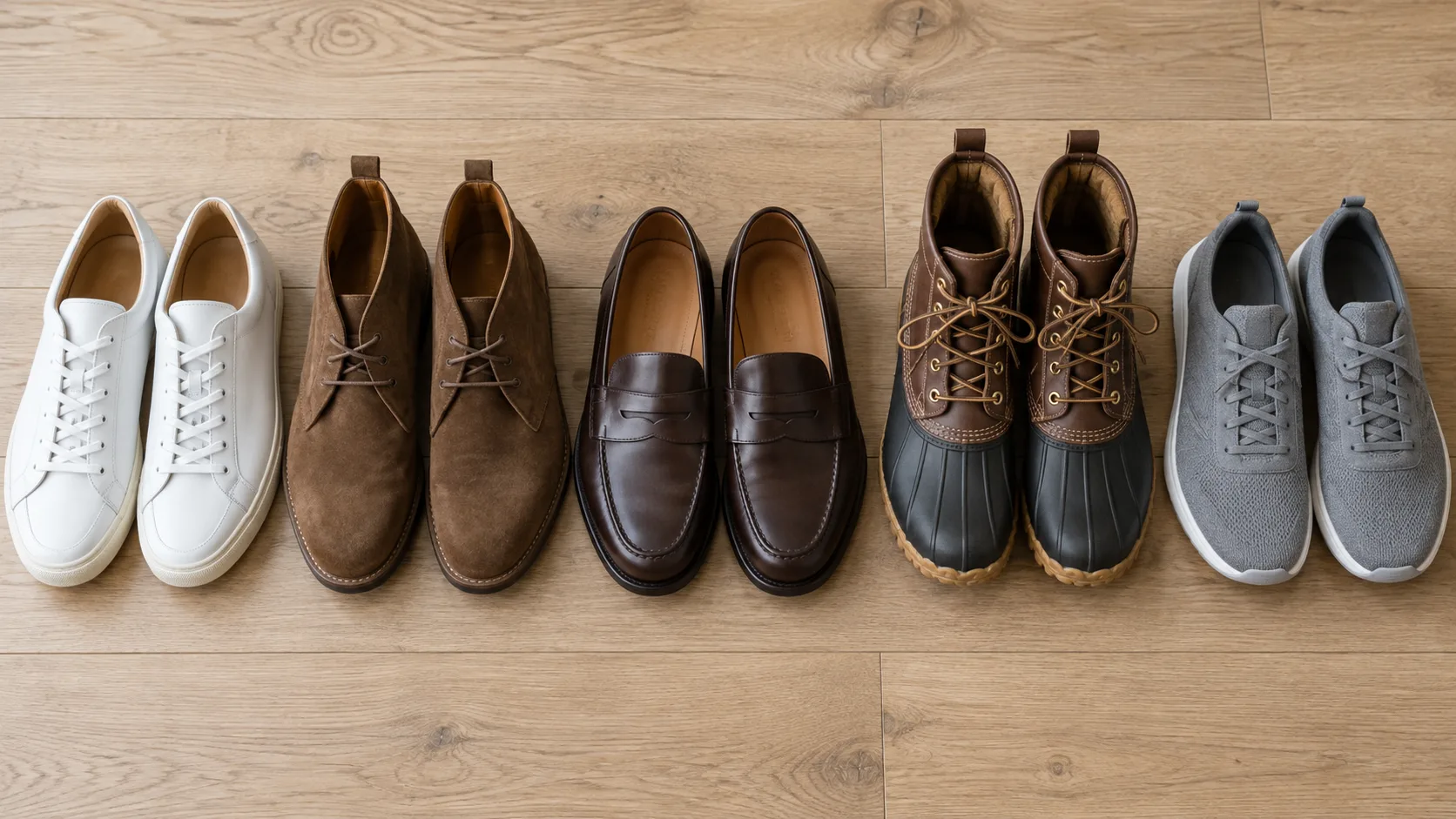
Footwear (5 pieces)
| Piece | Qty | Why It’s Here | Typical Price |
|---|---|---|---|
| White leather low-top sneaker, minimal branding | 1 | Reads current for years specifically because it isn’t chasing a trend | $78 to $178 |
| Brown leather chukka or derby boot | 1 | The default boot between casual sneakers and a formal dress shoe | $148 to $348 |
| Loafers or double monks, dark brown or black | 1 | The dressiest shoe on the list, and the one most men buy too late | $128 to $328 |
| Waterproof duck boot or all-weather boot | 1 | Keeps rain and slush from vetoing an outfit choice all winter | $88 to $198 |
| Minimalist trainer or slide | 1 | Gym, errands, and the days the sneakers above shouldn’t get scuffed | $30 to $80 |
Accessories (6 pieces)
| Piece | Qty | Why It’s Here | Typical Price |
|---|---|---|---|
| Reversible leather belt, brown/black | 1 | One belt instead of two, and it removes the classic mismatch of a black belt with brown shoes | $35 to $88 |
| Simple analog watch | 1 | Reads intentional in a way glancing at a phone never will | $45 to $250 |
| Wool scarf, neutral tone | 1 | The cheapest, fastest way to make a plain coat look chosen instead of grabbed | $28 to $68 |
| Beanie or flat cap | 1 | Solves cold-weather hair without needing a fresh haircut before winter | $18 to $45 |
| Classic-frame sunglasses | 1 | Photographs well in nearly every outfit on this list | $20 to $160 |
| Canvas or leather everyday bag | 1 | Carries the laptop, the gym kit, or the weekend bag without three separate purchases | $48 to $198 |
That’s 30 pieces built to cover a working week, a night out, a cold snap, and a long weekend away, with nothing on it that only earns its keep in one narrow scenario.
Three Outfits From the Same Ten Pieces
The math above is easy to state and harder to picture until it gets walked through with real pieces. Here’s what ten of those items produce across three completely different registers, using nothing bought specifically for any one of them.
Saturday, running errands: grey crew-neck tee, dark indigo jeans, white leather sneakers, and the field jacket if the morning is cool. Four pieces, zero thought required, and nothing here reads like it was picked for anyone but the man wearing it.
A dinner that actually matters: light blue oxford shirt tucked into the charcoal wool-blend trousers, brown leather loafers, the reversible belt turned to its brown side, and the unstructured navy blazer over the top. Five pieces, and not one of them overlaps with the Saturday outfit above, which is the actual point: a completely different register sits nine total pieces away, not a second wardrobe away.
A Tuesday that starts casual and ends at a client meeting: the oxford shirt and the loafers both come back from the dinner outfit, the field jacket comes back from Saturday, and the only new piece added is a pair of stone chinos swapped in for the charcoal trousers. Three of the four pieces already existed in the rotation, and the fourth is a chino that earns its own place on the list above anyway.
Ten pieces, three outfits, and every one of them recombines with the other 20 pieces just as easily. That’s the real payoff of the four-color rule from the ground rules section, and the reason a well-planned 30-item closet outproduces a 100-item one that was never built to coordinate in the first place.
How Do You Start Dressing Like an Adult?
Building the list is the mechanical half of this. The other half is a shift in what actually gets rewarded when clothes get chosen, and it shows up fastest in two places: logos and fit.
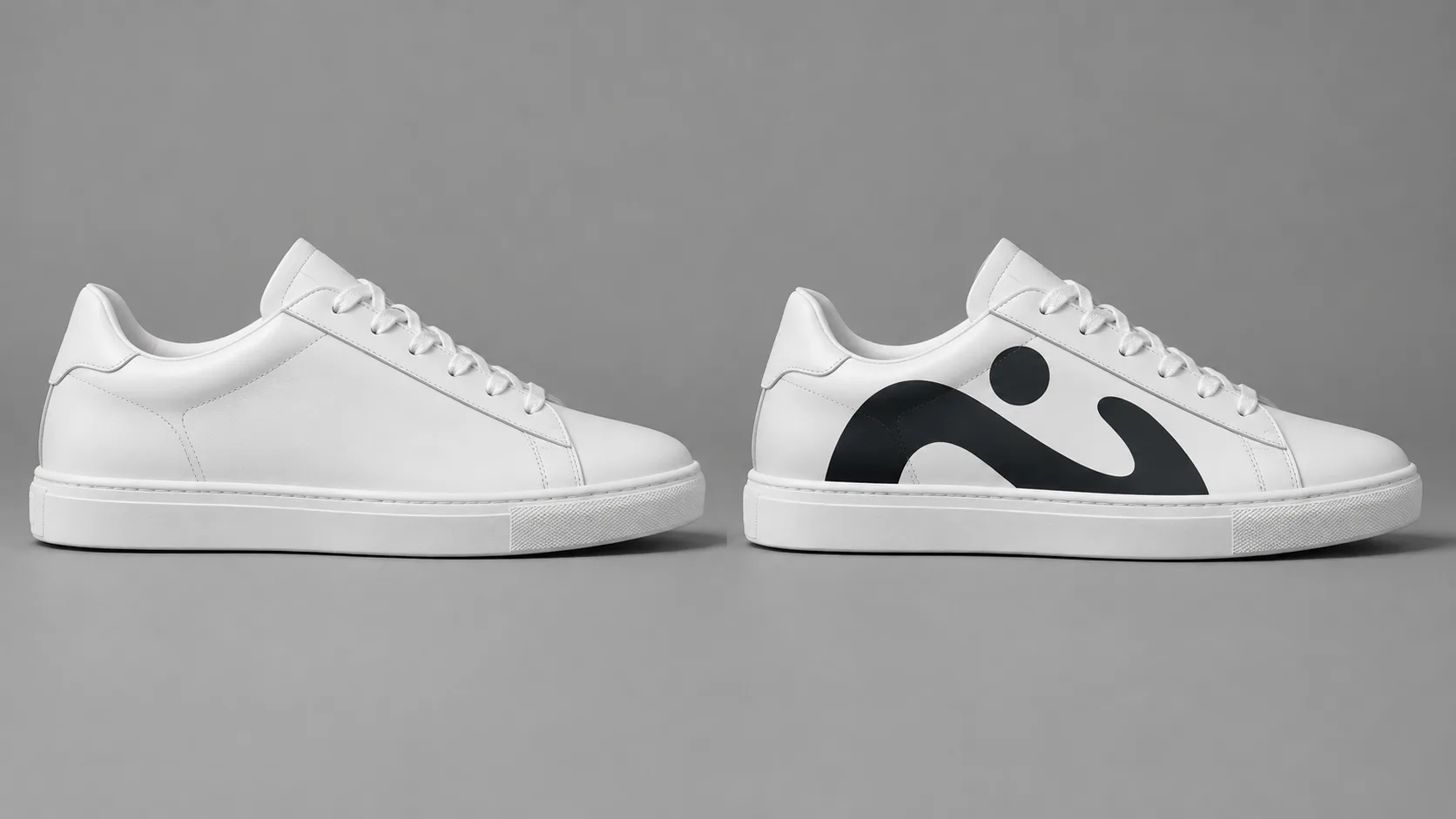
Heavily branded pieces date an outfit faster than almost anything else in a closet, and it’s measurable rather than a matter of opinion. A pair of trainers plastered in one brand’s logo gets tied to the exact year it was popular, so five years later it reads as “that thing everyone had” instead of just a shoe. A plain white leather sneaker with no visible branding sits outside that clock entirely, which is exactly why it earns a permanent slot on the list above instead of whatever’s trending this season. The same logic applies to logo belts, logo hoodies, and anything with a brand name across the chest. None of it is a moral failing. It’s just a wardrobe that expires on a schedule someone else set.
Fit does more for how put-together a man looks than fabric quality, price, or brand ever will, and it’s the cheapest fix on this entire list because a $20 tailoring bill can save a $150 jacket. The most common fit mistake is buying a genuinely good fabric in the wrong size and skipping the tailor afterward. A blazer with sleeves an inch too long, trousers pooling at the ankle, or a shirt collar gaping at the neck reads as careless no matter what the label says inside it, regardless of what the piece cost. One trip to a tailor for the two or three worst-fitting pieces usually does more visible work than an entire extra shopping trip, and a simple trouser hem or shirt taper rarely runs past $20 to $30 at a shop that handles alterations regularly. For shorter men, proportion matters even more than the label, and FashionXD’s fit guides go piece by piece: jeans for short men, shirts for short men, and outerwear lengths for short men.
Cost per wear, covered earlier as a formula, turns into an actual habit here. A trend piece worn four times before it’s embarrassing is a bad trade even at a low price. A well-made piece in one of the four anchor colors, worn 80 times over three years, wins that math every single time, and once it becomes automatic, most impulse buys stop looking tempting on their own.
How Does a Capsule Wardrobe Work for a College Student?
Skip the abstract “college student” persona for a second and look at the actual week: laundry that realistically happens every two or three weeks instead of on demand, a closet that’s really half a closet once a roommate’s clothes are hanging in the same six feet of space, and a bank account that can’t absorb a bad $200 impulse buy the way a working adult’s can. Career fair season adds its own specific panic, since plenty of guys reach twenty years old owning exactly zero pieces that would survive a recruiter’s first three seconds of eye contact.
The investment tier gets cut almost entirely. A $400 wool coat makes no sense on a student budget or a body that might still be changing shape, so that slot gets replaced with a solid $70 to $110 wool-blend coat from the mid tier instead, trading a shorter lifespan for a number that doesn’t wreck a semester. The same logic hits the boots: a $250 pair of resoleable boots is a purchase worth making five years from now, not during freshman year, so a $90 to $150 leather boot fills that slot until the budget catches up.
Laundry running once every two or three weeks instead of on demand changes the math on quantity, not the four colors. Bumping the white and grey tees from two each to three each, and the jeans from one pair to two, solves the actual problem, which is running out of clean basics mid-cycle, without touching the palette that makes the whole thing work.
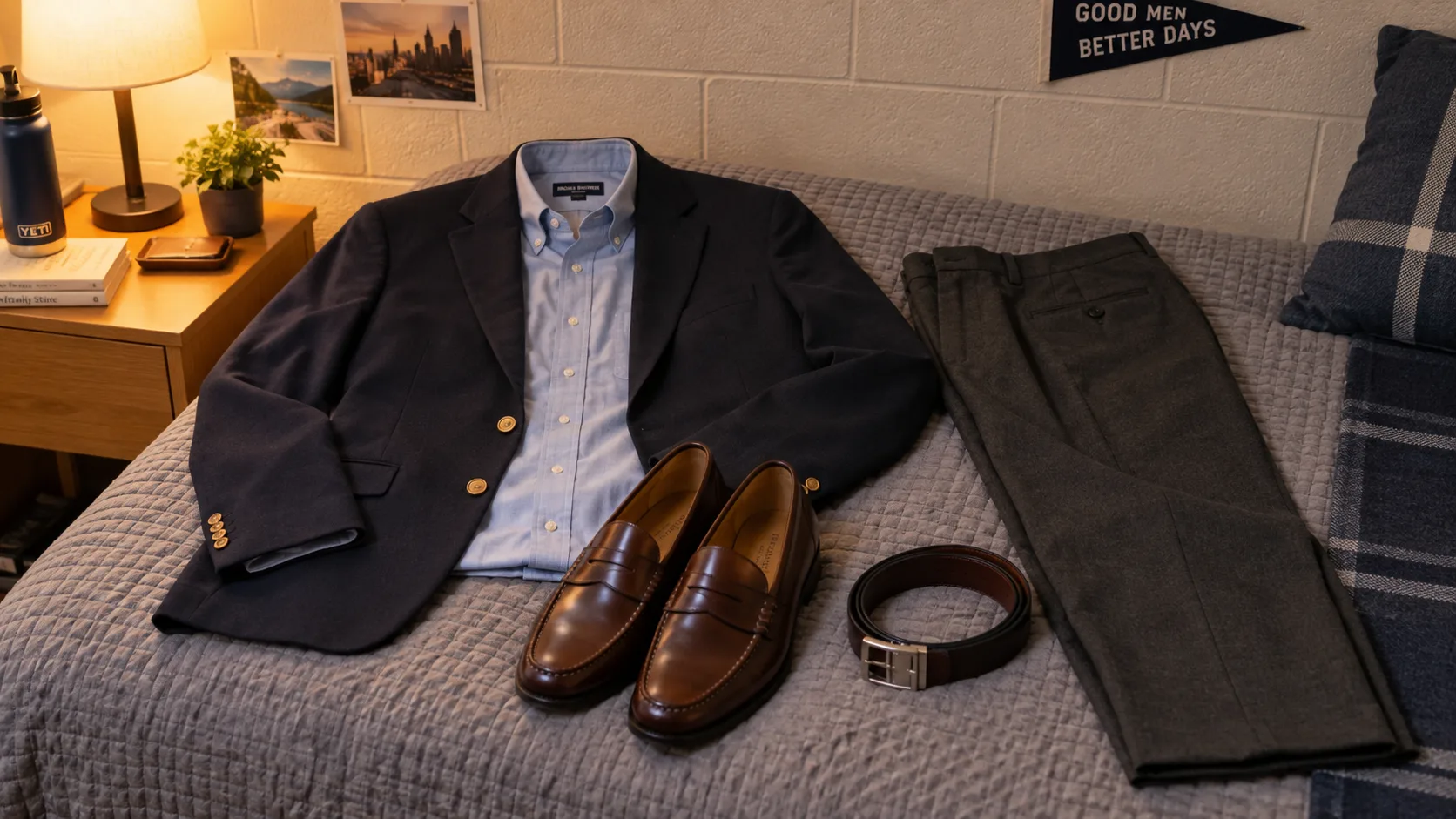
The career fair problem has a specific, cheap fix: the navy blazer and the charcoal trousers already on the list above, worn once with the light blue oxford and the brown loafers, is a complete recruiter-ready outfit that costs nothing extra if the rest of the closet is already built. That single combination, tried on once before the actual event rather than the morning of, is worth more than an entire new outfit bought in a panic the night before.
Space is the real constraint a dorm room adds that an apartment doesn’t. Anything that doubles as its own storage, like a canvas bag that also works as an overnight bag, or boots that don’t need a dedicated shoe rack to stay in shape, earns extra credit in a room with one closet and someone else’s clothes competing for it. The overshirt from the tops list does the heaviest lifting here, working as the layer that gets a cold lecture hall and a laundry day covered at the same time.
Building It for Work, Winter, and Travel
The list above is the base layer, and it’s built to flex rather than get rebuilt from zero every time life adds a new context. Three situations come up often enough to deserve their own breakdown here, even before a fuller version of each gets its own page.
For a Desk Job
Two additions cover most of it: a second blazer in a different texture, like a subtle herringbone or a wool flannel next to the plain navy one already on the list, and one more dress shirt in a pattern beyond the two oxfords already covered. Everything else, the trousers, the loafers, the belt, the canvas bag that already doubles as a laptop carrier, is already sitting in the closet and just gets worn more often. A five-day office week runs entirely on the shirt-and-trouser combinations already covered in the outfit examples above, rotated with the second blazer added in. If the office leans business casual, FashionXD’s business casual guide for short men maps that dress code in full.
For Winter
Three real gaps show up once temperatures actually drop: an insulating mid-layer like a puffer vest worn under the field jacket, thermal or merino base layers for the days actual temperature matters more than looking put together, and a second pair of gloves once the first pair inevitably gets left on a train. Base layer against the skin, an insulating knit or vest in the middle, then the wool overcoat or the packable shell on top, each piece doing one job instead of one heavy coat trying to do all three. The wool overcoat and the waterproof boot from the list above are already doing most of the heavy lifting, so winter mostly adds volume underneath what’s already there.
For Travel
A trip works best as a smaller closet built entirely from pieces that already exist in the 30: five to seven days from a single carry-on. Rolling instead of folding buys real space, packing one outfit more than the trip length in socks and underwear only, and picking one pair of shoes to wear on the plane so it doesn’t eat suitcase space matter more than anything bought specifically for the trip. A trip past a week is usually solved with one hotel laundry run rather than a bigger suitcase, which keeps the entire point of packing carry-on only intact. Nothing on the base list needs replacing for a week away. It just needs a smaller, smarter subset of itself.
Where the Idea Actually Started
A lot of capsule wardrobe content talks like this is a 2020s minimalism invention. It isn’t, and the real timeline is short enough to fit in three lines.
1970s, London. A boutique owner named Susie Faux ran a shop literally called Wardrobe and used the term to describe a small, seasonless base that customers topped up with a few new pieces each year instead of replacing everything on a cycle.
1985, New York. Donna Karan built her entire debut collection under her own name around the same idea: a handful of interchangeable pieces meant to take a working woman from a desk to dinner without a second bag of clothes, the moment this went from one boutique owner’s philosophy to something a mass-market shopper could actually buy into.
Long before either. The V&A’s own collection of tailoring and fashion plates, some dating back to the 1800s, shows how narrow a well-dressed man’s wardrobe used to be by default. A small, coordinated rotation is closer to the historical default. Unlimited wardrobes are the newer, stranger idea.
Quick Questions
These are pulled from the exact phrasing people actually search and ask chatbots, not the questions a writer assumes they’d ask.
How many pieces are actually in a men’s capsule wardrobe? Thirty is the number this list lands on, split across nine tops, six bottoms, four outerwear pieces, five pairs of shoes, and six accessories. That count covers one adult man through four seasons and a normal social life, though it can flex by two or three pieces in either direction depending on climate and how dressy the job actually is.
How many colors should a men’s capsule wardrobe have? Four: navy, charcoal grey, tan or camel, and white or off-white. That’s enough variation to avoid looking like a uniform while keeping every piece compatible with at least two of the others, which is the entire mechanism that makes a small closet outproduce a big one.
What’s a good capsule wardrobe on a budget? The same 30-piece structure, just shopping the budget tier throughout instead of mixing in mid and investment pieces. Uniqlo, Everlane, and Target’s Goodfellow & Co. cover almost every category on the list above for under $50 a piece, and the four-color rule matters more than the price tag at any budget.
What are the essential pants for a men’s capsule wardrobe? Four: dark indigo jeans, stone chinos, navy or olive chinos, and one pair of charcoal wool-blend trousers for anything jeans can’t cover. A pair of shorts and a jogger or technical trouser round out the full six-piece bottoms list above.
Is a capsule wardrobe actually worth it, or just a smaller closet? It’s worth it if the cost-per-wear math actually gets used when buying, not just when reading about it. A 30-piece wardrobe built from the same fast fashion quality as a 100-piece one saves closet space but not money, since the real savings come from pieces that last years instead of months.
What’s the actual difference between a capsule wardrobe and just being a minimalist? Minimalism is about owning less. A capsule wardrobe is about owning less in a coordinated way, so a smaller number of pieces produces more usable outfits than a bigger, uncoordinated closet does. A man can own 15 items and still not have a working capsule wardrobe if none of them match each other.
Do the pieces have to come from expensive brands? No single brand owns the 30-piece breakdown above. The budget, mid, and investment tiers exist specifically so the same categories work at any price point, with fit and fabric weight mattering more than the name on the tag.
How often does a capsule wardrobe actually need refreshing? Basics like tees and everyday jeans typically need replacing every one to two years depending on wash frequency. Outerwear and boots bought at the investment tier often last five years or longer before a refresh makes sense.
Does this work for a bigger or taller build, or is it made for one body type? The categories and the four-color rule hold regardless of build. What changes across sizes and heights is fit, not the list itself, and brands with genuinely extended size ranges are worth prioritizing over ones that only fit one narrow body type well.
A capsule wardrobe for men is a starting inventory rather than a life sentence: thirty pieces, built once and adjusted for a few years instead of rebuilt every season. Get the four colors right, buy the coat and the boots once they can be afforded properly instead of as a placeholder, and the rest of the closet mostly takes care of itself.
Sources checked for this piece: The Woolmark Company’s wool care guide for wool washing, Cotton Incorporated’s CottonWorks learning hub for denim and fabric weight standards, and the V&A’s collection for wardrobe history. Brand pages are linked for click-through reference, not cited as authorities. Prices are realistic 2026 street ranges by category, not single-product quotes.

Pingback: How to Match Clothes Colors for Men: A Simple System