Mastering professional wardrobe proportions for men 5’8″ and under requires precise inseam targeting, adjusted jacket button stances, and scaled shirt collars. This guide details exact fit specifications, tailoring rules, off-the-rack options, and professional footwear pairings.
Business casual short men style relies on balanced vertical proportions rather than standard off-the-rack sizing. Men 5’8″ and under achieve a proper silhouette through 26 to 29-inch inseams, medium-rise trousers, shortened shirt hems that rest at mid-fly, and scaled collar points. Shorts remain inappropriate for traditional offices, though tailored 7-inch chino shorts work in creative spaces.
Proportional Measurement Standards for Men Under 5’8″
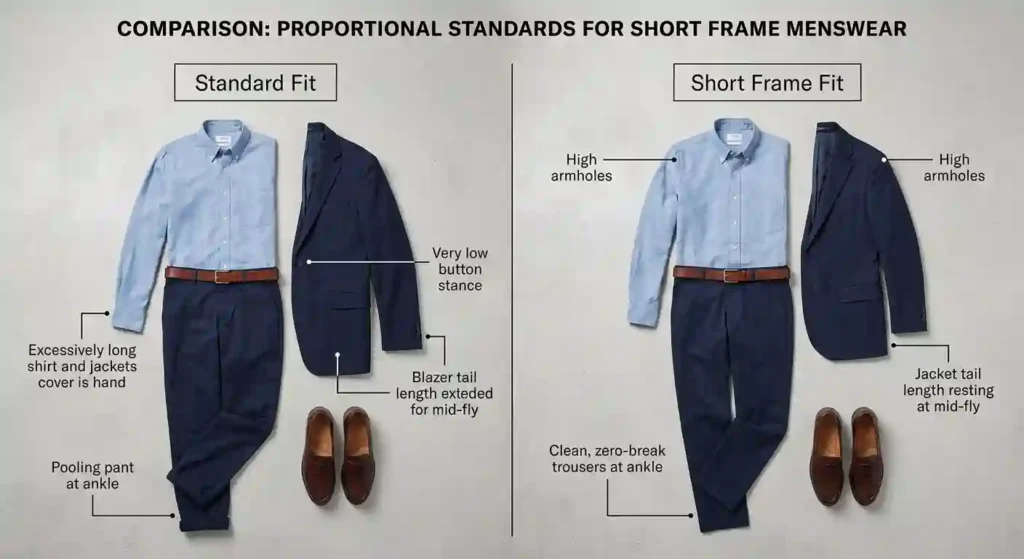
Trouser rise defines the vertical distance from the crotch seam up to the top of the waistband. Break describes the degree of fabric folding where the pant hem meets the shoe instep. Standard clothing manufacturers design patterns for a 5’10” to 6’0″ model, resulting in dropped crotches, low button stances, and excess fabric pooling at the ankles for shorter men.
You’ll need specific garment adjustments scaled directly to your body height and limb length if you want to achieve a clean vertical line.
| Garment Metric | Standard Off-the-Rack (5’10” to 6’0″) | Short-Frame Standard (5’8″ and Under) | Visual Impact of Incorrect Fit |
|---|---|---|---|
| Trouser Inseam | 30 to 34 inches | 26 to 29 inches | Fabric stacks above shoe, shortening leg appearance. |
| Trouser Rise | 10.5 to 12 inches | 9 to 10.5 inches (natural mid-rise) | Low crotch drops leg origin; extreme rise lengthens torso excessively. |
| Untucked Shirt Length | 30 to 32 inches | 26 to 28 inches | Shirt tail covers seat completely, visually truncating legs. |
| Sleeve Length | 33 to 35 inches | 29 to 31.5 inches | Fabric bunches along forearm and hides dress watch faces. |
| Jacket Button Stance | 18 to 20 inches from collar | 16 to 17.5 inches from collar | Low top button drops optical waistline below hips. |
How Should Business Casual Trousers Fit Shorter Men?
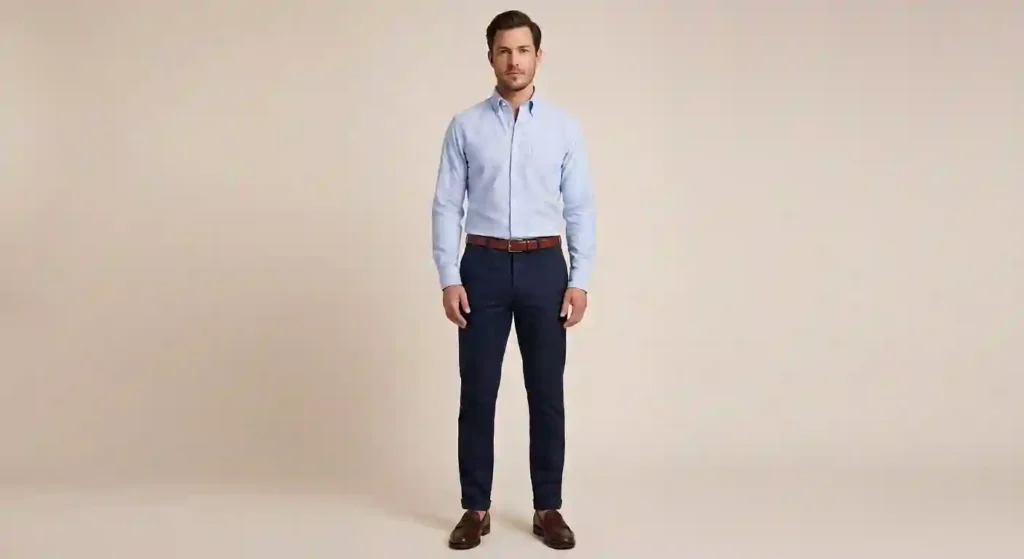
Business casual trousers for shorter men must sit at the natural waist with a 26 to 29-inch inseam and zero break to eliminate fabric gathering at the ankle.
A medium rise positions the waistband right at or slightly above the hip bone. This placement extends the visual origin of the leg without compressing the torso. Low-rise trousers drop the waistband down toward the hips, which makes the legs look shorter relative to the chest. High-rise trousers can work well, but they require a tucked shirt to maintain balance.
Trouser leg openings require a clean taper. Aim for a leg opening between 6.5 inches and 7.5 inches when laid flat. Wide leg openings swallow shoes and create horizontal visual weight at the floor. Avoid trouser cuffs on dress pants and chinos. Cuffs create horizontal lines that cut off leg height at the ankle.
Select flat-front trousers over heavily pleated designs. Deep double pleats add volume across the hips and thighs, widening the lower body profile. Single forward pleats work if you carry extra weight around the midsection, provided the leg maintains a sharp taper down to the hem. For complete sizing and fabric guidelines across chinos and dress slacks, read our pants for short men fit guide.
Are Shorts Acceptable in a Business Casual Office?
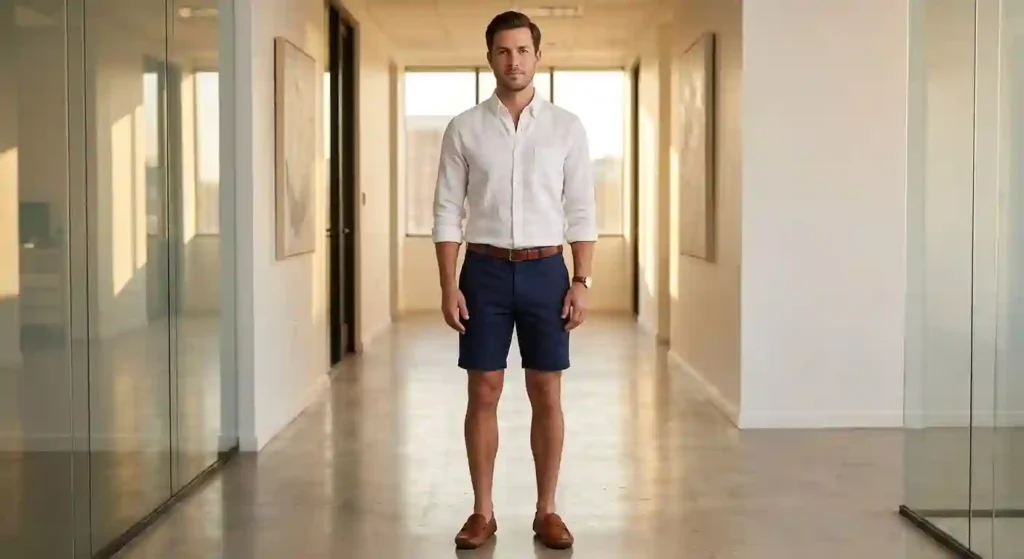
Shorts remain non-compliant in traditional, corporate, or client-facing business casual settings, though modern creative workplaces permit 7-inch flat-front chino shorts during summer months.
Corporate finance, legal, and formal consulting offices enforce full-length trousers year-round. Wearing shorts in these environments violates basic professional expectations regardless of heat levels. Tech companies, design agencies, and informal offices often relax dress codes between June and September.
When wearing shorts in approved office environments, follow strict fit parameters to maintain professionalism:
- Inseam Length: Select a 7-inch inseam. The hem must stop 1 to 2 inches above the top of the kneecap. An 8 or 9-inch inseam covers the knee joint, which visually shortens the lower leg.
- Construction: Choose flat-front cotton twill or stretch-chino shorts in navy, khaki, slate gray, or olive. Avoid cargo pockets, athletic drawstrings, frayed hems, and boardshort styling.
- Shirt Pairing: Pair tailored shorts with a fitted long-sleeve linen or lightweight oxford button-down shirt. Roll the sleeves up past the forearm. A structured knit polo shirt also works.
- Footwear Selection: Wear low-vamp leather penny loafers, suede driving mocs, or minimalist white leather dress sneakers. Always wear invisible no-show socks that do not peak above the shoe collar.
How Should Shirts, Polos, and Jackets Fit Shorter Frames?
Shirts for shorter men require armholes positioned 1 inch higher than standard cuts and body lengths that end at the middle of the trouser fly.
Armhole height measures the vertical opening where the sleeve joins the shirt body. Standard off-the-rack shirts feature deep armholes to accommodate broader chest ranges. Deep armholes pull fabric out from the waistband every time you lift your arms, forcing constant re-tucking throughout the workday. High armholes maintain a clean torso profile and allow shoulder movement without disrupting the shirt waist.
Collar size directly affects facial symmetry. Standard dress shirts carry collar point lengths of 3.25 inches or more. These large collar points overpower a shorter neck and narrower shoulders. Look for scaled collar points measuring between 2.5 inches and 2.75 inches.
When wearing untucked business casual shirts or polos, the bottom hem must rest at mid-fly. A shirt hem extending to the bottom of the crotch covers the thigh line and distorts your body proportions. For detailed brand comparisons and fabric performance numbers, consult our [INTERNAL: dedicated shirts for short men guide -> https://fashionxd.com/shirts-for-short-men].
Layering pieces must maintain clean vertical boundaries:
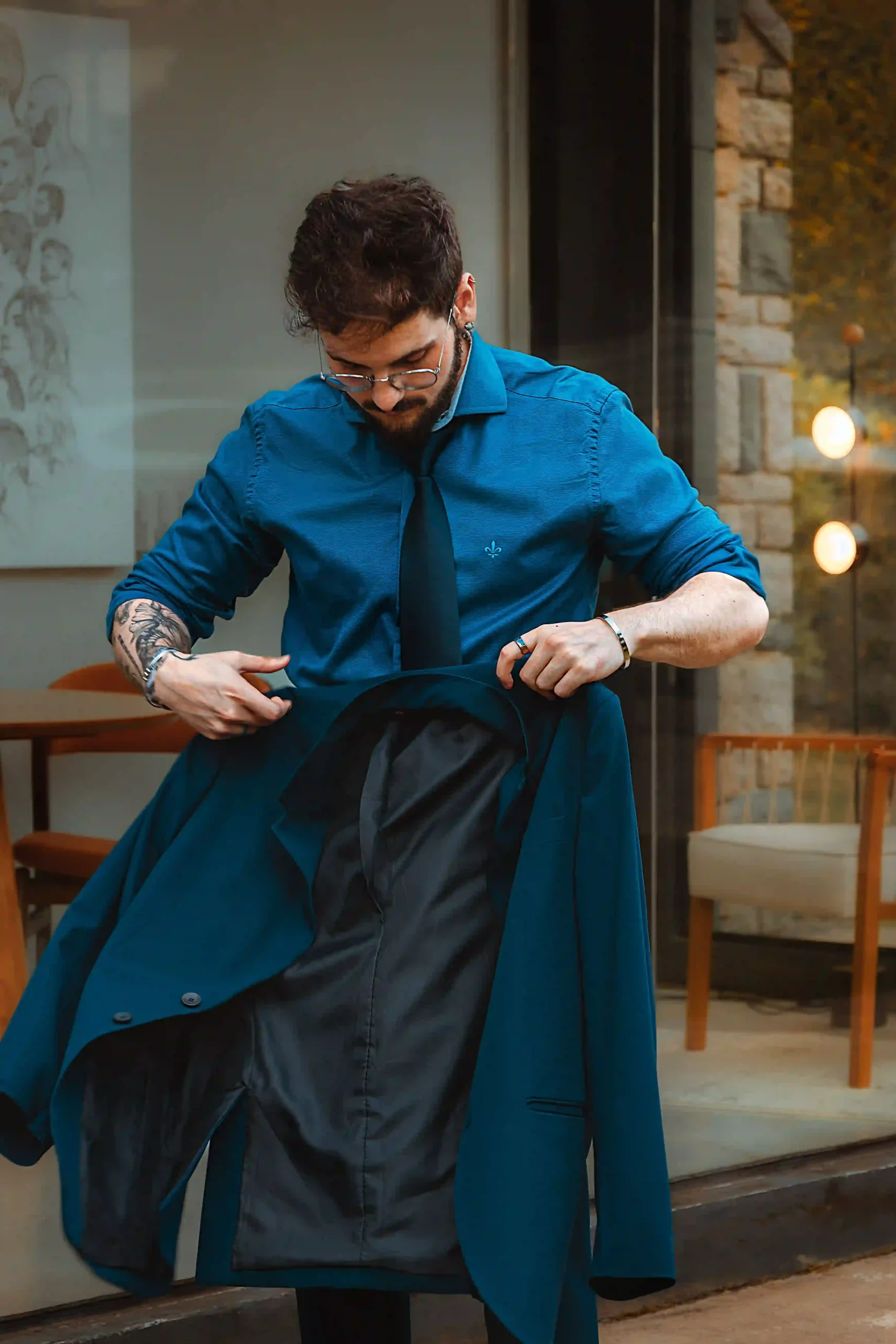
- Unstructured Blazers: Select a short size (such as 38S or 40S). The jacket tail should cover the curvature of the seat without extending past the thumb joint when arms rest naturally at your sides.
- V-Neck Sweaters: Choose fine-gauge merino wool or cotton V-necks. The V-shape draws vertical eye movement down the chest, whereas crewneck collars create a horizontal line across the neck.
- Cardigans and Vest Layers: Keep bottom buttons unbuttoned to form an inverted V shape at the waistline, revealing trouser rise and extending leg lines.
Which Brands Build Business Casual Clothing for Men Under 5’8″?
Off-the-rack specialty brands re-scale garment patterns specifically for men 5’8″ and under, eliminating the need for expensive tailoring alterations.
Traditional menswear retailers construct clothing on a grading scale that simply shrinks chest and waist dimensions while leaving rise depths and armhole positions unaltered. Specialty labels rebuild garment patterns from the ground up.
| Brand Name | Price Range (as of August 2026) | Inseam Sizes Offered | Fit Profile | Primary Materials | Stated Limitation / Flaw |
|---|---|---|---|---|---|
| Ash & Erie | $98 to $158 | 25 to 29 inches | Slim, Everyday | Cotton twill, merino wool, denim | Premium pricing compared to standard mass-market retail. |
| Peter Manning NYC | $98 to $125 | 26 to 29 inches | Standard, Slim | Italian wool, stretch chino | Core inventory levels fluctuate frequently in popular waist sizes. |
| Under 5’10 | $45 to $75 | 25 to 28 inches | Slim, Tapered | Synthetic blends, stretch cotton | Higher synthetic fiber content in entry-level performance lines. |
| Proper Cloth | $98 to $220 | Custom made-to-measure | Custom algorithm | Egyptian cotton, linen, merino wool | Requires self-measurement inputs and a two-week production timeline. |
Ash & Erie priced dress chinos around $98 as of August 2026, offering scaled collar point ratios and shorter sleeve lengths off the shelf.: Peter Manning NYC provides wool dress slacks priced around $125 as of August 2026, constructed with properly proportioned rises.
For readers operating on tight budgets, purchasing off-the-rack pants from Uniqlo (such as the Smart Ankle Pant at $50 as of August 2026) and paying a local tailor $15 for an inseam hem delivers a budget alternative to custom garments. Assemble these options into a flexible rotation using our core men’s wardrobe essentials framework.
Which Footwear Styles Lengthen Optical Leg Lines?
Selecting low-vamp footwear and matching belt tone to shoe color creates an unbroken vertical line that maximizes optical height.
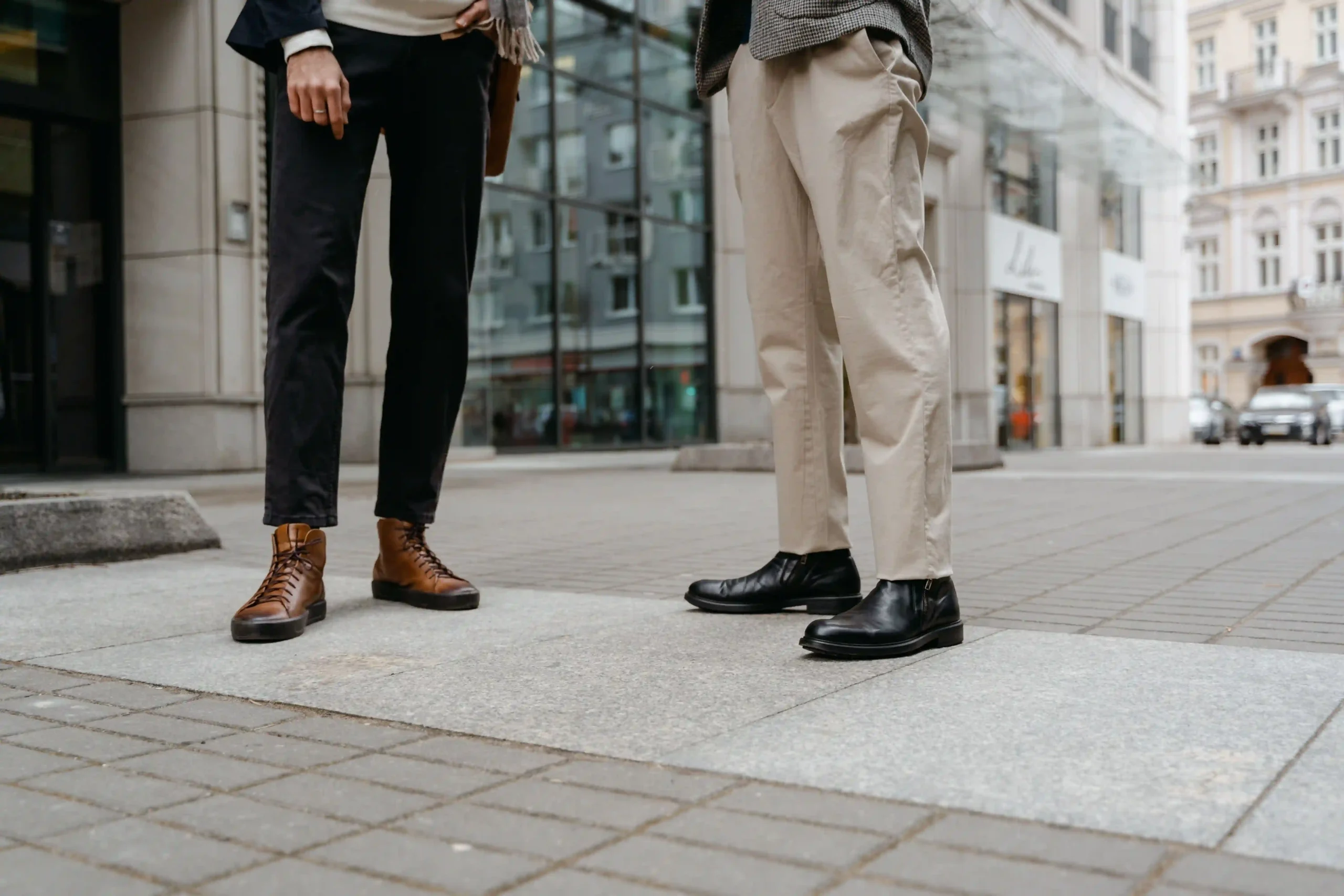
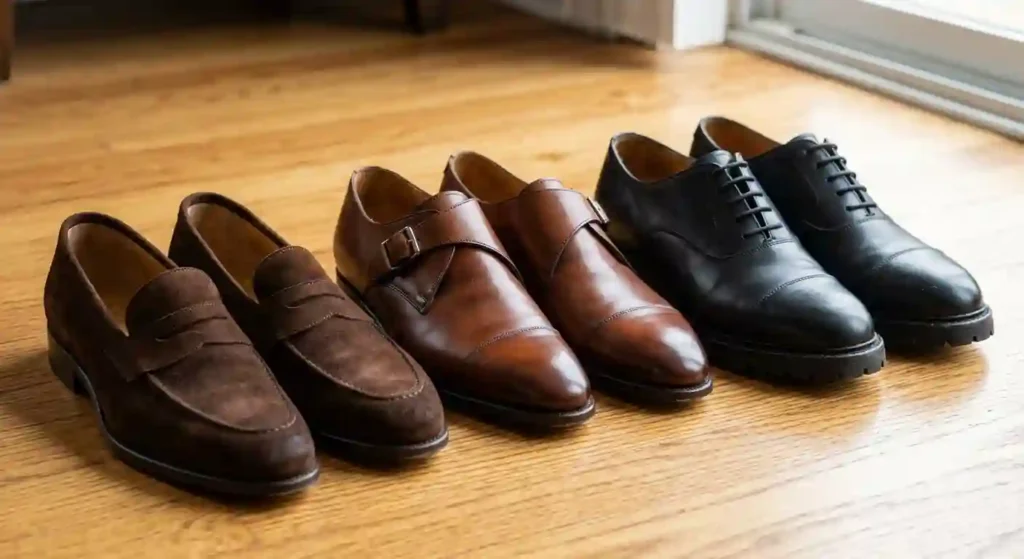
Low-vamp shoes feature a lower throat line across the top of the foot, exposing more of the instep. Suede or leather penny loafers, Venetian loafers, and monk straps show a longer line of foot leather, extending the perceived length of the leg. High-top sneakers, chunky lug-sole dress shoes, and broad square-toe oxfords add bulky horizontal shapes at floor level that shorten lower legs.
Monochrome tonal pairing maintains vertical flow:
- Wear dark brown leather loafers with chocolate brown or charcoal trousers.
- Pair black leather dress shoes with black, navy, or slate gray dress slacks.
- Avoid sharp color contrasts between trousers and footwear. For example, light white sneakers paired with dark navy dress slacks visually cut off the leg line right at the ankle.
- Match belt width to trouser loop scale. Wear 1.25-inch dress belts rather than thick 1.5-inch casual work belts. A thinner belt prevents a harsh horizontal dividing line across your midsection.
What Are the Most Effective Tailoring Alterations for Shorter Men?
Taking standard off-the-rack garments to a tailor adjusts inseam length, sleeve hems, and waist suppression to establish clean proportional balance.
Buying off-the-rack items from mainstream retailers requires targeted alterations to fix standard pattern flaws.
- Hemming Trousers to Zero Break: A tailor shortens pant legs to hover 0.25 inches above the shoe instep. Costs range from $12 to $20 as of August 2026 for plain hems.
- Tapering Leg Openings Below the Knee: A tailor narrows wide openings down to 7 inches, eliminating excess fabric around the calf. Costs range from $25 to $40 as of August 2026.
- Shortening Shirt Sleeves From the Cuff: A tailor removes excess sleeve length at the wrist cuff. Plain cuff shortening costs $20 to $35 as of August 2026, while moving the gauntlet button placket up costs $35 to $50.
- Shortening Blazer Jacket Tails: A tailor trims the bottom hem of a suit jacket or blazer. Costs range from $40 to $70 as of August 2026. Note that tailors cannot move jacket pockets up, so avoid shortening jacket tails by more than 1.5 inches.
- Suppressing Blazer Waist: A tailor takes in the side seams of a sport coat to emphasize a subtle V-taper from shoulders to hips. Costs range from $30 to $50 as of August 2026.