
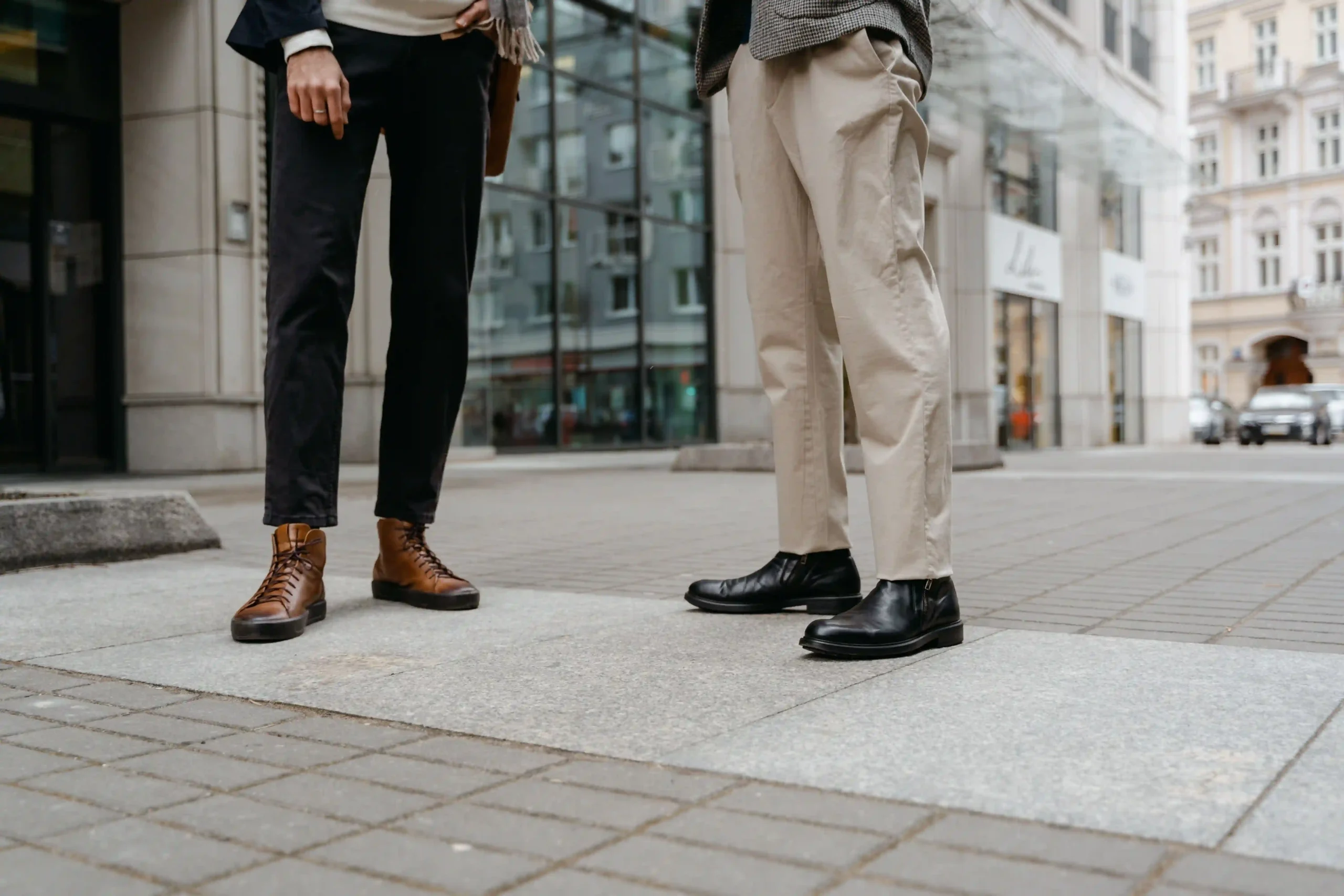
68.9 inches measured by trained staff using a stadiometer from the CDC’s National Health and Nutrition Examination Survey (NHANES) between August 2021 and August 2023.
Half of American men are 5’4” or smaller.
Now take a look at the things that the industry sells to them. The inseam of the men’s denim bottoms at Uniqlo is as low as 32 inches. The majority of the major brands do not go beyond 30.
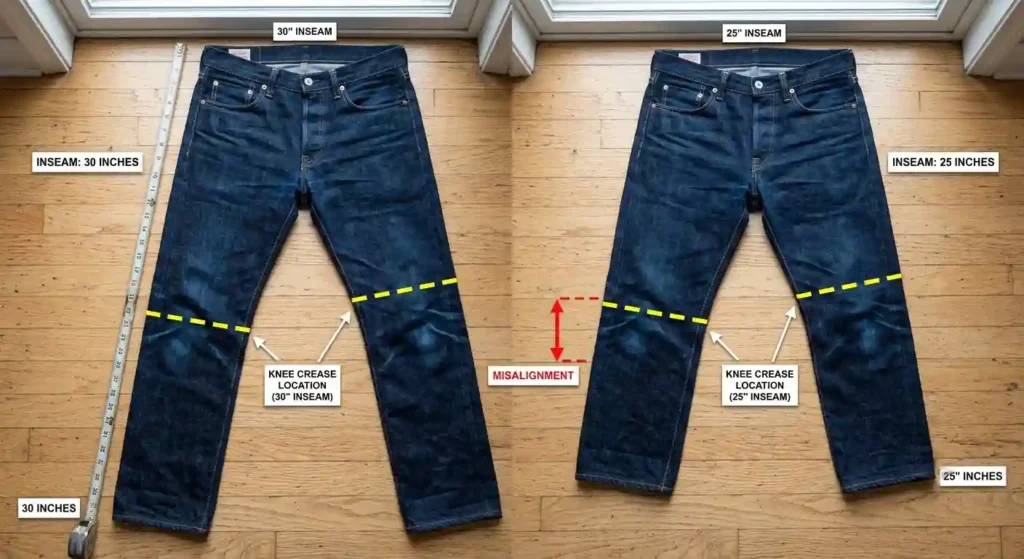
If, when you buy pants for shorter men, they end up pooling around your ankle, sagging through the crotch, and leave the crease around your knee pointing to your shin, it is not your shopping that is the issue. You’re shopping in a pattern that’s made for a man who is taller than half the country.
The numbers in this guide are based on the brands’ own live pages, and were found by the author personally, in August 2026.
Key Takeaways
- The average US adult male is 5’9″ (CDC NCHS, NHANES 2021 to 2023). The mainstream inseam floor is 30 inches.
- Fit turns on three numbers, not one: rise, inseam, and leg opening. Length alone will never save a bad pair.
- Two of the five things that go wrong on a shorter frame cannot be fixed by any tailor, at any price.
- Under 510, Peter Manning New York, and Ash & Erie all bottom out at a 25 inch inseam. Price is what separates them, not fit coverage.
- Uniqlo hems for free on most pants over $29.90, in store or ordered online, but altered items cannot be returned.
- One half-inch cuff lengthens the leg line. Two stacked cuffs shorten it.
Here is how the rest of this breaks down.
Why Pants for Short Men Fit Badly (It Isn’t You)
Quick Answer: Pants for short men fit badly because mainstream brands scale one master pattern up and down from a fit model who is usually 5’10” or taller. Scaling changes the waist and the length. It does not move the knee, the pocket, or the rise. That is why a correctly sized pair can still look wrong on you.
Grading is the term used to refer to the process of scaling a single master pattern into a full size run. It’s efficient, it’s the standard practice and it’s what caused your problem.
Grade Down Relationships within the garment remain in the original body. The knee remains a constant proportion of the leg. The back pocket is fixed distance down from the waistband. Take 4 inches off the entire thing, and those landmarks get thrown into the mix; they don’t go where you’re actually at, they go where the math says they go.
The 30-Inch Floor
The US menswear definition of short is anything under 30 inch inseam. This is USAGE, it is not a preference. With a commercial focus, the lengths 28 and 30 are the two smallest that will be seen in the mass market and many brands do not get much smaller than 30.
The brand says that most retailers begin at 30 inches, but under 510 says on its own storefront: “most men start at 5’4″-5’9″”.
Of course, that’s a marketing statement. Fortunately, it also happens to coincide almost exactly with federal health data, and that’s rare in itself.
What Grading Actually Breaks
The grading is the one thing that is broken.
The description of downstream damage is clearly explained by Ash & Erie on their own website, and it is specific, not vague. The knee of the jean is attached to your shin. Pockets are too low on the legs. The rise is longer for a shorter frame.
All three are structural in nature. They have been determined months before the garment comes to life at the pattern stage, and no amount of correct waist sizing has any effect on them.
This is the part that gets more than half of the guys wrong. A pair can be a perfect fit for your waist, the right spot at the ankle and still be borrowed. You glance into the mirror – something isn’t right, but you have no idea what it is. That is knee point and pocket placement working for you and very few people diagnose it as everyone is taught to look at length.
Our Data: The FashionXD Rack Audit, August 2026
Every single article in this area says “most brands cut off at 30 inches,” however, all of these articles lack examples. Therefore, I went ahead and documented some examples myself.
A very basic example of how to do this: Find the online published size chart for each of your favorite “named” clothing brands. Document the smallest inseam length that was available in their main men’s pants and jeans line. Also document the waist sizes provided by each brand. Determine if each brand uses an exclusive short pattern block (or grade) or simply use a standard graded up from their normal. All of the above information was obtained directly off the brands’ live collections page on August 7, 2026.
| Brand | Shortest inseam | Waist range | Pattern origin | Denim price as listed |
|---|---|---|---|---|
| Under 510 | 25 in | 28 to 40 | Short block, 5’4″ to 5’9″ | Chinos $63, joggers $45, suit pants $75 |
| Peter Manning NY | 25 in | 50 pant sizes total | Short block, 5’8″ and under | Roughly $99 to $125 |
| Ash & Erie | 25 in | 28 to 40 | Short block | $128 to $158 |
| Uniqlo | 32 in | Broad | Graded down | Under $70, plus free hem over $29.90 |
| Mainstream (Levi’s, Bonobos et al) | 28 in typical | Broad | Graded down | Varies |
Three things to sit with about the results:
1. The three brands have come together in their lowest inseam sizes. At that point they all bottomed out at 25″, so we may be looking at a ceiling for the category as opposed to an ongoing drop.
2. The difference in inseam between specialist and mainstream is approximately 7″ (inseam), which is not a rounding error. It is actually two separate garments.
3. And, most importantly, the specialists no longer compete with each other on fit. Instead, they compete on price, and the cost differential is huge: under $51 is what you pay for chino pants at Under 510; Ash & Erie charges $158 for jeans.
The study was performed on August 7, 2026 using each of the brands’ published size charts and collection page(s). Prices used were those reflected on-line at the time of the study, whether or not they included sale prices. Run every quarter since sizing changes are made without announcement. Learn what your clothes should actually fit like here.
The Short-Frame Fit Triangle: Three Numbers
Quick Answer: Three measurements decide whether pants for short men work: rise (where the waistband sits), inseam (crotch seam to hem), and leg opening (hem width laid flat). Get all three right and the pair fits. Get two right and it still looks off, which is why so many guys give up.
Call it the Short-Frame Fit Triangle. It is there for a reason, because length receives all the glory while the other two go about doing most of the heavy lifting.
Rise: The Number Nobody Measures
Rise is from the top of the front waistband, down the front through the crotch, and up the back to the top of the back waistband. It’s the only number on this list that can affect you physically, as it’s the point at which your body appears to split into torso and leg.
A long rise will lower the crotch seam. That’s why a pair can bunch up at the ankle when the length is correct as measured on the tag, and that’s the crotch seam that was dropped.
Peter Manning New York’s entire pant collection is based on this and calls it a “modest rise, proper ankle opening” which means no stacking and no crotch drop.
Very few guides include a discussion of rise or talk about it at all.
Inseam: Measure the Pair, Not Yourself!
Lay your best-fitting pair flat. Measure from the crotch seam straight down the inside leg to the hem. That number is what product pages mean by inseam.
Do not measure your body. Well, more precisely, measuring your body gives you a rough starting point, but body inseam and garment inseam are different quantities and mixing them up is how people end up ordering two sizes wrong twice in a row.
Two men who are both 5’6″ can genuinely need inseams two inches apart. Leg-to-torso ratio varies far more between individuals than total height does, which is exactly why height-based size charts keep failing you.
Leg Opening: Where the Look Is Won
Leg opening is the hem width measured flat, then doubled for the full circumference. It decides whether your pants meet your shoe cleanly or collapse into folds above it.
A wide opening on a short inseam has nowhere to go. It stacks. And a stack of fabric at the ankle draws a horizontal line across the narrowest, most lengthening part of your whole silhouette.
Pro Tip: Take the pair you already like, lay it flat, and write all three numbers on the back of a card in your wallet. Four minutes, once. Then the next time you are standing in a store, or reading a product page at one in the morning, you have a spec sheet instead of a hunch. This one habit has saved me more returns than any brand recommendation in this article.
| Measurement | Where to take it | Short-frame target | What goes wrong | Fixable by a tailor? |
|---|---|---|---|---|
| Rise (front) | Waistband top to crotch seam | Mid rise | Crotch drops, leg bunches, torso reads long | No |
| Inseam | Crotch seam to hem, flat | 25 to 29 in for most men under 5’8″ | Pooling, stacking, dragged hems | Yes |
| Leg opening | Hem width flat, doubled | Narrower as inseam shortens | Fabric stacks above the shoe | Partially |
| Knee point | Widest point of thigh taper | Should land on your knee | Crease hits the shin, reads borrowed | No |
| Pocket placement | Back pocket top to waistband | Proportional to your seat | Pockets sit low, seat looks short | No |
Two of those five are permanent the moment the garment is cut. That is the entire argument for buying short rather than buying long and hoping a tailor can rescue it.
Proportion Rules for Shorter Frames
Quick Answer: The proportion rules for shorter frames that actually work are about continuity, not illusion. An unbroken color line from waist to shoe lengthens a silhouette far more than vertical stripes, contrast belts, or any of the height hacks the internet keeps recycling.
The 60% Leg Line Rule
Second framework, and it is simpler than the first. Look at yourself from the waistband down. That block is your leg line. Every horizontal interruption inside it, whether a cuff, a fabric stack, a contrasting shoe, or a hard break at the ankle, chops the block into smaller pieces. Smaller pieces read as shorter.
The 60% Leg Line Rule: aim for the leg block to occupy roughly the bottom 60% of your outfit, uninterrupted. You raise that ratio by choosing a mid-to-high rise and by tucking your shirt, not by anything you do below the knee.
Which is worth pausing on, actually. Tucking a shirt does more for apparent height than any pair of pants you will ever buy, because the tuck is what sets the split point. Everything else is downstream of that decision.
Color Continuity Beats Pattern Tricks
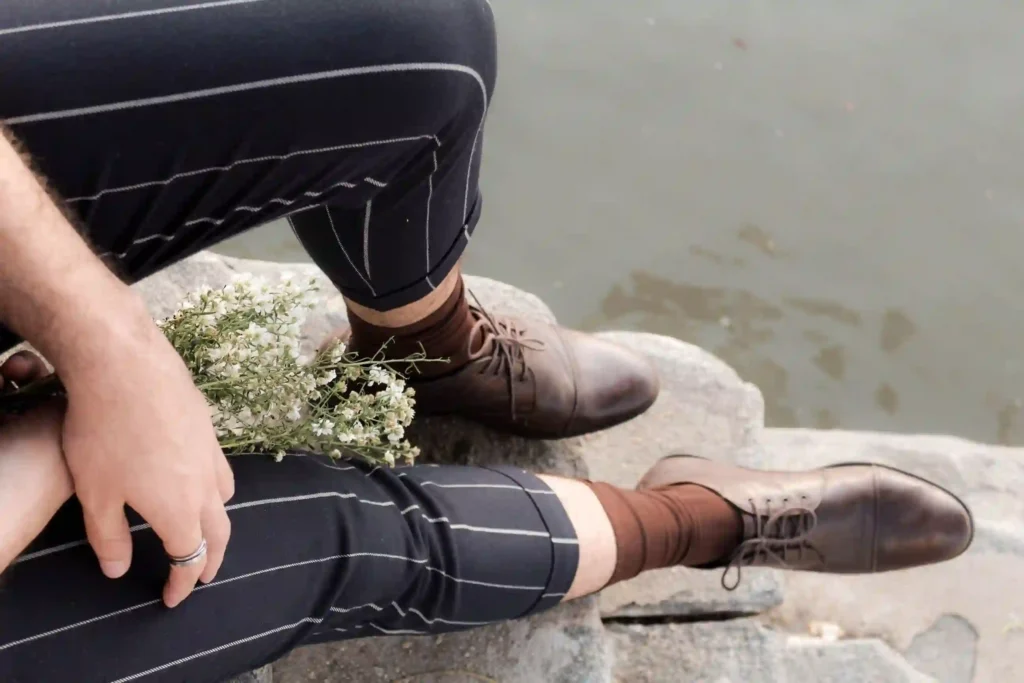
Match your trouser color to your shoe color and you delete the sharpest horizontal line in the entire outfit. Navy trousers with brown boots create a hard stop right at the ankle. Navy trousers with navy or black footwear do not.
Tonal dressing works on the same principle. It is not about looking monastic. It is about removing edges.
What to Ignore?
Vertical stripes show up in every short-men guide like scripture. The effect is real and it is small, and fit beats it every single time. Given a choice between a striped pair that fits badly and a solid pair that fits, take the solid pair and do not think about it again.
Same goes for the blanket bans: no patterns, no cuffs, no light colors. Lazy advice. A light chino cut correctly at the rise, inseam, and leg opening will beat a black pair that misses on any one of them. How does proportion play out across every menswear aesthetic? Read about it here.
Best Jeans for Short Men: Fits and Washes
Quick Answer: The best jeans for short men are slim straight or slim tapered, in a mid rise, in a dark or raw wash, at an inseam that needs no more than a single cuff. Fit does roughly 80% of the work. Wash handles the rest.
Denim is where most guys start and where the gap hurts most, because denim is stiff enough to hold a bad shape rather than draping past it. A chino forgives. A raw 13oz jean tells the truth.
Fits, Ranked for a Short Frame
- Slim straight. One continuous line from knee to hem. Safest pick for most builds and the one I would default to.
- Slim taper. Better if you carry thigh. The taper narrows the hem so it clears your shoe without stacking.
- Skinny. Genuinely good on slim legs. Fails badly on athletic ones.
- Straight. Fine, but the wider hem needs a shorter inseam to avoid pooling.
- Relaxed and baggy. Adds horizontal volume exactly where a short frame cannot afford it.
Peter Manning tells its own customers roughly the same thing, steering most men toward slim straight or slim tapered and away from baggy regardless of build. When a brand that sells you the jeans is talking you out of a category, that is usually worth listening to.
Short Men Jeans 28 Inseam: The Honest Middle Ground
Short men jeans 28 inseam is the most common entry point into this whole category, and it deserves a straight answer rather than an upsell.
It is a real option. 28 is the shortest inseam most mainstream brands stock, so you can find it at Levi’s, Bonobos, and plenty of others without leaving the high street or paying specialty prices.
It is also still a graded-down pair. The length is right. The knee point and pocket placement remain drafted for a taller man. So a 28 from a mainstream brand is a genuine improvement over a 30, and it is not the same object as a pair cut on a short block.
If you are deciding right now: the mainstream 28 is the budget-sane move and the correct first experiment. The specialist 25 or 26 is the fix.
Wash and Fabric
Dark and raw washes forgive more, because they hide the fold lines a short inseam creates at the ankle. Light washes and heavy whiskering do the opposite, pulling the eye to exactly the seams you want quiet.
On weight: denim is graded in ounces per square yard, and weight plus weave structure determine whether a leg drapes or holds a crease. Peter Manning’s original PMNYC jean, made with Brooklyn Denim Co., runs 100% cotton at 13oz, which is a solid all-season midweight. CottonWorks (cottonworks.com) publishes proper technical references on weave and fabric weight if you want the material science rather than blog folklore.
For the wool trousers further down, the Woolmark Company (woolmark.com) is the equivalent authority on fibre behaviour and care. Explore denim in alternative and grunge menswear.
Chinos, Trousers, and Joggers
Chinos
Chinos are the most forgiving category in pants for short men, because cotton twill drapes rather than stacking. Look for a flat front, a mid rise, and a leg opening narrower than your denim’s.
Pleats are not banned, whatever you have read. A single forward pleat adds room at the hip without adding width at the hem, which is a genuinely useful trade on a shorter frame. Double pleats do add visual bulk. That is the version worth skipping.
Price check, since this is the category where the spread is widest: as of August 2026, Under 510 lists its lightweight stretch chino at $63, Ash & Erie lists its lightweight signature chino at $138. Same category, more than double the price, both cut on short blocks. That is not a quality gap you can assume from the number alone.
Dress Trousers
This is where hemming genuinely shines, because dress trousers are typically straight-legged and your tailor is not fighting a taper. Ask for a slight break or no break. A full break folds fabric across the top of your shoe and eats an inch of visible leg for no benefit.
Wool holds a clean line better than most synthetics, which matters more on a short frame where every fold registers. If you want the history of how the modern trouser silhouette arrived at all, the V&A collections archive (vam.ac.uk/collections) is the best free primary resource in English and it is genuinely worth an hour.
Joggers and Technical Pants
Elastic hems solve the leg opening problem automatically, which makes joggers unexpectedly short-frame friendly. They are also the cheapest way into this category: Under 510 lists its flex jogger at $45, Ash & Erie its hybrid jogger at $88.
The trap is rise. Plenty of joggers run a dropped crotch as a design feature, and a dropped crotch on a short leg is the worst available combination. Check the rise before you check anything else. If the crotch already sits low on a 6’1″ fit model in the product photo, work out where it lands on you. Technical and utility-driven menswear are also trending in men’s fashion.
Hem It, Cuff It, or Send It Back
Quick Answer: Cuff if the pair is under one inch too long. Hem if it is one to three inches too long and straight-legged. Send it back if it is more than three inches too long, tapered, or wrong in the rise, because rise cannot be meaningfully altered.
The process, in order.
- Put them on with the shoes you will actually wear. Not socks. Shoes move the hem point by up to an inch and this is the step everyone skips.
- Measure the excess. Pinch the fabric at the hem and measure what you would need to remove for a slight break.
- Check the taper. Look at the leg from knee to hem. If it narrows noticeably, hemming will drag a wider section of leg down to your ankle.
- Check the rise. Is the crotch seam sitting where your crotch is? If it hangs low, stop. Return them. Nothing downstream fixes this.
- Decide. Under an inch, cuff once. One to three inches on a straight leg, hem. Tapered and over two inches, send it back.
- If hemming denim, ask for a chain stitch or an original hem. Costs more, preserves the character of the factory edge.
Pro Tip that nobody in this niche mentions: Uniqlo’s men’s inseams stop at 32 inches, which looks disqualifying. But Uniqlo runs a free alteration service on selected pants priced $29.90 and above, using a normal lock stitch, and charges only $6 for a blind stitch or on items under $29.90. You can select the alteration when ordering online (add three to seven business days), or walk an online purchase into a store and have it hemmed there. Select denim styles even qualify for a chain stitch, which is the traditional denim hem.
The catch, and it is a real one: altered items cannot be returned or exchanged, whether you bought them in store or online. So Uniqlo is only the cheap route once you already know your number. Which brings us back to the card in your wallet.
What a Tailor Cannot Fix
A tailor can shorten a leg, taper a leg, and take in a waist. A tailor cannot move the knee point, relocate the back pockets, or shorten the rise without effectively rebuilding the garment.
Ash & Erie makes the same argument about hemming and I think they are right: it delivers correct length while widening the leg opening relative to that length, which shifts the proportions in a direction that usually does not look good.
So the honest trade-off for this entire category is that buying short-specific costs more and solves problems no alteration can reach, while buying mainstream and hemming is cheaper and solves exactly one of the five.
A Real Case, Including the Unflattering Part
Peter Manning New York launched in 2012 and builds exclusively for men 5’8″ and under, now offering 50 pant sizes with inseams starting at 25 inches and a showroom in the Flatiron district. On paper it is the most complete answer in the category.
Brett at The Modest Man, who is 5’6″ and around 125 pounds, has worn and reviewed essentially the entire Peter Manning line, unsponsored. His conclusion was mixed. A few pieces earned permanent closet space. He passes on most of the collection, citing fit that varies between items, some odd fabric and color choices, and high prices.
I am including that because it is the part a pure recommendation post would leave out. Cutting a dedicated short block gets a brand past the structural problem. It does not automatically make every garment good, and the specialty premium does not come with a guarantee. Buy one pair, wear it for a month, then commit.
Five Mistakes That Make Short Pants Look Worse
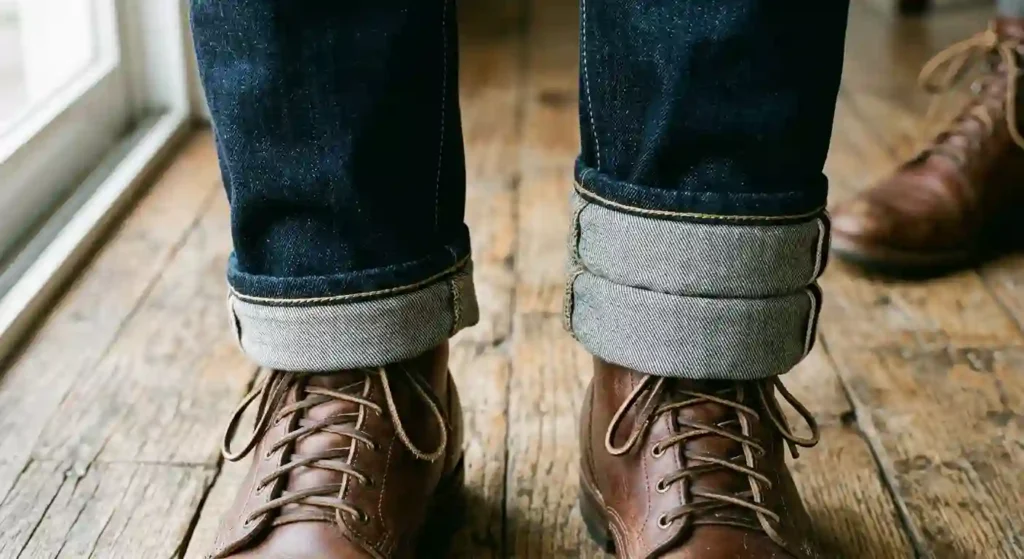
- Stacking cuffs. Two or three rolls build a wide horizontal band at the ankle. One narrow cuff, or none at all.
- Buying to height charts. Height charts ignore leg-to-torso ratio, which is the variable that actually decides your number.
- Treating rise as a style preference. Rise is a fit measurement first. Style is a distant second.
- Hemming tapered pants aggressively. You end up with correct length and an ankle opening built for a taller man.
- Contrast footwear by default. A hard color break at the shoe cuts the leg line at its very lowest point.
Pants for Short Men Comparison
Scores below use a published rubric rather than star ratings, because I would rather show you the math than ask you to trust a number.
Short-Frame Score, out of 10: inseam floor (0 to 4 points), pattern origin, meaning short block versus graded down (0 to 3), size depth (0 to 2), and fits off the rack with no alteration (0 to 1).
| Option | Key feature | Best for | Price (Aug 2026) | Short-Frame Score |
|---|---|---|---|---|
| Under 510 | 25 to 28 in inseams, block cut for 5’4″ to 5’9″ | Best value in the specialist tier | Joggers $45, chinos $63, suit pants $75 | 10/10 |
| Peter Manning NY | Inseams from 25 in, 50 pant sizes, modest rise by design | Widest size coverage, NYC showroom | Roughly $99 to $125 | 10/10 |
| Ash & Erie | 25 to 29 in inseams, waists 28 to 40 | Denim rotation, if budget allows | Denim $128 to $158, joggers $88 | 10/10 |
| Mainstream at 28 in | Levi’s, Bonobos and similar | Testing whether length alone fixes your complaint | Varies | 3/10 |
| Uniqlo plus alteration | 32 in floor, free hem over $29.90, chain stitch on select denim | Cheapest route once you know your number | Usually under $70 | 2/10 raw, higher once hemmed |
Our pick: Under 510. Although all three specialists have a perfect match of fit/coverage we see it as an identical issue to be solved. There is no choice between “good” fit and “better” fit there is a difference in what you will pay for it. If this is your area of interest begin at the low end.
But if you have never owned a pair cut short and you are not ready to spend, buy a mainstream 28 first. That single experiment tells you whether your complaint is length or pattern, and it is the cheapest diagnostic in menswear.
Prices and inseam ranges verified against each brand’s live collection pages on August 7, 2026, including sale pricing active that day. FashionXD has no affiliate relationship with any brand named on this page.
Frequently Asked Questions
What is the best jean fit for short guys?
Slim straight is the best choice for short men. This fit removes unnecessary bulk but does not hug; it draws only one single line from knee to hemline, making a single vertical element as opposed to the three-segmented version. Slim tapers come in the second place if your thighs are athletic because the taper gives enough space for your feet to appear without stacking. Skinny jeans suit well to slim men but poorly to muscular individuals. Baggy and relaxed cuts give too much horizontal volume at the bottom of your legs where you have no opportunity to absorb it.
How should short men cuff their jeans?
Do not cuff more than once, but the length should be from half an inch to one inch. The single cuff appears above the shoe and shows the ankle area, thus lengthening the leg line. Double or triple cuffs, however, shorten the line, making thick horizontal layer at the narrowest place of the leg. Easy rule: If you need three rolls for making your foot fit inside the leg, then this pair of jeans needs not cuffing but hemming.
What inseam should a 5’6″ man wear?
Most men 5’6″ tall have the inseam of 27 to 29 inches. The height itself is not a good estimator for finding the proper inseam because the proportion of leg to torso varies considerably. So, even people of the same height might differ by two inches of inseam. For measuring your inseam, measure the inside leg from the crotch seam to the hem. All three brands above offer sizes down to 25 inches.
Are 28 inseam jeans considered short?
Yes. Anything under 30 inches counts as a short inseam in US menswear, and 28 is the shortest length most mainstream brands stock. Short men jeans 28 inseam is a real category with real availability at Levi’s, Bonobos, and similar. Just remember those pairs are graded down from a standard block, so the knee crease and pocket placement remain drafted for a taller man even when the length is finally right.
Should short men wear high rise or mid rise pants?
Mid rise is the safe default. It sits at or just below the navel and splits the body closer to a leg-favoring ratio without compressing your torso. High rise lengthens the leg block further but shortens the upper body in exchange, so it suits men who already have a long torso and comparatively short legs. Low rise is the one to avoid outright, since it drops the split point and shortens the leg line directly. Peter Manning builds its entire pant line around a modest rise for exactly this reason.
Is it worth hemming pants instead of buying short inseams?
It depends almost entirely on leg shape. Hemming a straight leg is cheap and clean. Hemming a tapered leg is where it goes wrong, because shortening the leg drags a wider section of fabric down to your ankle, leaving you with correct length and an opening built for someone taller. Rise, knee point, and pocket placement cannot be altered at all, which is the ceiling on what any tailor can do. If you are near a Uniqlo, their free alteration on pants over $29.90 makes the hemming route unusually cheap, with the caveat that altered items cannot be returned.
What’s the best way to shop for pants for short men online without returning everything?
Shop to three flat measurements rather than to a size. Measure the rise, inseam, and leg opening of a pair you already love, write those three numbers down, and buy only from product pages that publish comparable flat measurements. A brand that publishes a full measurement chart has thought about fit. A brand that lists only waist and length is asking you to gamble, so factor return shipping into the price before you click.
Why do my pants bunch at the ankle even when the length is right?
Two culprits, and length is neither of them. Either the leg opening is too wide, so the excess fabric has nowhere to go once it meets your shoe and collapses into folds, or the rise is too long, which drops the crotch seam and effectively adds leg fabric your inseam number never counted. Check the leg opening first, since it is the easier of the two to measure and the faster of the two to rule out.
Do vertical stripes actually make short men look taller?
Slightly, and much less than the internet claims. The lengthening effect of a vertical stripe is real but mild, and an unbroken color line from waist to shoe beats it comprehensively. Matching your trouser color to your footwear removes the sharpest horizontal break in the outfit, which does far more work than any print. Fit first, color continuity second, pattern a distant third.
How much do pants for short men cost from a specialty brand?
Considerably less than the category’s reputation suggests, at the value end. As of August 2026, Under 510 lists joggers around $45 and chinos around $63, while Ash & Erie lists denim between $128 and $158 and joggers at $88, with Peter Manning falling roughly in between. Specialty pricing runs above mass market because these brands draft a separate pattern block instead of shortening an existing one, and that engineering cost lands in the retail price. The spread between specialists is wider than most people expect, so shop the tier rather than assuming.
Conclusion
Three things worth taking away. The sizing gap is structural rather than personal: the CDC puts the average American man at 5’9″ while the mainstream inseam floor sits at 30 inches, and that mismatch explains almost everything you have experienced in a fitting room. Fit is a three-number problem, and rise is the number nobody checks. And the specialist tier has converged on a 25 inch floor, which means your real decision is now about price, not about who fits you better.
Go measure a pair you already like. That is the whole starting point for buying pants for short men that work, and it costs you four minutes.
Next steps, in the next ten minutes:
- Lay your best-fitting pair flat and record rise, inseam, and leg opening.
- Save those three numbers in your phone notes, then write them on a card for your wallet.
- Open one brand from the comparison table and check its published chart against your numbers before you buy anything.
Once you have your three numbers, the rest of your wardrobe gets easier fast. Our men’s wardrobe essentials guide covers what to build around them.
Author Bio
Written by Traumatized Ghoul, @ghoulstuffs
Ghoul runs FashionXD, where he writes about menswear for guys who have run out of patience with generic advice. He built the FashionXD Rack Audit after noticing that every article about pants for short men repeated the same unsourced claim about inseam floors, and he now re-runs it quarterly against brands’ published size charts rather than against other people’s blog posts. He works in measurements first and opinions second, on the theory that a flat tape settles most style arguments faster than a paragraph does. He writes at FashionXD and films at @FashXD on YouTube.
Disclosure: This article contains no affiliate links. FashionXD earns nothing from any brand named here. Pricing and sizing data were verified directly against brand websites on August 7, 2026.
References
- Centers for Disease Control and Prevention, National Center for Health Statistics. FastStats: Body Measurements. NHANES, August 2021 to August 2023.
- Under 510. Pants for Short Men collection, sizing filters and pricing. under510.com, accessed August 7, 2026.
- Peter Manning New York. Pants, Jeans and Denim collections, sizing and construction detail. petermanningnyc.com, accessed August 7, 2026.
- Ash & Erie. Pants and Jeans collection, inseam filters and pricing. ashanderie.com, accessed August 7, 2026.
- UNIQLO US. Alterations, in store and online, customer service documentation. faq-us.uniqlo.com, accessed August 7, 2026.
- The Modest Man. Peter Manning review and short inseam jeans guides. themodestman.com
- The Woolmark Company. Fibre properties and garment care. woolmark.com
- CottonWorks. Fabric weight and weave technical references. cottonworks.com
- Victoria and Albert Museum. Collections archive, menswear and tailoring history. vam.ac.uk/collections
Pingback: Business Casual Short Men: The 2026 Fit and Style Blueprint
Pingback: Outerwear Lengths For Short Men: The Complete Fit Guide