Three thin layers beat one thick coat, indoors and out. Here is the system, the fit rules, and the formulas.
By Ghoul, FashionXD. Last updated November 15, 2026.
Layer winter clothes in three thin layers instead of one thick one: a base that sits close to the skin, a mid layer that traps warm air, and an outer layer that blocks wind and rain. Each layer should fit well enough to wear on its own, because the whole point of the system is taking one off when you step inside.
The One-Big-Coat Mistake
Your commute is freezing, so the logical purchase is the biggest, warmest coat in the store. Then the office heater is on, the train is packed, and your coat has exactly 2 settings: arctic and swamp. By 10 AM you are carrying it over one arm, sweating through the shirt underneath.
The mistake is treating warmth as a single purchase. 1 heavy layer gives you no options. Your body heats and cools all day, between street, vehicle, building and back, and a single thick coat cannot adapt to any of it. 3 lighter layers handle every one of those transitions by adding or removing a piece, which is why mountaineers have dressed this way for a century and why the city version of the same idea works from November through March.
There is a style cost too. 1 giant padded coat flattens your whole outfit into irrelevance. Layers let the outfit survive the weather.
The 3 Jobs
Every working winter outfit assigns 1 job to each layer. GQ’s layering guide puts the same structure at the center of its advice (gq-magazine.co.uk), and the logic holds whether the budget is thrift store or designer.
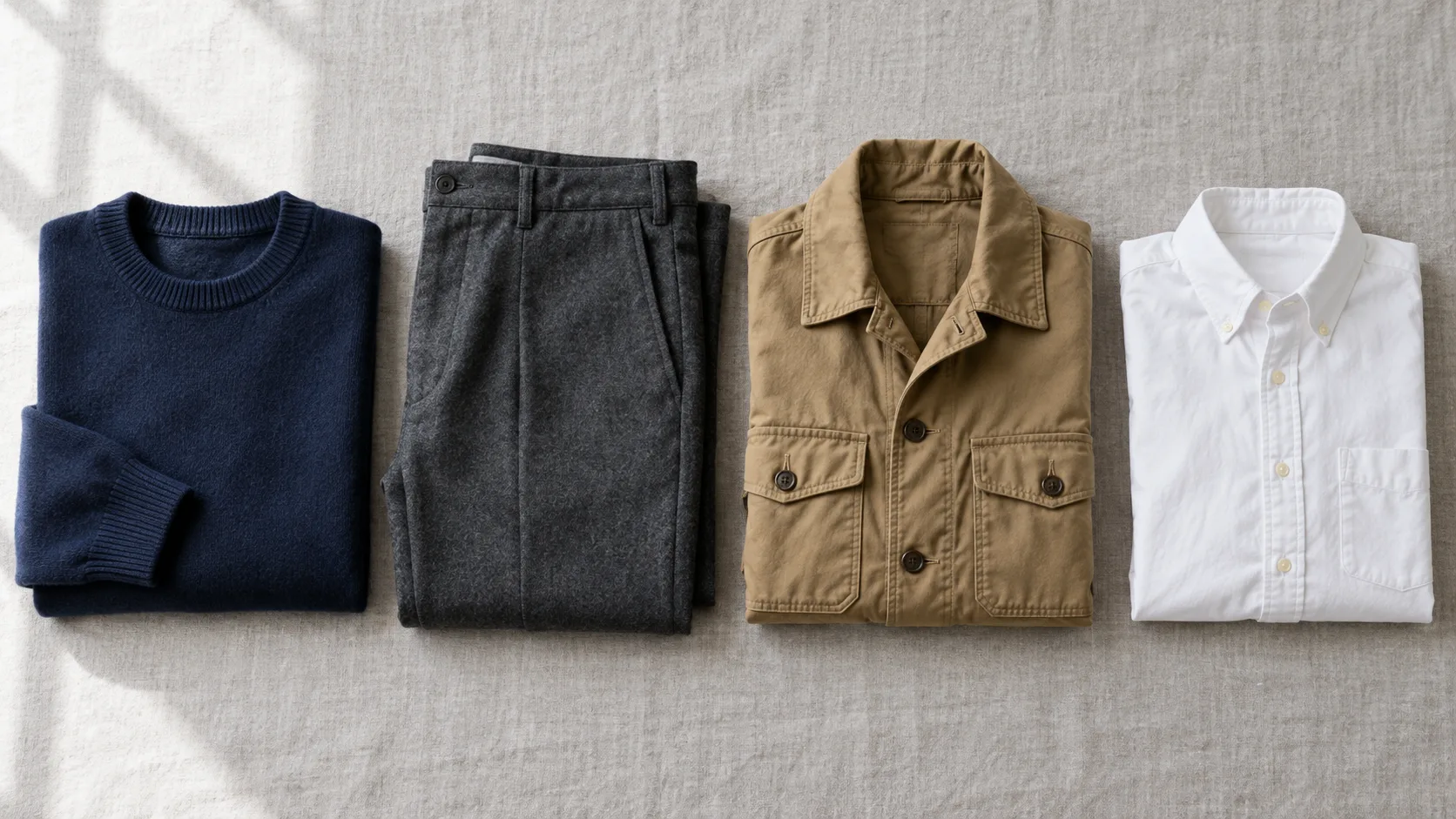
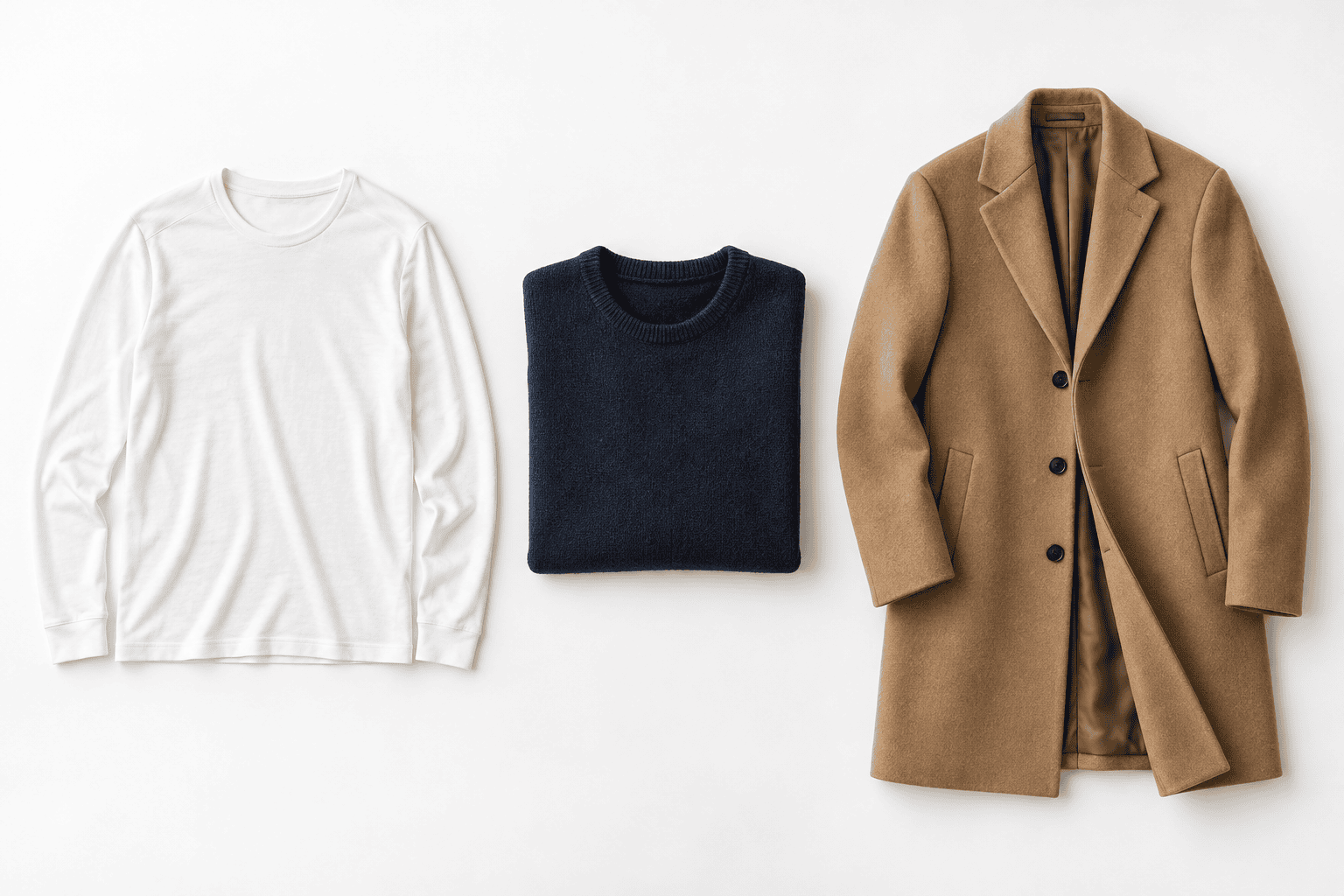
The layer that touches you. A t-shirt, a thin rollneck or an oxford shirt, close to the body without squeezing it. This layer manages comfort and sweat, which is why fabric matters more here than anywhere else in the stack. Merino and other fine wools handle moisture; cotton holds it against the skin and turns clammy within the hour.
The layer that warms you. A crewneck sweater, a cardigan, a flannel overshirt or a light fleece. Warmth comes from the air trapped in and between fabrics, so 2 medium layers insulate better than 1 thick one and give you 2 settings instead of 1.
The layer that shields you. The coat or jacket whose job is weather: wind, rain, snow. Wool overcoat, parka, or a waxed or technical shell depending on the climate. Length and proportion do most of the visual work here, and the outerwear lengths guide covers that decision in detail.
Check your closet against the 3 jobs tonight. Most men find they own 2 of the 3 and have been asking 1 garment to do a third job badly.
Fit Rules That Stop the Bulk
Thin closest to the body, thickest on the outside. Reversing that order, like a chunky knit under a slim coat, is where the stuffed look comes from.
Every layer should fit as if worn alone. A mid layer that only works hidden under a coat fails the moment the coat comes off indoors, and it pulls and bunches the whole time it is on.
Hems step down in order. Each visible edge should make sense in sequence: shirt hem below the sweater hem reads deliberate, sweater hem dangling below the coat reads accidental. The one exception is an open, unbuttoned overshirt over a tee, where the open front creates its own vertical line.
Test the stack in motion. Raise both arms, then sit down. If the shoulders pull, the elbows bind or the layers shift out of place, the fit only works standing still, which is to say it does not work.
A note for shorter men, because the layering guides never write one: bulk shortens. Every added inch of padding at the torso makes legs read shorter by comparison, so keep the mid layer thin and close, let the outer layer carry the warmth, and keep the coat hem at or above mid-thigh. The proportion rules from the site’s shorter-men fit guides apply to every layer added.
The Indoor Test
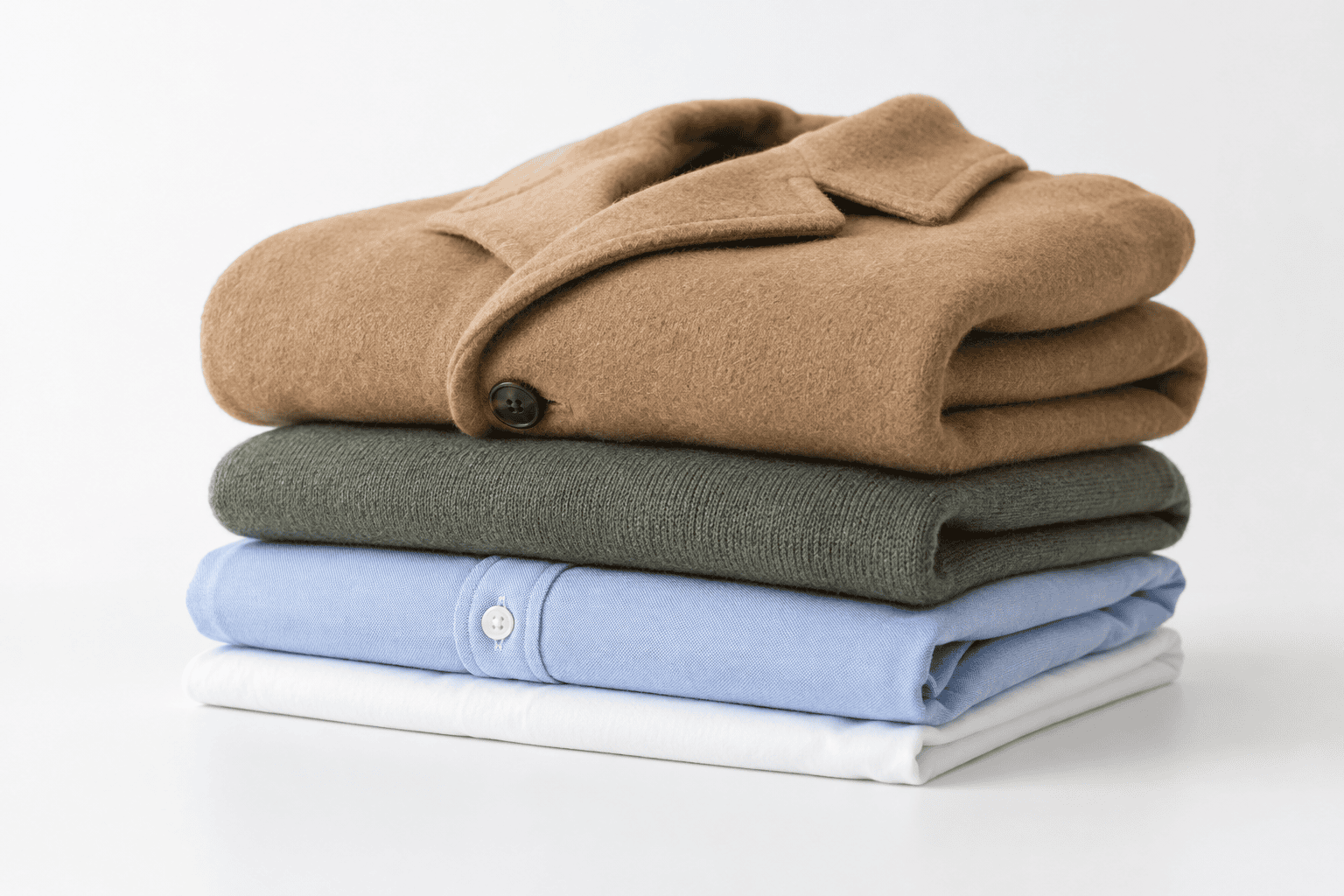
A layered outfit earns its keep at the moment of transition: stepping from a cold street into a heated room. Your system passes if 1 removal, the coat, brings comfort, and the remaining 2 layers still look like a complete outfit.
This is where the one-big-coat approach fails twice. The coat comes off and there is nothing left but a base layer working harder than it was meant to. It is also why your mid layer deserves real money: it is the piece people actually see for most of your day.
Plan the outfit from the mid layer outward on mornings with indoor plans. The coat is weather equipment. The sweater is the outfit.

3 Formulas for a City Winter
Temperatures below are Fahrenheit and assume dry city conditions. Wind and rain push everything a band colder.
The 50s. Oxford shirt or heavyweight tee, a merino or cotton crewneck, and an unlined jacket: a chore coat, a denim jacket or a light trench. This band is where the wardrobe essentials do all the work without any true winter piece.
The 30s and 40s. Base tee or rollneck, a wool sweater, and a real coat: wool overcoat or a lined parka. Add a beanie and scarf as the temperature drops through the band. December brings a full guide to matching those accessories to your coat.

Below freezing. Merino base layer, heavier wool mid layer, and a parka or insulated coat rated for the weather. At this band function runs the decisions, and the outdoor brands’ technical layering advice applies directly.
Colors stay easier across layers than within single garments, because 3 layers give you 3 chances to repeat a neutral. The 2-neutrals-plus-1-color rule from the color matching guide handles a 3-layer stack without any adjustment.
What Breaks a Layered Outfit
You are making a few mistakes that turn a good system into a bulky mess, and they are almost always 1 of these 4:
- Stacking thick on thick. 2 heavy knits under a padded coat is 3 insulation layers fighting for the same space, and you lose.
- Cotton against your skin in real cold. Once it gets damp it stays damp, and damp cotton against skin is how a commute turns miserable.
- Ignoring the mid layer’s appearance. It is your visible outfit for 8 indoor hours. A pilled, shapeless fleece under a good coat is a good coat wasted.
- Letting hems wander. A shirt tail escaping below your sweater and coat turns 3 good layers into 1 visible mistake.
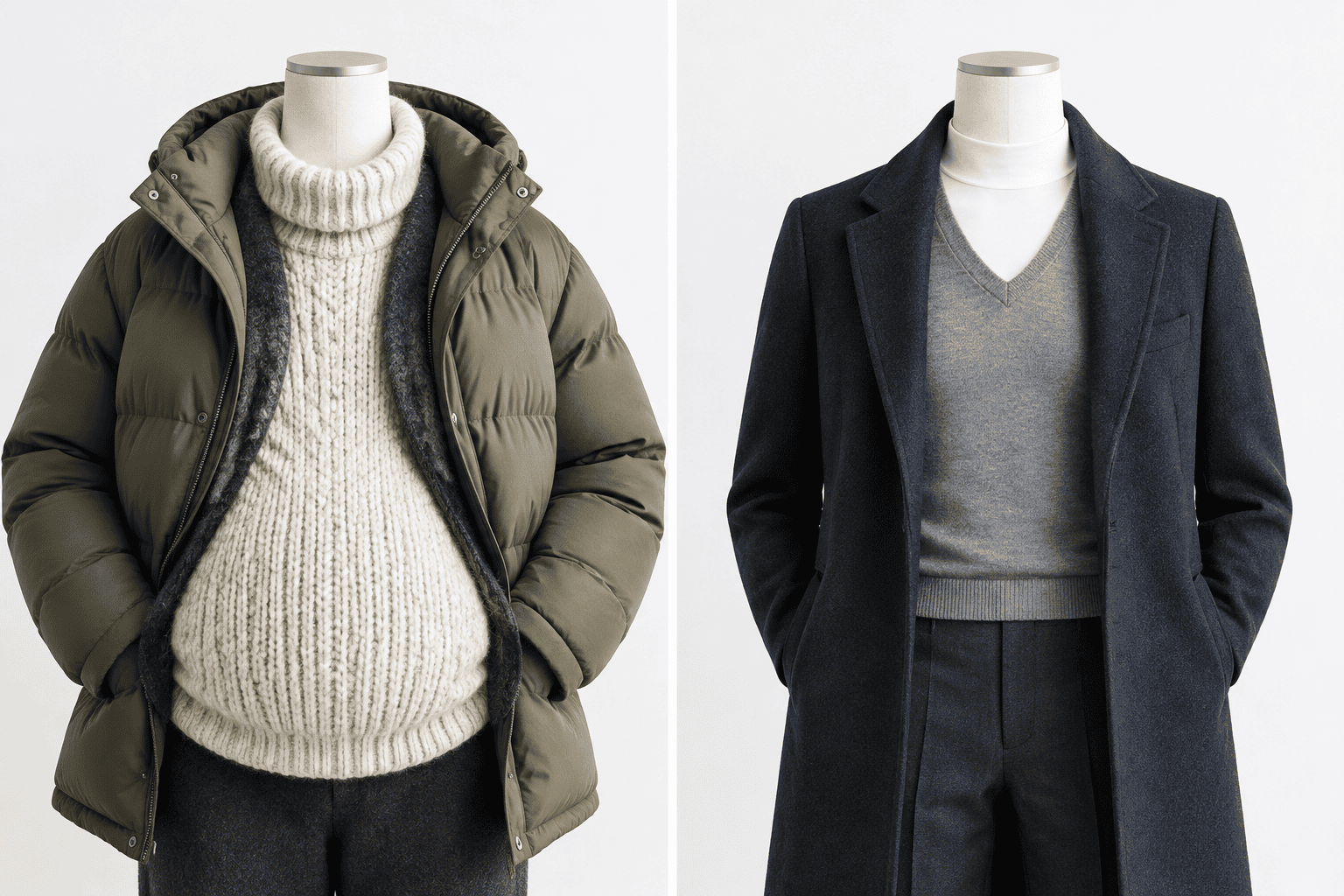
Fix the order before you fix the wardrobe. Most broken stacks come from the wrong pieces in the wrong sequence, and swapping 1 layer usually solves what buying a new coat was supposed to.
FAQs
How many layers should men wear in winter?
3 covers nearly every city situation: base, mid and outer. Below freezing, add a thin 4th between base and mid rather than upgrading any single piece.
What exactly is a base layer?
The layer worn against your skin: a t-shirt, a thin rollneck or a long-sleeve merino top. Its job is comfort and moisture rather than warmth. Fit matters most here, because a loose base bunches under everything above it and you will feel it all day.
Is cotton a bad base layer in winter?
On a mild, dry day, cotton is fine. In real cold or anywhere you might sweat, it is the wrong choice: cotton absorbs moisture, dries slowly, and leaves a damp layer against your skin. Merino wool and synthetic performance fabrics move that moisture away instead, which is why hikers treat cotton as a cold-weather hazard rather than a fabric.
How do you layer without looking bulky?
Keep each layer thin and put the thickest piece last. Warmth comes from trapped air between layers, so several light pieces insulate better than 1 heavy one, and they look like an outfit instead of a survival situation.
How should men layer for the office?
Build the stack so it survives the coat coming off: a shirt as the base, a fine-gauge merino or cashmere-blend sweater as the mid, and a wool overcoat as the outer. All 3 pieces read as business casual on their own, so when you hang the coat at 9 AM, the shirt and sweater still look like the outfit you meant to wear. The business casual fit guide covers the proportions underneath.
The Version to Remember
3 layers, 3 jobs, every piece good enough to be seen alone. Dress for the coldest minute of your day with all 3, and for the warmest room by removing 1. Winter stops being a coat problem and becomes a system.