
Last Updated: August 2, 2026
Written by the FashionXD Editorial Team — Men’s Style, Grooming & Aesthetics Specialists
Disclosure: This article contains no affiliate links. All editorial content is independent research. All information verified as of August 2, 2026.
Introduction
In last year’s Talker Research survey of 2,000 American men, 44% said they weren’t fully happy with the suits hanging in their closet. But the more revealing number came later in the same study: when those men were shown photographs and asked to identify dress codes, only 17% correctly picked out cocktail attire, and just 41% recognised white tie.
The problem was never taste. It’s that nobody ever explained the categories.
The short answer: the main types of men’s fashion styles are classic, smart casual, business casual, streetwear, minimalist, workwear, preppy, old money, Y2K, techwear and gorpcore, dark academia, and the alternative family — punk, goth, emo, and grunge. Each is defined by a distinct silhouette, colour palette, and set of cultural references. Most well-dressed men run two of them rather than committing to one.
That’s what this guide does. The same research found men feel roughly 67% more confident when they’re dressed correctly for the occasion — so the payoff for learning the categories is immediate and measurable.
Knowing the categories is the first step to building a wardrobe on purpose rather than by accident. What follows covers all sixteen, with what each one actually costs to start.
What you’ll get from this guide:
→ All sixteen major men’s style categories, defined and compared side by side
→ A cost and upkeep table so you can pick one that fits your actual budget
→ How to work out which aesthetic suits your body type, lifestyle, and how you already live
→ Which haircut and grooming approach matches each style
→ The FashionXD Style Stack – a five-layer framework for building a wardrobe in the right order
What Are the Different Types of Men’s Fashion Styles?
We can think of the types of men’s fashion styles as different and distinct aesthetic categories that decide how a man presents himself through his clothing choices, accessories, grooming habits, and overall visual identity.
Every fashion aesthetic has its own DNA—the colors, fabrics, silhouettes, and kicks that give it a signature look. But these categories aren’t any hard-and-fast rules. They’re just jumping-off points.
The most stylish guys know how to pull elements from a few different vibes and blend them together. You shouldn’t try to pick one “look” and stick to it permanently.
Here is the list of things you need to learn to dress in an intentional way and create your style.
Are you ready to nail the basics of different types of men’s fashion styles? Check out our men’s wardrobe essentials guide.
Why Knowing Your Style Category Matters?
For most men who struggle with fashion, the problem is not money. The issue is that they do not have a framework for making decisions about clothes. It’s all guesswork.
Knowing your style category allows you to make decisions about what you wear. You can finally dress well without spending too much money on clothes you will not wear often. You will look better and feel better in your clothes.
How Men’s Fashion Styles Have Evolved?
Men’s fashion styles have cycled back on themselves over the years. The fashion of the 1990s defined the men’s Y2K fashion renaissance in the 2020s. The streetwear of the 2010s paid homage to the military and workwear fashion of the previous decade. Preppy and school fashion styles from the Ivy League have made their way into the American fashion mainstream every decade since the 1950s.
Knowing where a fashion style originated allows a man to dress in a way that is authentic to that fashion style. A man who understands where his fashion style originated will dress in a way that matches the influences of that particular style. A man who blindly copies fashion from TikTok will always look like he is wearing a costume rather than dressing in a way that is authentic to his fashion style.
Latest Fashion Trends for Men
Style categories are durable. Trends move inside them, a classic dresser in 2026 is buying softer shoulders and richer knitwear, but he’s still a classic dresser. If you want the seasonal layer, we cover it separately in our guide to the latest fashion trends for men.
Major Types of Men’s Fashion Styles
Here is a complete overview and reference for different types of men’s fashion styles in America today:
| Style | Defining pieces | Palette | Entry cost | Upkeep | Best for |
|---|---|---|---|---|---|
| Classic | Navy blazer, oxford shirt, leather oxfords | Navy, charcoal, white, tan | $300–800 | Very low | Professionals 25+ who want to stop thinking about it |
| Business casual | Collared shirt, tailored trousers, leather derbies | Navy, charcoal, light blue, stone | $350–900 | Low | Most American offices |
| Smart casual | Chinos, minimalist sneakers, knit polo | Navy, olive, stone, grey | $250–700 | Low | The widest range of situations |
| Old money | Cashmere crewneck, flat-front wool trousers, suede loafers | Cream, camel, navy, grey | $800–2,000 | Medium | Reading as established, not current |
| Preppy | Polo shirt, cable knit, chinos, boat shoes | Navy, cream, forest, bright accents | $250–800 | Low | College and East Coast professional |
| Quiet luxury | Structured overcoat, cashmere knits, unbranded leather | Camel, charcoal, cream, navy | $1,200–3,000 | Medium | Buying five things instead of forty |
| Minimalist | Plain heavyweight tees, straight trousers, unbranded sneakers | Black, white, grey, navy | $150–450 | Very low | Anyone who finds shopping exhausting |
| Dark academia | Tweed sport coat, roll-neck, corduroy trousers, brogues | Brown, forest, oxblood, charcoal | $400–1,000 | Medium | Cold climates and literary types |
| Streetwear | Graphic tees, hoodies, cargos, statement sneakers | Black, grey, bold accent colours | $200–600 | Medium | Young men, creatives, casual workplaces |
| Techwear | Taped-seam shell, articulated trousers, technical mid-layer | Matte black, grey, occasional olive | $400–1,200 | Low | Wet cities, cyclists, commuters |
| Gorpcore | Shell jacket, grid fleece, cargos, trail runners | Bright colourways, earth tones | $300–900 | Low | Practical clothing as a deliberate look |
| Workwear & utility | Chore coat, raw denim, flannel, welted boots | Brown, olive, indigo, black | $200–700 | Very low | Clothes you never have to be careful with |
| Soft boy / clean boy | Knit vest, oversized crewneck, wide trousers, white sneakers | Pastels and washed tones, or strict neutrals | $150–500 | Medium | Under-30s building a first aesthetic |
| Y2K | Baggy cargos, athletic jersey, chunky sneakers | Bold logos, metallics, primary colours | $200–600 | Medium | Gen Z and younger millennials |
| Grunge | Flannel overshirt, distressed denim, band tee, combat boots | Black, faded indigo, muted plaid | $150–500 | Extremely low | Rebellious, trend-resistant, culturally rooted |
| Softmaxxing | Not clothing — haircut, skincare, fit, posture | n/a | $100–400 | Daily but cheap | Everyone, before anything else on this list |
Editor’s pick: Smart casual is the most practical starting point for most American men — it covers the widest range of situations with the fewest pieces. Build that foundation first, then layer a second aesthetic on top.
Classic and Traditional Style
Classic style is defined as a timeless approach to dressing built on well-fitted, neutral-colored basics rooted in European and American tailoring traditions. The core wardrobe includes tailored trousers, Oxford cloth shirts, navy or charcoal blazers, leather shoes, and simple leather belts.
What makes classic style special is that it doesn’t follow fashion trends. A guy dressed in the classic style in 2026 will look just as good as in 1986. This aesthetic combines the influence of Ivy League student style, traditional English suits, and American companies such as Brooks Brothers, Polo Ralph Lauren, and J.Crew.
Core pieces:
→ Navy or charcoal wool blazer in a slim or regular fit
→ White and light blue Oxford button-down shirts
→ Dark wash denim and flat-front chino trousers in stone or khaki
→ Leather Oxford, Derby, or loafers in brown or black
→ A leather belt that matches your shoe color exactly
Best for: Working professionals, men older than 25 years of age, and those who are willing to dress up in something which requires little maintenance and never looks out of date.
Business Casual
Business casual is the office dress code that sits below a suit and above jeans: a collared shirt, tailored trousers or dark chinos, leather shoes, and a jacket that is optional rather than expected. It is the default in most American workplaces outside law, finance, and government, and it is the single most misread category on this list.
The confusion is that business casual and smart casual are not the same thing, though almost every guide treats them as interchangeable. Business casual has a floor — no denim, no sneakers, no untucked hems. Smart casual has no floor, only a ceiling. If your workplace says business casual and you turn up in white sneakers and a crewneck, you are dressed smart casual, and the room will notice.
Core pieces:
→ Oxford or poplin button-down shirts in white, light blue, and subtle stripe
→ Tailored trousers or dark chinos in navy, charcoal, and stone
→ Leather derbies, loafers, or minimal lace-ups in brown or black
→ An unstructured navy or grey blazer for days that need one
→ Merino crewnecks and quarter-zips for layering without a jacket
Best for: Anyone working in an office that has a dress code but doesn’t require a suit — which in 2026 is most of them.
Streetwear Style
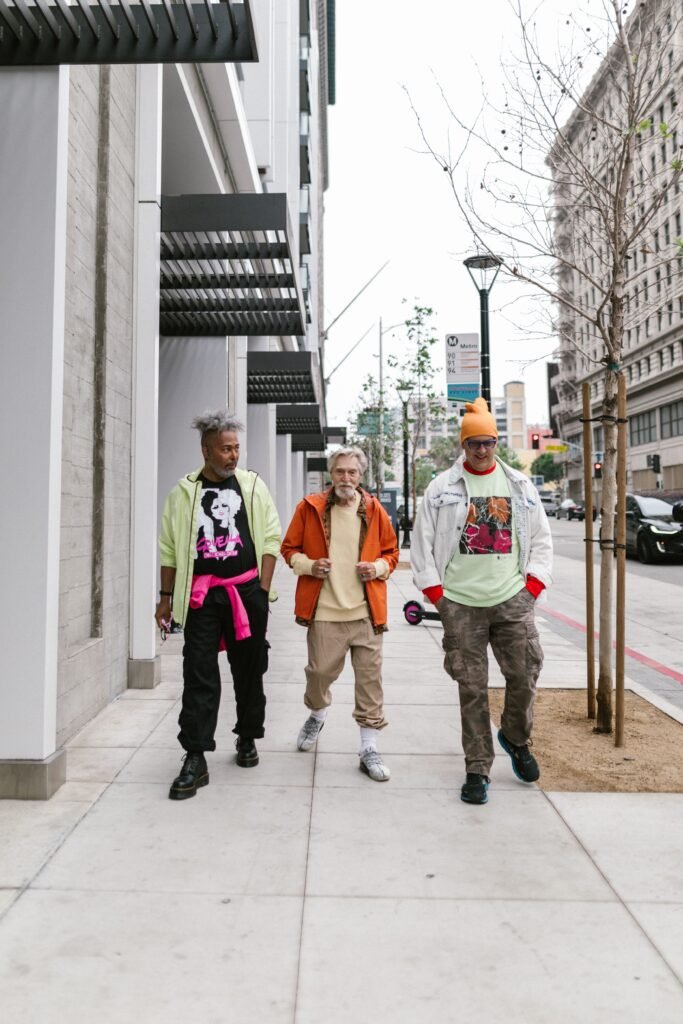
Streetwear can be described as casual, urban-inspired aesthetic that is influenced by skateboarding, hip-hop, and West Coast youth subcultures of the 1980s. Typical clothes of this style are graphic tees, hoodies, sneakers, cargo pants, caps, and brand logos.
According to data from Cowen and Company cited by Business of Fashion (2024), the global streetwear market exceeds $185 billion annually. Supreme, Off-White, Nike, Adidas, and KITH define the brand landscape. The aesthetic rewards exclusivity, limited releases, and cultural awareness.
Core pieces:
→ Graphic tees and oversized fleece hoodies
→ Cargo pants, joggers, and relaxed-fit denim
→ Collectible or high-demand sneakers as the focal point
→ Caps, beanies, and crossbody bags → Bold, logo-forward outerwear in statement colors
Best for: Young men, artists, and anyone working in casual professional settings.
Techwear and Gorpcore
These are two related aesthetics built on the same premise: performance clothing worn in the city, where its performance is never actually needed.
Techwear is the darker, more architectural version — matte black technical fabrics, taped seams, modular straps, articulated knees, and a silhouette closer to science fiction than sportswear. Gorpcore is the outdoorsy sibling, named for trail mix, and it wears hiking and climbing gear in bright colours as everyday clothing: shell jackets, fleece, cargo trousers, and trail runners.
Worth knowing if you are searching for either: almost everything ranking for techwear online is a store rather than a guide. The category is under-explained relative to how many people are looking for it.
Core pieces:
→ A waterproof shell jacket with taped seams, in black for techwear or a bright colourway for gorpcore
→ Technical trousers with articulated knees, or nylon cargos with utility pockets
→ Fleece — a grid fleece for gorpcore, a black technical mid-layer for techwear
→ Trail runners or approach shoes with an aggressive outsole
→ A sling bag, a modular chest rig, or a small technical backpack
Best for: Men in wet cities, cyclists and commuters, and anyone who wants clothing that solves a practical problem while still being a clear aesthetic choice.
Workwear and Utility
Workwear borrows directly from American trade clothing: duck canvas chore coats, heavyweight denim, painter’s trousers, flannel shirts, and boots built to be resoled rather than replaced. The utility extension adds military surplus — field jackets, fatigue trousers, and webbing.
The defining quality is that the clothes are supposed to get worse-looking and better-fitting at the same time. A workwear wardrobe that still looks new is a workwear wardrobe that isn’t working. This makes it one of the cheapest categories to run long-term, because wear is the point rather than the problem.
It overlaps heavily with grunge in its raw materials and with gorpcore in its practicality, but its reference point is labour rather than music or the outdoors.
Core pieces:
→ A duck canvas or waxed chore coat in brown, olive, or black
→ Raw or heavyweight denim in a straight or relaxed leg
→ Flannel or chambray work shirts, worn open or tucked
→ Leather work boots with a Goodyear welt — moc-toe or plain-toe
→ A watch cap, a bandana, and a leather belt that will outlive the trousers
Best for: Men who want clothes they never have to be careful with, anyone who works with their hands, and people who like the idea of a garment that looks better in year five than year one.
Soft Boy and Clean Boy
Two of the most-searched younger aesthetics online, and effectively two settings of the same dial.
Soft boy is the warmer, more expressive one: pastels and washed tones, knitted vests, pearl or beaded jewellery, layered shirts, and a deliberately gentle silhouette that pushes back against conventionally hard masculine dressing. It came out of Korean and Japanese street style before spreading through TikTok.
Clean boy is the stripped-back version. Same soft silhouette, but the colour is gone: white, cream, grey, and navy only, immaculate sneakers, one silver chain, a fresh haircut, and a visible level of grooming that is doing at least half the work. Clean boy is less about clothes than about maintenance.
Core pieces:
→ Knitted vests and cardigans over collared shirts
→ Oversized but not baggy tees and crewnecks, in cream, sage, and washed pastels for soft boy or strict neutrals for clean boy
→ Wide-leg or straight trousers with a full break
→ Immaculate white leather sneakers, replaced rather than cleaned
→ One silver chain, a couple of rings, and for soft boy, pearls
Best for: Men under thirty building a first real aesthetic, and anyone who wants a look that reads as considered without reading as formal.
Smart Casual
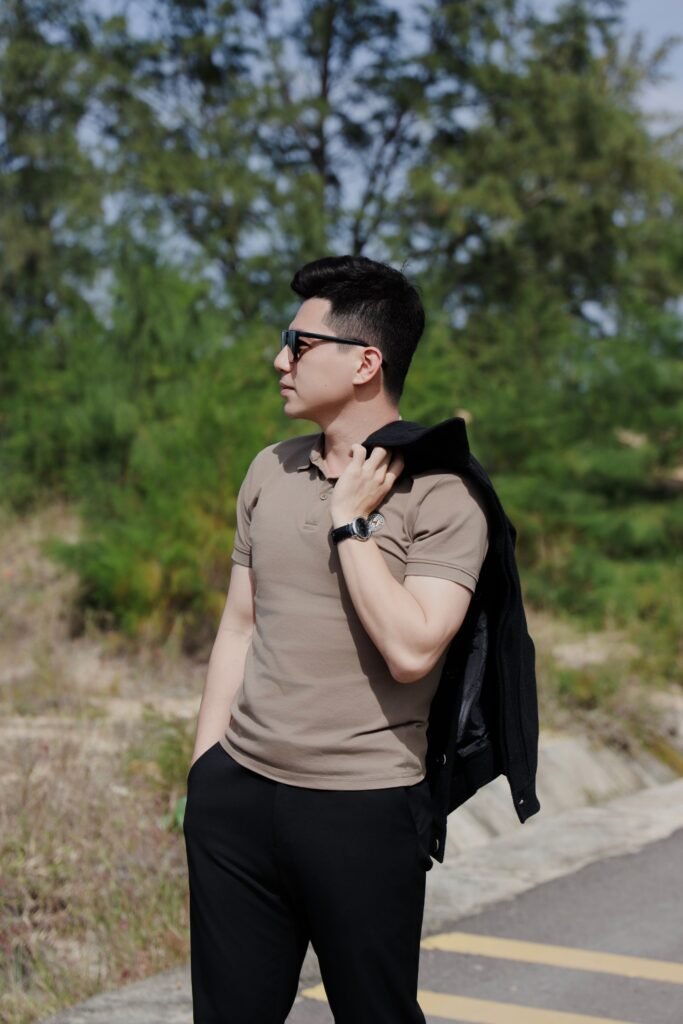
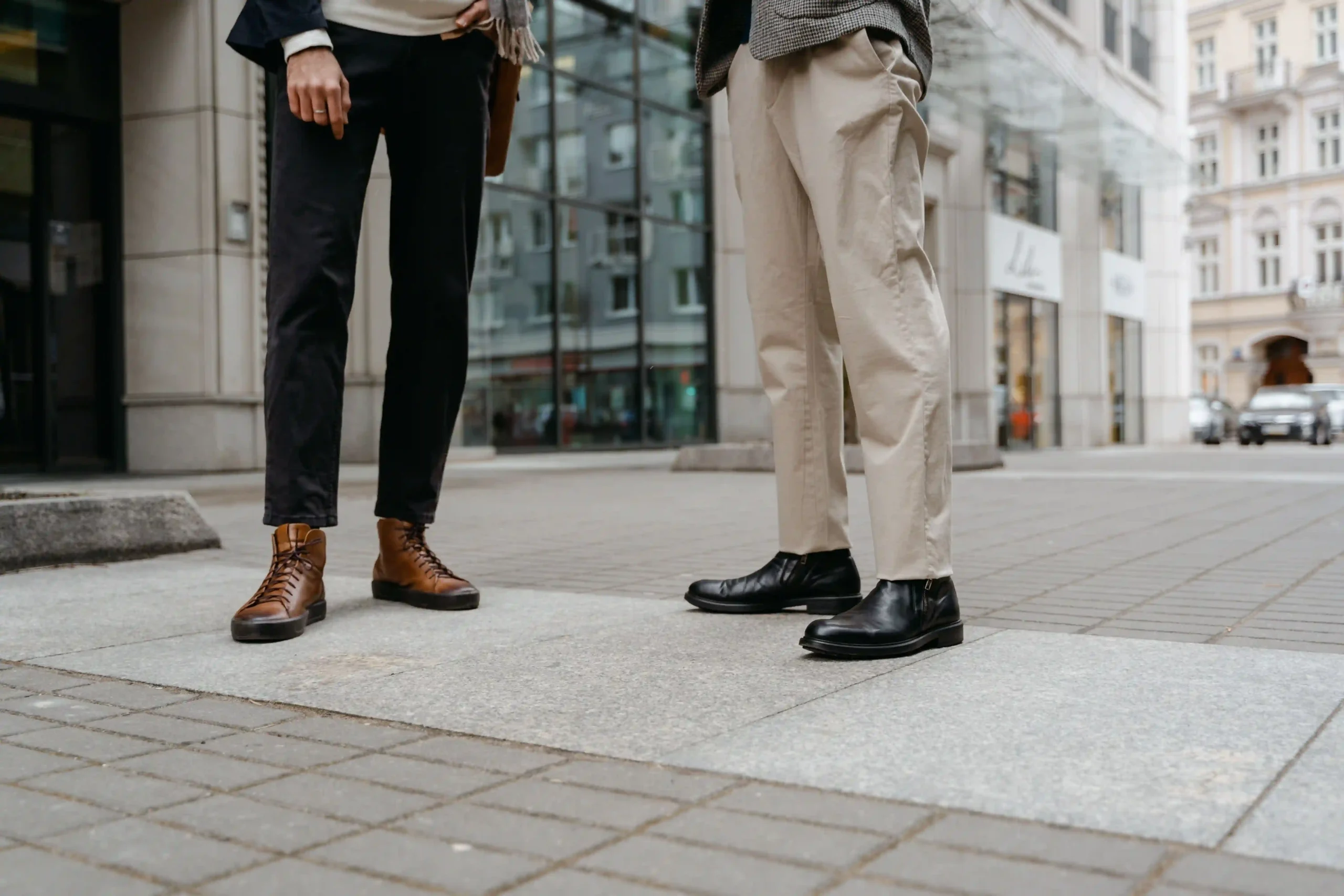
Smart casual is the term used to describe the style category that is located somewhere between the categories formal and informal. It includes both structured items like tailored chinos and blazers, as well as more relaxed items like a pair of pristine white sneakers or a crew-neck sweater.
Smart casual is the most practical style choice for any American man in 2026. This style can be used in professional environments, dinner dates, parties, and casual Saturday. Surprisingly, most style guides do not cover this important category even though it is the place where most men actually spend a lot of time.
Core pieces:
→ Well-fitting chinos in navy, olive, stone, or dark grey
→ White, navy, or gray minimalist sneakers
→ Polo shirts, crew-neck sweaters, and Henley shirts
→ Chelsea-style boots for men as a smarter alternative
→ Slim-fit blazer in navy, tan, or mid-grey
Best for: Any man who needs one style that works in the maximum amount of situations without the need for multiple wardrobes.
Old Money Style
Old money is the aesthetic of inherited wealth that has no reason to announce itself. No visible logos, no seasonal pieces, no obvious spending. The clothes are expensive and the point is that you cannot immediately tell.
It descends from preppy but is not the same thing. Preppy is collegiate, bright, and slightly performative — Nantucket reds, embroidered whales, a cap with a crest. Old money strips all of that out and keeps only the fabric quality and the fit. Where prep says which school, old money says nothing at all.
The aesthetic surged after 2022 on the back of Succession and a broader turn away from logo-driven luxury, and it has proven far more durable than most social-media aesthetics because it is really just classic tailoring with the branding removed.
Core pieces:
→ Cashmere or fine merino crewnecks in cream, camel, navy, and grey
→ Flat-front trousers in wool, linen, or heavy cotton — never distressed
→ Suede or polished leather loafers, worn without socks in summer
→ A camel or navy overcoat with clean shoulders
→ One quiet watch on a leather strap, and nothing else
Best for: Men who want to read as established rather than current, and anyone who has decided they are done buying anything with a logo on it.
Quiet Luxury
Quiet luxury is old money’s contemporary cousin: the same rejection of visible branding, but built from modern silhouettes rather than heritage ones. Where old money references a specific American East Coast past, quiet luxury is timeless and geographically neutral. It is what a well-paid person with no interest in fashion wears when they have decided to only buy good things.
The whole aesthetic rests on one idea — that quality is legible at close range even when it is invisible at a distance. A cashmere coat and an acrylic coat photograph almost identically. In person, across a table, they do not.
Practically, this is the most expensive category on this list per item and the cheapest per wear, because the whole point is buying five things instead of forty.
Core pieces:
→ A structured camel, charcoal, or navy overcoat in wool or wool-cashmere
→ Cashmere knitwear in neutral tones, worn until it pills and then replaced
→ Tailored trousers with a clean break, in charcoal, navy, or stone
→ Unbranded leather loafers or minimal leather sneakers
→ Leather goods with no visible hardware or monogram
Best for: Men in their thirties and up with the budget to buy fewer, better things, and anyone whose job rewards looking expensive without looking like they tried.
Minimalist Style
Minimalist menswear reduces the wardrobe to a small set of neutral, well-cut pieces that all work together, so that getting dressed stops being a decision. It is defined more by what it removes – pattern, logo, hardware, colour — than by what it includes.
The distinction from quiet luxury is budget and intent. Quiet luxury is minimalism with money. Minimalism proper is a system that works at any price point, and it is the easiest category on this list to execute well cheaply, because plain clothes in neutral colours are the least expensive things in any store.
The failure mode is looking underdressed rather than deliberate. The fix is fit: when there is no pattern or detail to look at, the cut of the garment is the only thing carrying the outfit.
Core pieces:
→ Heavyweight plain tees in white, black, grey, and navy
→ One or two pairs of straight-leg trousers in black, charcoal, or stone
→ Plain leather or canvas sneakers with no visible branding
→ A single unlined overshirt or chore jacket in a neutral
→ A monochrome palette of no more than four colours, total
Best for: Men who find shopping exhausting, anyone building a first real wardrobe on a budget, and people who want to look put-together with the smallest possible number of items.
Dark Academia
Dark academia dresses like a graduate student at an old European university in November. Tweed, wool, corduroy, and leather in a palette of brown, forest green, oxblood, and charcoal, with the layering density of somewhere that is permanently cold and slightly damp.
It emerged as an internet aesthetic around 2020 and has outlasted almost all of its contemporaries, because unlike most social-media styles it is built from garments that already existed and already worked — the tweed jacket, the roll-neck, the oxford shirt. It is closer to classic tailoring than its subcultural reputation suggests.
The menswear version leans more literary than gothic. Think reading room rather than graveyard.
Core pieces:
→ A tweed or herringbone sport coat with patch pockets
→ Roll-neck and cable-knit sweaters in cream, forest green, and brown
→ Corduroy or wool trousers, pleated, in brown or charcoal
→ Leather brogues, loafers, or lace-up boots with a visible welt
→ A wool overcoat, a leather satchel, and if you actually need them, round-frame glasses
Best for: Students and academics obviously, but also anyone who wants a fully formed aesthetic that reads as intellectual rather than fashionable, and who lives somewhere with a real autumn.
Alternative Fashion for Men
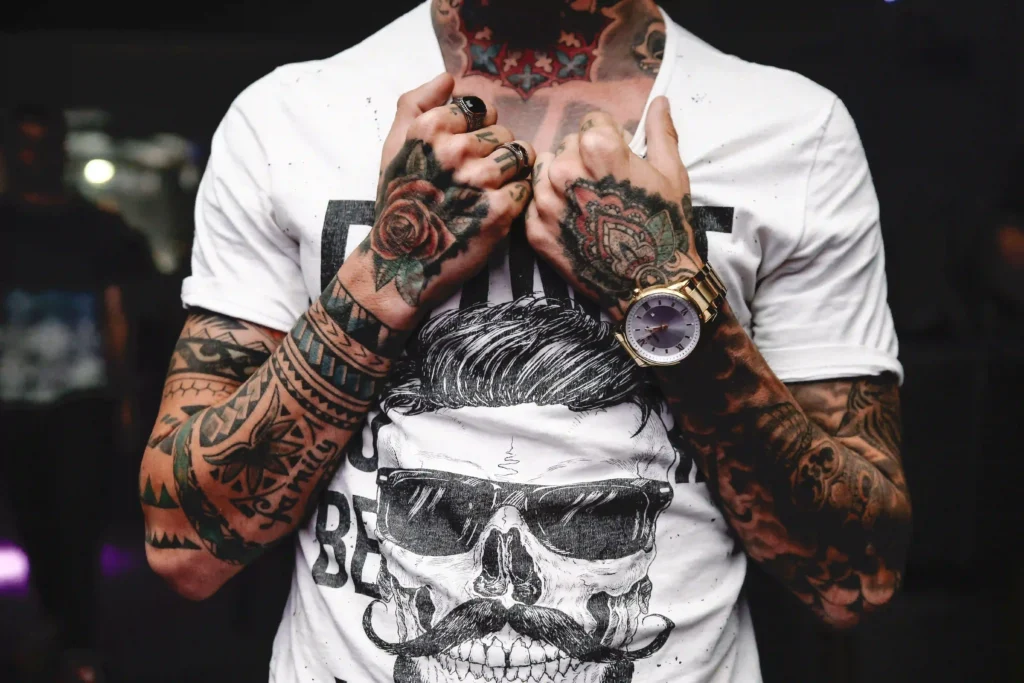
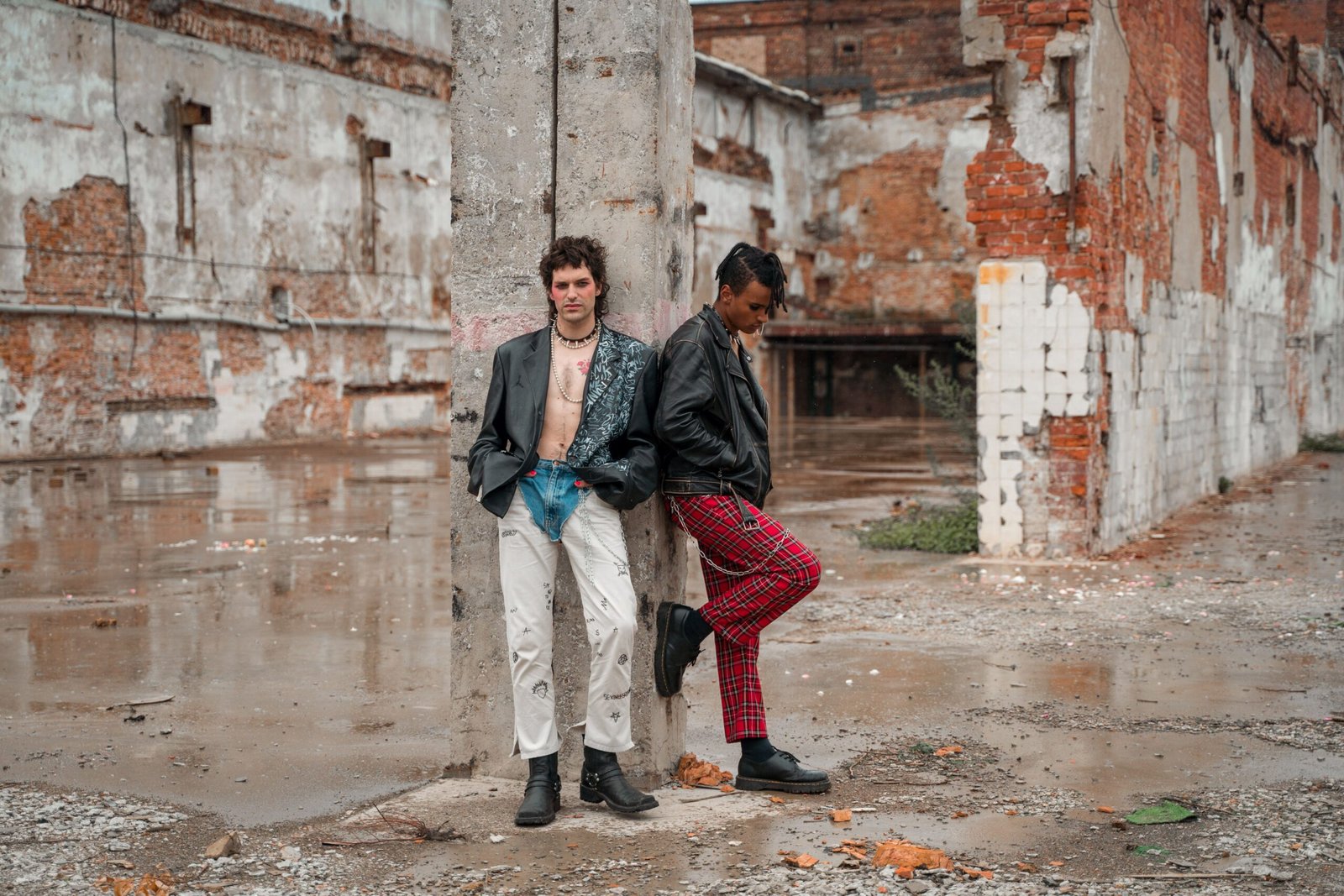
Alternative fashion defines itself against mainstream trends, drawing its heaviest influences directly from historical music subcultures. The style completely rejects mass-produced aesthetics, heavily favoring dark palettes, thrifting, and do-it-yourself customization. Rather than a single uniform, it acts as an umbrella for several distinct subcultural branches.
For a massive deep dive into the history, sizing, and specific wardrobe essentials for each of these subcultures, explore our complete guide to alternative fashion for men.
Punk
Originating in the mid-1970s, punk remains the oldest and most confrontational branch. The signature look relies heavily on leather biker jackets, ripped black jeans, and tartan bondage trousers. You finish the silhouette with heavy combat boots like Dr. Martens and hand-added hardware like safety pins and studs.
Goth
Goth fashion for men trades aggressive punk hardware for dark romance and Victorian tailoring. Emerging from late-1970s post-punk, the aesthetic demands a strictly black-dominated palette mixed with deep jewel tones. Men lean heavily on long dramatic coats, high collars, and rich textures like velvet, lace, and leather.
Emo
Rooted in 1980s Washington D.C. emotional hardcore, emo sits closer to both punk and goth but reads much younger. The uniform requires a fitted band tee, black skinny jeans, and canvas sneakers like Converse or Vans. Dark, side-swept hair and studded belts anchor the look.
Avant-Garde Darkwear (The “Opium” Aesthetic)
This 2020s movement takes traditional goth palettes and applies them to hype-driven luxury streetwear. Driven by the “Opium” record label, it abandons thrifted roots for extreme, draped proportions. Signature pieces include massively flared black denim, cropped leather bombers, and exaggerated platform boots from designers like Rick Owens.
Grunge Fashion Men
Grunge fashion for men is an anti-establishment and rebellious style that comes from the Seattle music scene of the late 1980s and includes elements like flannel shirts, ripped or distressed denim, band tees, combat boots, and the overall layered and messy appearance.
The grunge fashion men movement draws its inspiration from the image of Kurt Cobain, Eddie Vedder, Chris Cornell, and other musicians of the Pacific Northwest music scene. The philosophy of the style is based on the idea of authenticity, but at the same time, the best grunge outfits are those that are carefully constructed to appear messy.
Core pieces:
→ Flannel shirt worn unbuttoned as an overshirt over a plain or band graphic shirt
→ Torn or heavily distressed black or dark wash jeans
→ Vintage band t-shirts from the 1980s and 1990s (or high-quality reproductions)
→ Doc Martens 1460 or heavy combat boots in black
→ Beanies, silver rings, and minimal chain necklaces
Best for: Men who need an innovative and rebellious style with rich cultural background that is resistant to trends. Be sure to read our grunge fashion men style guide to learn more.
Men’s Y2K Fashion
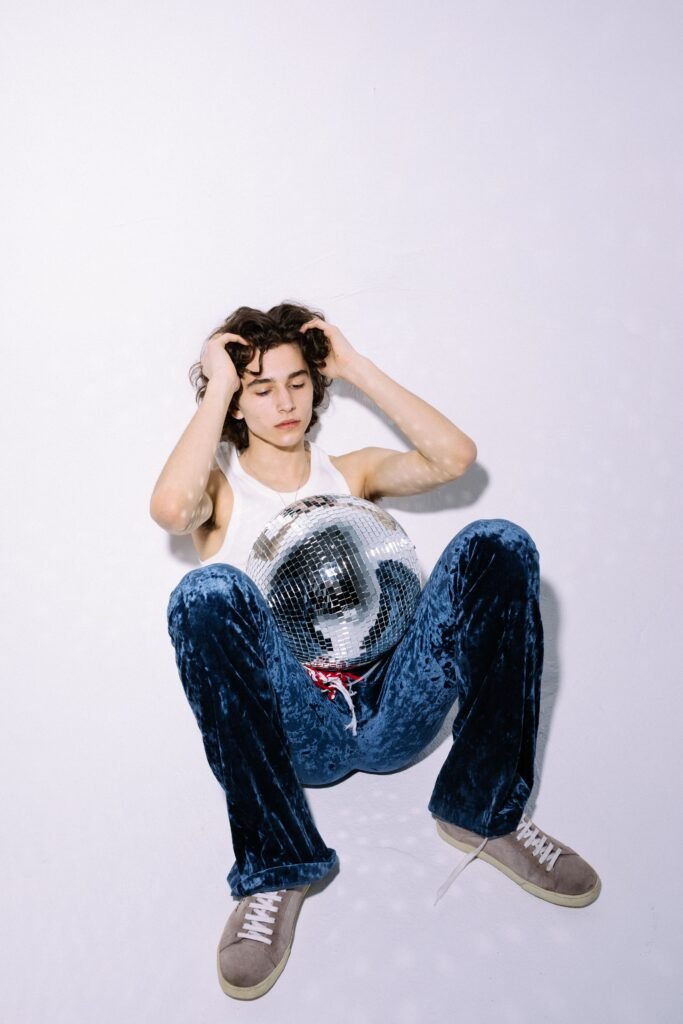
Men’s Y2K fashion refers to the revival of early 2000s aesthetic codes characterized by baggy and wide-leg silhouettes, athletic jerseys, oversized logos, shiny fabrics, and visual references to early internet culture and early 2000s pop music.
The original Y2K era ran from roughly 1998 to 2005. It returned as a major cultural force after 2021. According to Vogue Business (2023), searches for Y2K fashion increased by over 400% between 2021 and 2023, making it one of the most significant aesthetic revivals in modern menswear.
Core pieces:
→ Baggy or wide-leg cargo pants and relaxed-fit denim
→ Athletic jerseys, track jackets, and nylon windbreakers
→ Chunky platform sneakers and retro running silhouettes
→ Bucket hats, tinted wraparound sunglasses, and baseball caps
→ Bold, oversized logo polo shirts and zip-up hoodies
Best for: Gen Z men and younger millennials who want a nostalgic aesthetic with contemporary streetwear energy.
Men’s Teenage Fashion
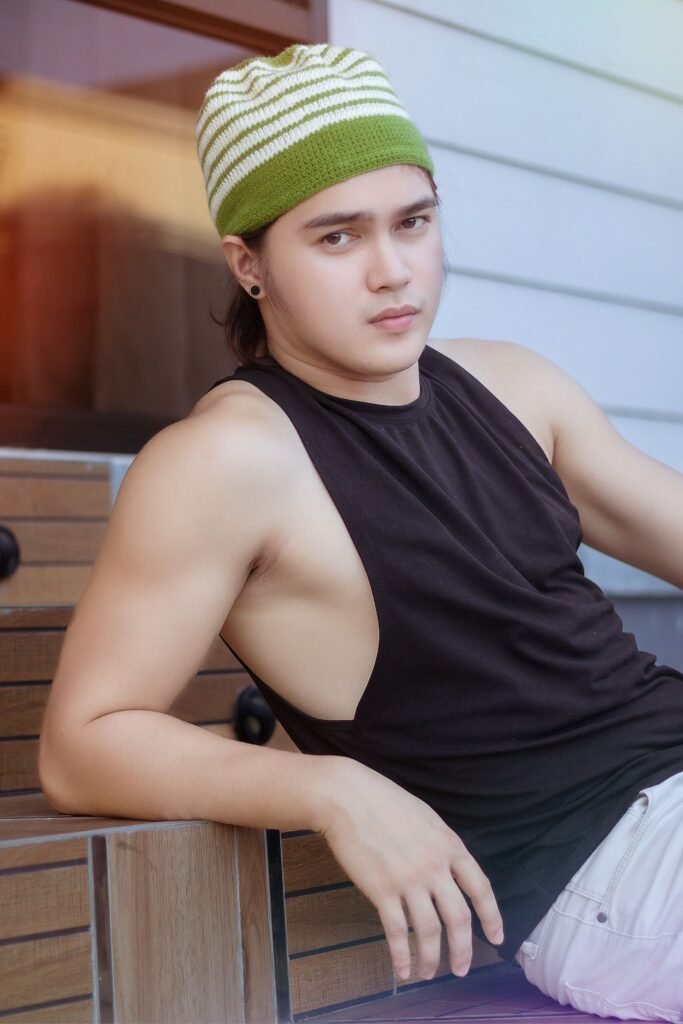
Men’s teenage fashion is not fixed to one particular style but includes many that are influenced by the culture of online platforms themselves. Currently, some of the most popular men’s teenage fashion styles within America’s high school boys include softmaxxing, streetwear, Y2K, and prep.
Because of the influence of social media platforms like TikTok and Instagram, the life cycle of fashion trends has become shorter. What may start as a fashion trend for a specific group of individuals can become the dress style of high school students across the country in as little as three to four weeks. Understanding this cycle allows for younger boys to have more control over their clothing choices rather than simply reacting to the fashion choices of others.
What’s trending men’s teenage fashion right now? These:
→ Clean, minimal outfits built around one strong focal piece
→ Cargos with fitted crewnecks or graphic tees
→ New Balance 574, Air Force 1, or Nike Dunk Low as the default shoe
→ Softmaxxing-level grooming investment: clean skin, fresh fade, trimmed nails
→ One quality accessory, either a clean watch or a simple silver chain, not both
Best for: High school and college-age men building their style identity for the first time and wanting to invest intentionally rather than following every micro-trend.
Softmaxxing Aesthetic
Softmaxxing is the practice of making a man look better using low-cost methods such as changing haircuts, skin care routines, posture improvements, and wearing clothing that fits a man’s body type.
Softmaxx and hardmaxx are not the same but two different looks improvement strategies for men. Hardmaxx refers to invasive surgeries and/or costly treatments to improve how someone looks. The changes are irreversible in most cases. Softmaxxing refers to the process of using the most impactful ways possible – without spending too much money – to improve one’s appearance. This includes a wide variety of options available to anyone, anywhere. In short, it’s natural self-improvement for a man that amplifies their sense of aesthetics and fashion.
Here is a softmaxxing playbook to get started with:
• Choose an appropriate haircut based upon your face shape and hair texture
• Start with a regular skin care routine for men, at least a cleanser and SPF
• Dress according to your body type now, not what you think you will be able to achieve
• Strengthen your core muscles each day to fix posture and stretch regularly
• Groom eyebrows and shave/trim unwanted facial hair; trim fingernails and toenails frequently
• If your teeth are noticeably discoloured, whiten them. Go for teeth cleaning once every 6 months.
• Invest in physical fitness over time; this is like a high-return, compound interest investment.
Softmaxxing is the highest ROI style move any man can make, regardless of budget or starting point, because it multiplies the impact of every other style choice. Some of these things don’t need you to invest money, because you can get started with them right away. All it takes is a bit of intention and routine.
Preppy Style
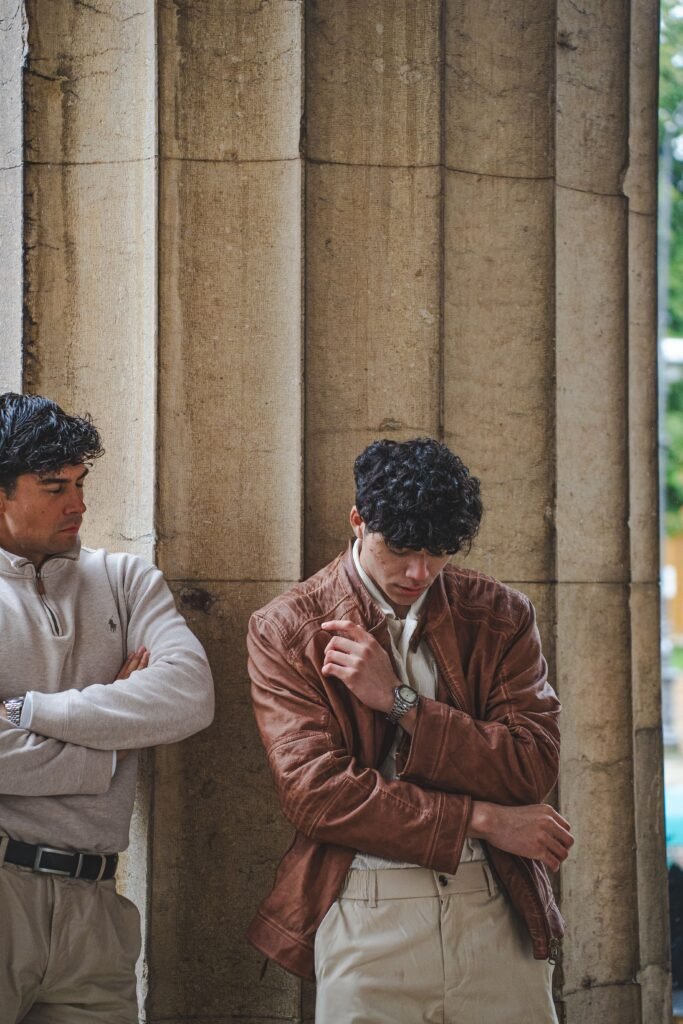
Preppy style draws from American East Coast college culture of the 1950s through 1980s. It includes polo shirts (with the classic collar), oxford button-down collared shirts, khakis, boat shoes and heritage American brands such as; Ralph Lauren, J.Crew, Vineyard Vines, and Brooks Brothers.
What to wear:
→ Polo shirts in solid or subtle stripe colors
→ Cable-knit sweaters in cream, navy, or forest green
→ Khaki or corduroy trousers and shorts
→ Boat shoes or penny loafers in tan or brown leather
→ Baseball caps from heritage teams or college insignia
Best for: Men attending college, working professionals with East Coast or Southern jobs, and men who want to project understated, affluent, heritage-American taste.
Men’s Haircut Styling for Every Aesthetic
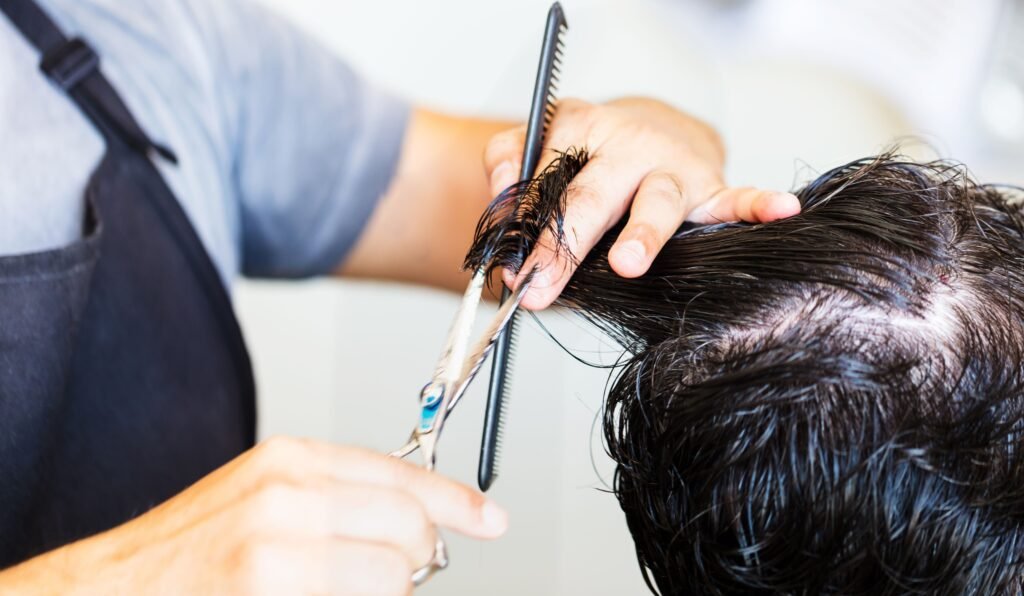
Men’s haircut styling refers to the selection, execution, and maintenance of a haircut chosen to complement face shape, hair texture, and overall fashion identity. The right haircut is one of the top three most impactful grooming decisions a man can make, alongside skincare and physical fitness.
A well-chosen haircut restructures the visual perception of your face. It can make a round face look leaner, a square face look softer, and a weak jawline look more defined without any other change to your appearance.
What Haircut Suits You by Face Shape?
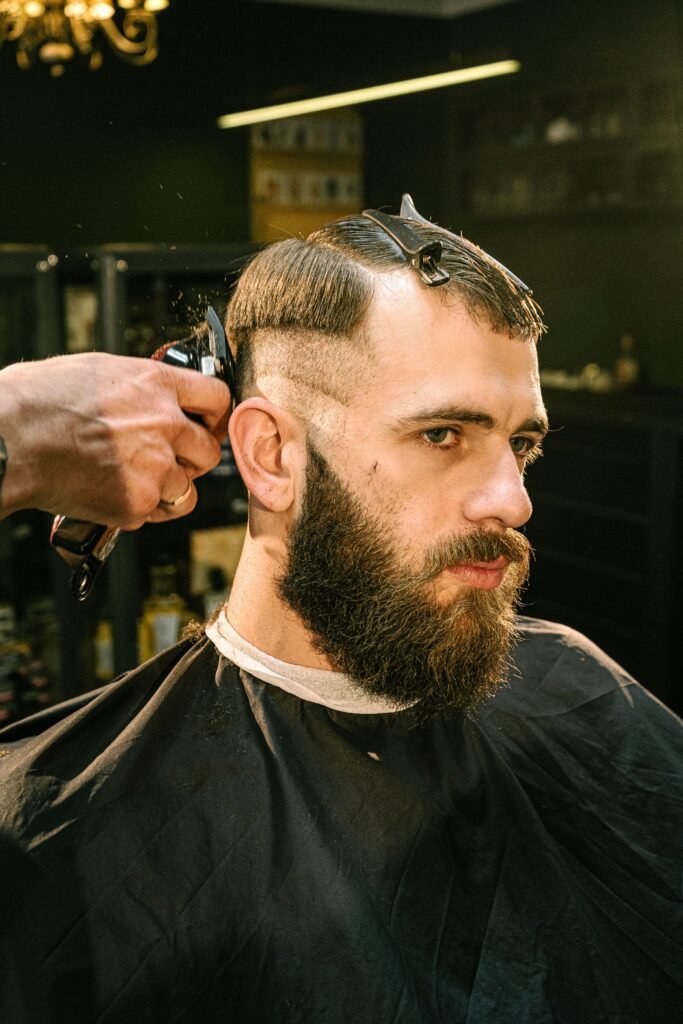
What haircut suits you depends first on your face shape and second on your hair texture.
Your main goal should be to create some kind of visual balance; to add width when there’s too much height and vice versa.
Oval face shape: This is the most versatile of all the face shapes. Any kind of haircut can go well with an oval face, including textured cuts, French crop, curtain bangs, slick backs and buzz cuts. If you have an oval face, the only thing that would matter to you is your hair texture.
Round face shape: Add some height vertically to elongate the overall appearance. A pompadour cut, slick back or a high fade cut with volume and texture on top of the head would look good. Bowl cut and blunt fringe hairstyles are to be avoided.
Square face shape: Lengthen your sides with a long hairstyle to soften your hard jawlines. Medium-length hairstyles with some texture, messy quiff or curtain bangs will make you look good.
Oblong/rectangular face shape: Add width, rather than height. Side part with kept length on the sides, medium-length brush back or low fade with fuller sides will suit you very well.
Heart face shape: To balance out your wider forehead, add fullness below the jawline. Curtain bangs, mid-length brushback or medium-length cut with fuller volume near the ears can look good.
Haircuts Matched to Each Style Aesthetic
Some haircut profiles work with each fashion category. There’s a certain degree of visual incoherence that occurs when the haircut doesn’t match the aesthetic – which most people feel but can’t articulate.
→ Classic style: This is characterized by a high taper, a clean side part, a slick back, or a neat pompadour with some definition. If looking for a fade, select a short fade on natural or textured top, buzz cut or a mid-length natural top with a fine taper.
→ Grunge fashion men: shaggy medium length hair cut, curtain bangs around the face, and/or longer cut with layers that are left untidy.
→ Men’s Y2K fashion: For men, Y2K looks include two-block cuts, bleached ends, textured bowl cuts or braids based on the type of hair.
→ Softmaxxing: Clean taper fade with an attractive natural taper or a medium taper that has been carefully selected for your facial shape.
How to Maintain Your Haircut Between Barber Visits?
Your haircut will depreciate the fastest during the first two weeks. Most men do not know how to take care of their haircuts between their barbershop visits and thus appear disheveled by the third week.
Step 1: Schedule your next visit to the barber shop after the current appointment. Every three to four weeks if you have a tight fade. Every five to six weeks if you have a loose cut.
Step 2: Use just the right amount of styling product according to the texture of your hair. Matte clay for textured hair, light pomade for defined and shiny hair, leave-in conditioner for curls or coils.
Step 3: Only wash your hair three times a week maximum. Washing your hair every day robs it of the necessary natural oils which are required to maintain its structure and hydration. Use sulfate-free shampoo if you wash your hair often.
Step 4: If you have curly, coily or chemically treated hair, use a satin or silk pillowcase. Cotton pillowcases will irritate the hair and cause breakage and frizz.
The highest-impact move most men can make isn’t clothing at all, it’s getting a haircut that actually matches their face shape.
The FashionXD Style Stack
FashionXD Style Stack was initially created by the FashionXD editorial board as a unique model consisting of 5 layers which allow American men to form a logical wardrobe without spending much time and efforts in useless shopping, experiencing decision paralysis and chaos in clothes selection.
Main idea of the Style Stack is that people construct their wardrobes in the reverse order to what needs to be done. Their clothes are expensive yet inefficient because they use Layer 3 items while not having learned anything about Layer 1 stuff.
5 Layers have to be built in the following order:
Layer 1: Foundation – The Basics of Your Wardrobe: Layer 1 is composed of neutral, well-fitting, easy to mix and match basics. White t-shirts (3), black t-shirts (2), a plain grey crewneck, dark wash denim, khaki chinos, olive chinos. Every item in Layer 1 will go with every item in all layers above.
Layer 2: Identity – This is where you commit to one or two main aesthetics. Streetwear and prep. Classic and smart casual. Grunge and Y2K. The harder you commit, the more of your wardrobe actually works together – and the less you waste on pieces that go with nothing. If you don’t have an identity Layer 2, your wardrobe is a collection of random things.
Layer 3: Lift – Statement Pieces: 2-4 high quality stand out value pieces (per season). A leather jacket, a statement outerwear piece, a solid pair of men’s Chelsea style boots or a statement sneaker. These are the things that will make your clothes forever memorable, but only after Layer 1 and 2 are in check.
Layer 4: Details — Accessories: Watches, belts, bags, rings and chains. The accessories account for about 20% of the style but 80% of the allure in an appearance. A clean watch and a good belt read as deliberate. Going without them reads as forgetting. This is where a good men’s guide to wearing watches is essential.
Layer 5: Maintenance — Grooming: Your haircut, skincare routine for men, daily men’s hygiene practices and scent. Every layer above rests on this one. Even the most expensive clothes can’t hide the fact that someone is not well-groomed. Layer 5 is a must and not the final priority. It is the baseline for all work.
As with any layer in the FashionXD Style Stack, invest in each layer before investing in the next. A man with $200 in Layer 1 and $0 in all other layers looks better than a man with $2,000 in Layer 3 and $0 in the rest.
Men’s Hygiene Essentials
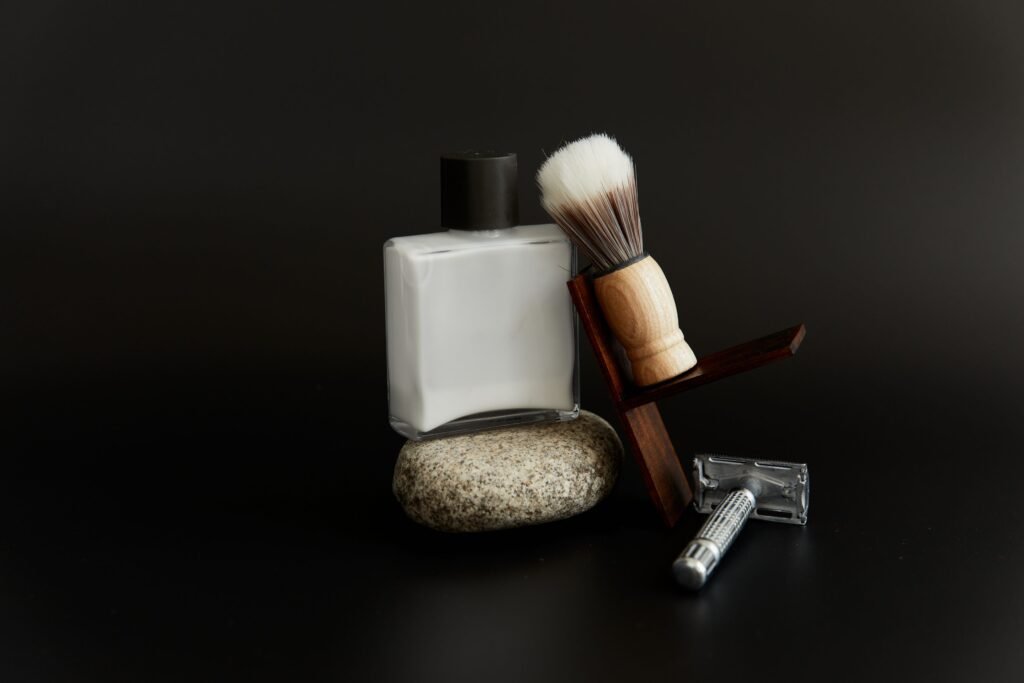
Men’s hygiene is the permanent foundation of every style category. It does not matter how expensive your clothes are or how well your haircut suits your face shape. Poor grooming eliminates the entire investment.
Grooming has stopped being optional for American men, and the spending data shows it. Grand View Research put the U.S. men’s grooming products market at $46.54 billion in 2023, growing at 8.3% CAGR through 2030.
Today, 68% of American men use at least 4 grooming products regularly. This is a massive jump from 45% in 2018. This cultural shift proves that proper grooming is now viewed as fundamental rather than optional or feminine.
The Future of Men’s Grooming 2026 report highlights that younger demographics prioritize self-care and overall wellness. Artificial intelligence is also making it easier to purchase these essential products. This paints a clear picture of the industry’s future.
Men’s Hygiene Essentials Beyond Skincare
Complete men’s hygiene is more than just covering men’s hygiene essentials or basic men’s skincare routine. There are other things to note which are:
→ Shower every day using a body wash that establishes your scent profile
→ Apply deodorant or anti-perspirant every morning after you shower
→ Brush your teeth twice daily and floss once. No one wants to smell your breath from a distance and this is an instant style mistake that no outfit can remedy
→ Keep your nails clipped short, manicured, and free of any visible dirt
→ Moisturize your hands and body. This is especially important in the fall and winter months when the air gets particularly dry
→ Trim or groom your facial hair every five to seven days irrespective of whether you are sporting a beard or are completely clean shaven
→ Wear a good cologne that is suited to your environment: lighter and citrus-based for daytime and warmer seasons, deeper and woodier for nighttime and cooler seasons
Grooming Matched to Each Aesthetic
Your grooming approach should align with your style category. Mismatches create subtle inconsistency, like wearing a pristine luxury watch but having unkempt facial hair, that undercuts your overall look.
→ Classic style man: Clean-shaven or a tightly trimmed short beard with defined edges. Traditional scents: cedarwood, vetiver, leather, sandalwood.
→ Streetwear man: Fade kept fresh, more expressive hairstyle is acceptable. Scents lean fresher: citrus, aquatic, or light woods.
→ Grunge fashion men: Intentionally undone but not actually dirty. Light stubble, medium-length hair with minimal product. Scents lean earthy or smoky.
→ Softmaxxing man: Maximum grooming investment across every category. Flawless skin, optimized haircut, trimmed brows, clean nails, fresh teeth, calibrated scent.
FAQ: People Also Ask
What are the different types of men’s fashion styles?
The main types of men’s fashion styles are classic, business casual, smart casual, old money, preppy, quiet luxury, minimalist, dark academia, streetwear, techwear and gorpcore, workwear and utility, soft boy and clean boy, Y2K, and the alternative family of punk, goth, emo and grunge. Each is defined by a distinct silhouette, colour palette, and set of cultural references. Most well-dressed men combine two of these rather than committing to one.
What is the difference between business casual and smart casual?
Business casual has a floor: no denim, no sneakers, no untucked hems. It means a collared shirt, tailored trousers, and leather shoes, with a jacket optional. Smart casual has no floor, only a ceiling. Clean white sneakers, dark denim, and a crewneck are all acceptable smart casual and none of them are business casual. If your workplace specifies business casual, the sneakers are the line.
What is the difference between old money and quiet luxury?
Both reject visible branding, but they draw from different sources. Old money references a specific American East Coast past through heritage silhouettes: cable knits, flat-front trousers, suede loafers. Quiet luxury is geographically neutral and contemporary, built from modern cuts in expensive materials. Old money looks inherited. Quiet luxury looks earned.
Which men’s style is cheapest to start?
Minimalist and grunge are the two cheapest categories to build, both starting around $150. Minimalist works cheaply because plain clothes in neutral colours are the least expensive items in any store. Grunge works cheaply because wear and age are part of the aesthetic rather than a problem to avoid. Softmaxxing costs even less and returns more, because grooming and fit multiply the effect of every garment you already own.
What haircut suits you based on face shape?
Your face shape sets the goal and your hair texture sets the method. Oval faces work with nearly any cut. Round faces need added height on top through a pompadour or high fade. Square faces benefit from softer, longer sides that reduce jaw sharpness. Oblong faces need added width rather than height. Heart-shaped faces need fullness below the jawline to balance a wider forehead.
What is men’s Y2K fashion?
Men’s Y2K fashion is the revival of early 2000s aesthetic codes: baggy and wide-leg silhouettes, athletic jerseys, bold logos, cargo pants, chunky sneakers, and nostalgic references to early 2000s pop and hip-hop culture. According to Vogue Business, searches for Y2K fashion grew by over 400 percent between 2021 and 2023. It remains influential in streetwear and teen fashion communities in 2026.
What is softmaxxing and how does it work?
Softmaxxing is the practice of maximising your natural appearance through non-invasive, incremental improvements: a haircut chosen for your face shape, a consistent skincare routine, clothes that fit your current body, better posture, and reliable personal hygiene. It works because small compounding changes in presentation produce disproportionately large improvements in how you are perceived, and because it multiplies the effect of every clothing decision layered on top of it.
What is grunge fashion for men and is it still relevant?
Grunge fashion for men is the rebellious aesthetic from the late 1980s Seattle music scene, built around flannel shirts, distressed denim, band tees, and combat boots. It remains relevant in 2026 as a counterpoint to the highly curated aesthetics dominant on social media. The modern version updates the original silhouettes for contemporary proportions while keeping the authenticity-first spirit that defines it.
What types of men’s fashion styles work best for the workplace?
Business casual and classic style work in the widest range of American workplaces. Smart casual suits tech, creative, and startup environments. Quiet luxury and old money read well in client-facing professional roles. Streetwear, grunge, and techwear are better suited to creative agencies, music and entertainment, or fully casual dress codes. Grooming standards apply regardless of which category you choose.
How important is grooming to men’s style?
Grooming is the floor that everything else rests on. No clothing choice compensates for visible signs of poor hygiene. The baseline habits of daily showering, deodorant, dental care, nail maintenance, and facial hair grooming multiply the impact of every style decision above them, which is why softmaxxing returns more per dollar than any wardrobe purchase.
Conclusion and Next Steps
Knowing the full range of types of men’s fashion styles is not about following trends. It is about building a coherent visual identity that communicates who you are before you speak.
Style is one of the most underused personal tools available to American men today. Learning about the types of men’s fashion styles and how they work will help you unlock your fullest potential as a man. You will gain considerable advantage over your peers in a variety of social and professional settings.
The 3 most important takeaways from this types of men’s fashion styles guide are:
→ Style begins from within the self. Focus on personal hygiene, then build your wardrobe with basics first, then work into accessories.
→ The FashionXD Style Stack will help you curate a wardrobe that includes only the items that you need and that will provide the greatest value for your dollar.
→ There is no universally accepted style for men. While smart casual is the most versatile style for the majority of American men, the best style for yourself is the one that reflects who you are and how you live your life.
Style categories aren’t a cage. Pick the one that fits how you actually live, borrow from a second when it suits you, and revisit this when your life changes shape.
Next Steps:
→ Identify which style category in this guide most closely matches who you want to be seen as. Commit to it as your Layer 2 identity anchor.
→ Audit your current wardrobe against the FashionXD Style Stack. Identify which layer is missing and address it before buying anything else.
→ Start your skincare routine for men this week. A cleanser and an SPF moisturizer are all you need to begin. Add steps as the habit locks in.
Author Bio
The FashionXD Editorial Team consists of several senior contributors to the publication who all have over 15 years of combined experience publishing content about fashion and grooming for American men. The writers use research from experts in the field, including certified professionals in grooming, fashion, and styling from across the United States. All content that is published on FashionXD is reviewed to ensure that the information is accurate, up to date, and applicable to the reader who is building a wardrobe that reflects their individual style.
Sources and References
- Talker Research (2025). Suit confidence and dress-code recognition among American men. Survey of 2,000 U.S. men, fielded 14–21 March 2025, commissioned by Generation Tux.
- Hewlin, P. (2012). Clothing and Perceived Competence. Journal of Experimental Social Psychology.
- Business of Fashion (2024). Global Streetwear Market Valuation Report. Analysis of the $185 billion streetwear ecosystem and brand landscape.
- Vogue Business (2023). The Y2K Fashion Revival: Search Trend and Consumer Data Analysis.
- Mintel (2026). The Future of Men’s Grooming 2026: Annual Industry Report. Tracking the 68% adoption rate of daily grooming products.
This article contains no affiliate links and no sponsored content.
Pingback: Grunge Fashion Men: Beginners’ Style Guide (2026) - Fashionxd.com
Pingback: Grunge Fashion Men: Beginners’ Style Guide (2026) - Fashionxd.com
Pingback: Men’s Wardrobe Essentials: The Complete 2026 Guide - Fashionxd.com
Pingback: Alternative Fashion for Men: The Styles, Explained - Fashionxd.com
Pingback: Goth Fashion for Men: 9 Sub-Genres and 2026 Outfit Guide - Fashionxd.com
Pingback: Outerwear Lengths For Short Men: The Complete Fit Guide