It’s a normal Tuesday until the calendar pings: a client is joining the stand-up in ten minutes, or the recruiter says to come into the office today. You look down at whatever was closest this morning. Good software engineer style fixes that moment before it happens. You don’t need fashion knowledge or a big budget: you need about a dozen pieces that fit you, in colors that go together, kept clean and in good shape. This guide builds that wardrobe and shows you how to handle the days that matter, from your first day to interviews to surprise client calls.
Tech’s relaxed dress culture is real, and it’s a perk worth keeping. But when nobody tells you what to wear, it’s easy to default to whatever is nearest each morning and stop thinking about it. That works until it doesn’t: a client visit, a conference, a video call with leadership. A small amount of intention, applied once, removes those moments without changing who you are or how comfortable you feel.
Start with fit, not new clothes
Before buying anything, check what you already own. An inexpensive plain tee that fits well beats a premium one that hangs like a tent, so sizing is the first upgrade to try.
These fit checks are starting points for standard set-in-sleeve cuts, not universal rules. Bodies differ, and so do climates and preferences, so treat them as defaults to adjust:
- T-shirts and polos: the shoulder seam lands near the edge of your shoulder and the hem ends around mid-fly. You should be able to move, reach and sit without the fabric pulling or billowing.
- Jeans and chinos: they stay up without a belt and the leg follows yours without straining or swallowing it. Straight, slim and relaxed cuts all work when the lines are clean. If the hem pools on your shoes, a local tailor can shorten it.
- Hoodies and sweaters: the cuff stops near your wrist bone and the body ends somewhere below your belt. Size for your frame, not up or down by default.
If your current rotation mostly passes these checks, you may not need to shop at all. If it doesn’t, the list below is the fix.
Software engineer style: the core wardrobe
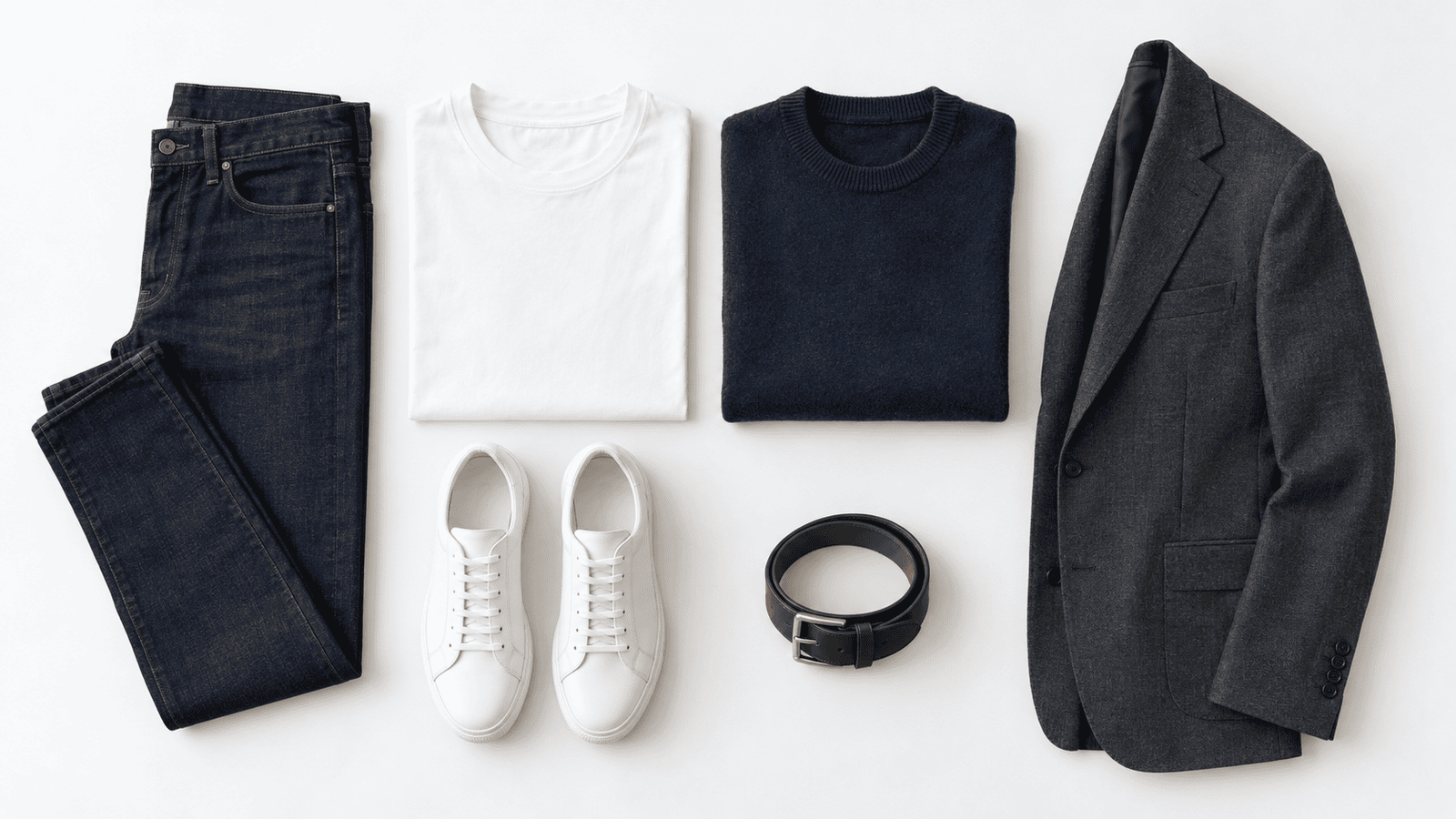
Here’s an example wardrobe of 12 pieces (10 garments and 2 pairs of shoes, with the blazer optional and the belt as a 13th accessory), chosen so that almost any combination works. It borrows the logic of a capsule wardrobe: fewer pieces, fewer decisions, fewer ways to go wrong.
On a phone, swipe the table sideways to see all 4 columns.
| Piece | What to look for | What it replaces | Why it works |
|---|---|---|---|
| 3 plain heavyweight tees | White, black or navy. Thick cotton, no logos, no jokes | Faded event and graphic tees | Looks tidy without any thought and layers under everything |
| 2 collared shirts | A light blue oxford button-down and one knit polo | The nice shirt you never wear | A collar signals effort with t-shirt comfort; your meeting default |
| 1 merino crewneck sweater | Navy or charcoal, cut to your frame | The baggy hoodie on cold days | A tidier cold-day layer than a hoodie; add a jacket if your office runs cold |
| 1 unstructured blazer | Navy or charcoal, soft shoulders, no shine | Nothing; an optional addition | An optional layer for surprise meetings and interviews |
| 2 dark jeans | Indigo and black, straight or slim, no rips or heavy fading | Baggy washed-out jeans | Dark denim, the tech default at its most put-together |
| 1 pair chinos | Khaki, olive or navy, clean straight or tapered leg | Sweatpants on days that need more | Steps things up without feeling dressed up |
| Minimal leather sneakers | White or neutral, no big logos | Worn-out trainers | Works with every bottom on this list |
| Chelsea boots or loafers | Brown suede or black leather; pick one, not both | Nothing; this covers dressier days | Handles interviews, dates, dinners and client visits |
| A simple leather belt | Brown or black, matching your dressier shoes | The fraying fabric belt | The 13th piece: a small detail that finishes an outfit |
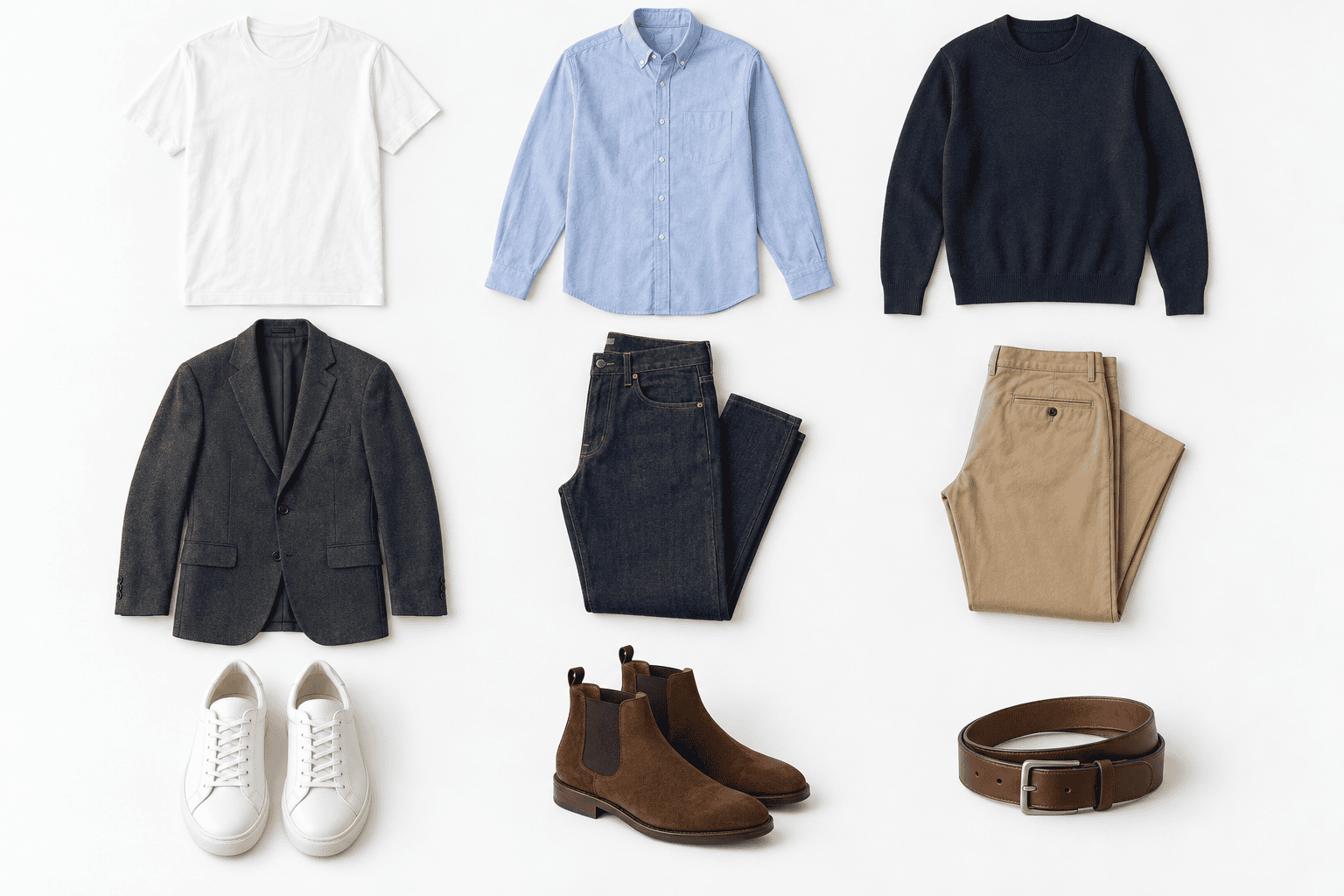
Two things this list deliberately leaves out: visible branding and trend pieces. Our complete wardrobe essentials guide goes deeper on each category when you want to build beyond this base.
Pick the outfit for the day you’re actually having
Engineering weeks aren’t uniform, so here’s a quick decision path:
- Normal team day: plain tee or polo, dark jeans or chinos, clean sneakers. Done in 30 seconds.
- First day or first week: one step tidier than what you saw in interviews, usually chinos and a collared shirt, until you’ve seen what the team actually wears.
- Client-facing day: your usual base, plus the blazer if the meeting is formal. When in doubt, ask whoever set up the meeting what the client’s side wears.
- Hot commute, cold office AC: a breathable tee with the merino sweater or an overshirt you can shed, so you’re dressed for both climates.
- Remote video call: a collared shirt or solid sweater on top, anything comfortable below.

The hoodie question
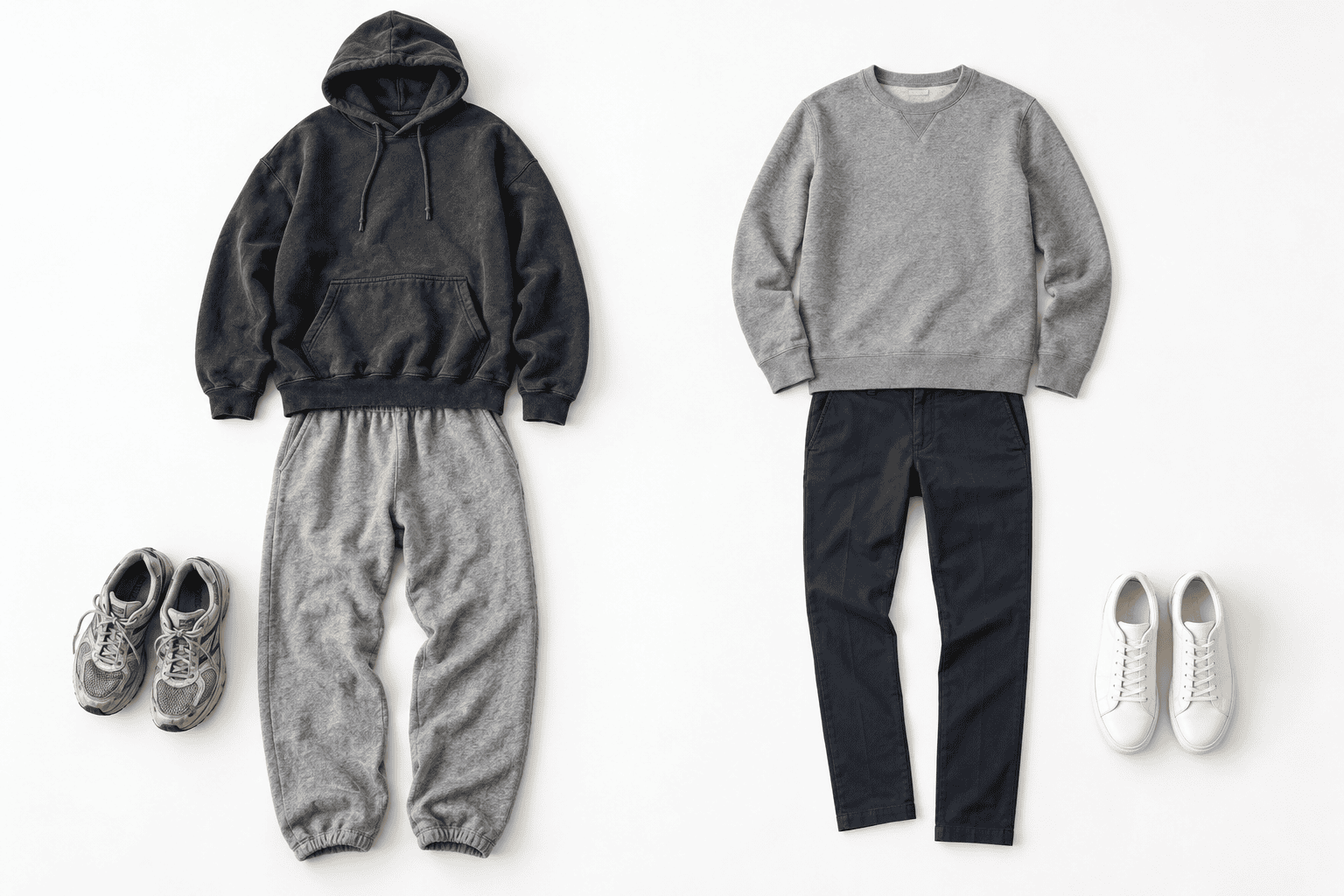
You can keep wearing hoodies. The question is rarely the garment itself. It’s the specific hoodie.
3 things make the difference. First, plain fabric: no event logos, no startup swag, no graphics. Second, a cut that fits your frame. Third, condition: pilling, stretched cuffs or faded-out black reads as loungewear. A plain hoodie that fits, in good shape, layers under a jacket and works in most engineering offices. If yours is more formal, a merino crewneck is a tidier alternative, though it is usually lighter than a thick hoodie, so add a jacket if your office runs cold.
Shoes: condition over price
Shoes get noticed, and in tech the gap is almost never about price. It’s about condition. Clean, intact shoes make a simple outfit look considered; beaten-up ones drag down a good one.
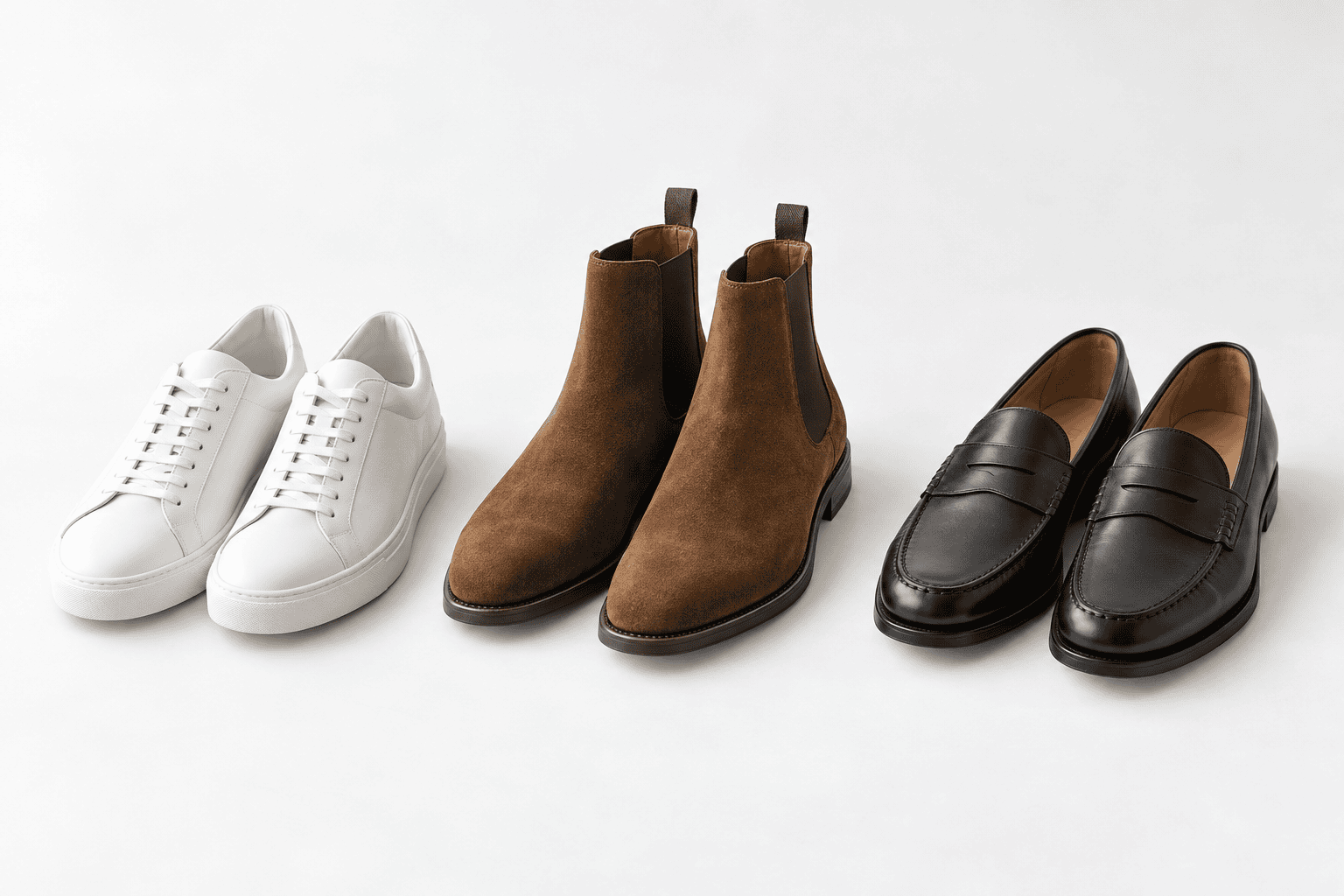
2 pairs cover an engineering life: minimal leather sneakers in a neutral color for every day, and one dressier option, brown chelsea boots or black loafers, for interviews, dinners and client visits. Two pairs are a base, not a promise: a wet commute, a site visit that needs protective footwear or a very hot or cold climate may call for something else. You don’t need both dressier options; pick one. Clean running shoes are also fine in many offices, especially where you’re on your feet or the culture is very relaxed. A weekly wipe-down and fresh laces when they gray will do more for you than any single purchase.
Colors that work together
Build on a base of navy, gray, white and black, add earth tones like khaki, olive and brown, and treat light blue as your one shirt accent. The core wardrobe above stays inside that palette, which is why its pieces combine so easily.
If you’d rather understand color combinations than memorize them, our guide on how to match clothes colors walks through the logic. It’s a short read that pays off every morning.
First days, interviews and surprise meetings
The rule that beats every other rule: follow the employer’s own guidance first. Many companies send interview or onboarding notes that say what people wear, and recruiters answer this question directly all the time. Some companies even publish their stance. Microsoft’s careers page tells candidates they don’t need to dress up to impress and to wear whatever makes them most comfortable. Amazon’s interview prep page says to wear what makes you comfortable and confident, because the focus is your ideas and experience, not your outfit.
Day one at a new job: when no guidance exists, go one step tidier than the team’s everyday wear, usually chinos and a collared shirt, then calibrate once you’ve seen the office. Some companies take an ID or badge photo early on, sometimes on day one, so a clean top that morning is cheap insurance.
Interviews: with no stated dress code, one step above the team’s daily wear is a sensible default: chinos or dark jeans, an oxford or knit polo, clean shoes. Comfort is not a compromise here; it’s what the employers themselves recommend, and it frees you to focus on the conversation.
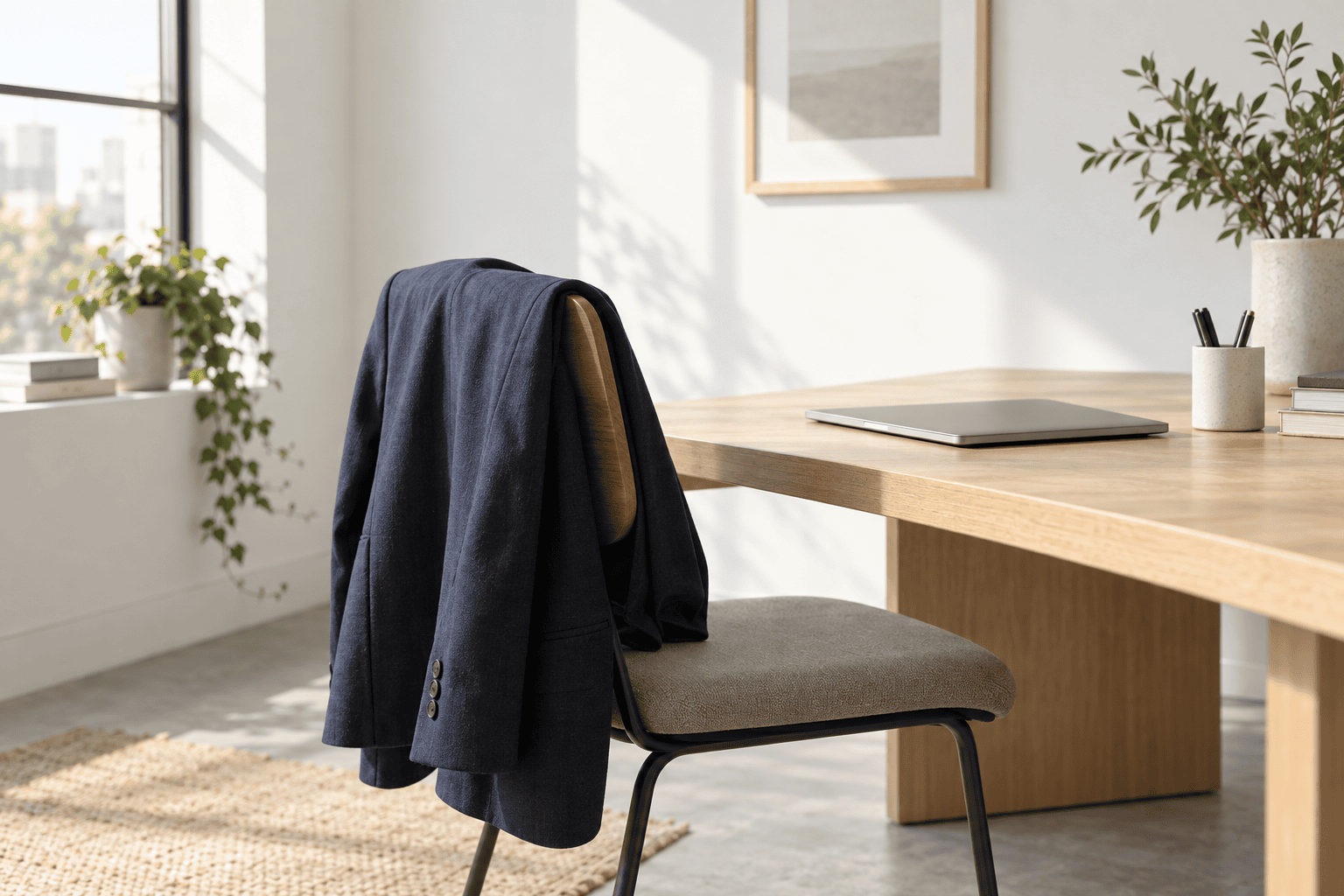
Surprise meetings: keeping a navy or charcoal blazer at your desk is an optional layer that can make a plain tee and jeans look meeting-ready in seconds when a client appears. Useful when you want it, skippable when you don’t.
Thinking ahead to leadership? Expectations shift as roles change. Our tech CEO style guide breaks down the 3 uniforms executives actually wear, a useful preview of where a wardrobe like this one can head next.
Working remote
Remote work compresses your visible wardrobe to a head, shoulders and a few inches of chest. The collar and color of your top do all the work, so keep 2 collared shirts or solid sweaters within reach of your desk for camera-on meetings. Solid colors read cleanly on webcams; tight stripes and busy patterns can shimmer on some cameras. Below the frame, wear whatever keeps you comfortable.
The short version
A relaxed dress code means freedom, not invisibility. A little intention goes a long way in an office full of default outfits.
- Check fit before shopping: the checks above are starting points you adjust to your body, not laws.
- The example wardrobe is 12 pieces (blazer optional, 13 with the belt), built so almost any combination works.
- Condition beats price, especially on shoes. A weekly wipe-down outperforms most purchases.
- Employer guidance comes first for interviews and first days. Microsoft and Amazon both tell candidates to wear what’s comfortable.
- A blazer kept at your desk is an optional layer for surprise meetings.
Frequently asked questions
What should I wear on my first day as a software engineer?
Start with any guidance the employer gives you. Offer emails, onboarding docs and recruiters often say what the team wears, and asking the recruiter is a normal question. When nobody tells you anything, clean dark jeans or chinos with a collared shirt is a safe middle ground for software engineer style: relaxed enough for a tech office, tidy enough for introductions.
One practical note: some companies take an ID or badge photo early on, sometimes on day one, so a clean top that morning is cheap insurance. If yours doesn’t, nothing is lost.
Can I wear a hoodie to a tech office?
In most tech offices, yes. The difference between a hoodie that works and one that doesn’t comes down to 3 things: plain fabric without event logos or graphics, a cut that fits your frame, and good condition with no pilling or stretched cuffs.
A plain, well-kept hoodie also layers cleanly under a jacket when the day calls for it. If your workplace leans more formal, a merino crewneck is a tidier alternative, though it is usually lighter than a thick hoodie, so add a jacket if your office runs cold.
What should I wear to a software engineering interview?
Follow the employer’s own guidance first. Many companies send interview prep notes, and some publish theirs: Microsoft’s careers page tells candidates they don’t need to dress up to impress and to wear whatever makes them most comfortable, and Amazon’s interview prep page says to wear what makes you comfortable and confident.
When you get no guidance, aim one step above the team’s daily wear: chinos or dark jeans, an oxford or knit polo, and clean shoes. That keeps you comfortable, which matters more for how you perform than any outfit rule.
How do I dress better without looking like I’m trying too hard?
Keep the outfit combinations you already wear and improve each piece one notch. Plain heavyweight tees instead of graphic tees, dark straight or slim jeans instead of baggy faded ones, minimal leather sneakers instead of worn trainers, and a plain fitted hoodie or merino sweater instead of event swag.
Each swap is small on its own, so the overall effect reads as tidy rather than dressed up. That tends to be exactly the right register for a casual engineering office.
What shoes should a software engineer wear?
Minimal leather sneakers in white or another neutral cover day-to-day office life for most engineering teams, and clean running shoes are a perfectly reasonable choice in plenty of workplaces. Add one dressier option, brown chelsea boots or black loafers, for interviews, client visits and dinners.
Whatever you choose, condition carries the outfit: clean, intact shoes in a basic style look better than neglected premium ones, and a weekly wipe-down takes minutes.
Does it matter what I wear if I work remotely?
Less, but not zero. On video calls, colleagues see your head, shoulders and a slice of your top, so a collared shirt or a solid-color sweater does all the visible work. Keeping 2 clean options within reach of your desk covers unexpected camera-on meetings.
Solid colors tend to read cleanly on webcams, while tight stripes and busy patterns can shimmer on some cameras. Below the desk, wear whatever you like.